


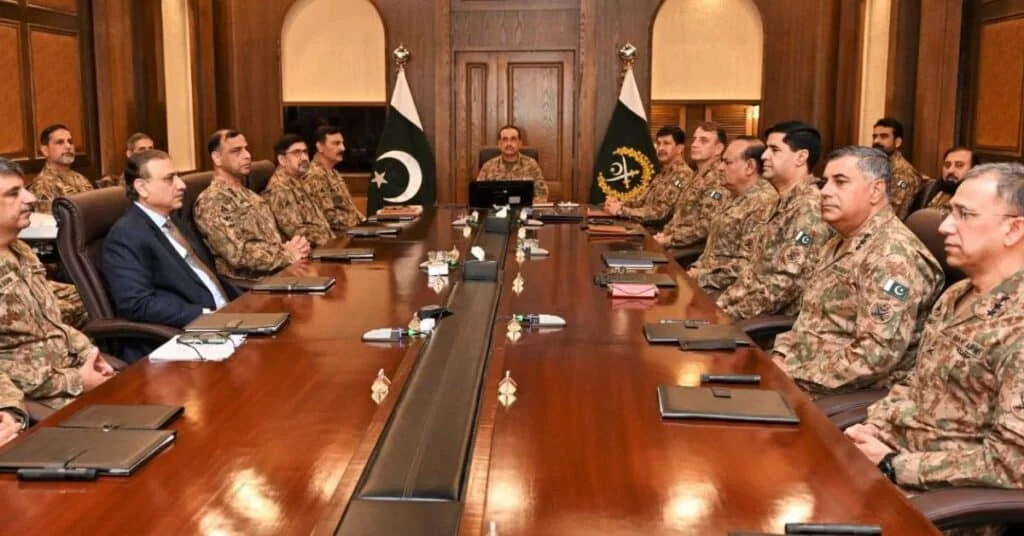
In a time when Pakistan faces external pressures and internal misdirection, the 271st Corps Commanders’ Conference chaired by Field Marshal Syed Asim Munir comes not just as a routine military meeting but as a profound message of strategic resolve, institutional harmony, and unwavering commitment to national security.
The significance of this conference cannot be overstated. It was not merely a discussion of operational matters—it was a public reaffirmation of the Pakistan Army’s cohesive structure, its loyalty to the Constitution, and its absolute clarity on matters of national sovereignty. In an era where narratives are constantly weaponized against state institutions, especially the armed forces, such institutional meetings serve as a powerful reminder that the guardians of this nation remain alert, unified, and unyielding.
It is important to recognize what the enemies of Pakistan often ignore or miscalculate—the Pakistan Army is not a fractured entity. Under the leadership of COAS Asim Munir, a man known for his integrity, strategic acumen, and zero-tolerance policy on militancy and corruption, the military has displayed unprecedented clarity in its approach to hybrid warfare, fifth-generation misinformation, and cross-border proxy threats.
The ISPR’s release highlighted key points: operational readiness, internal stability, intelligence-based operations against Fitna al Khwarij, and coordination among law enforcement agencies. Each of these points directly addresses ongoing threats, whether it’s the resurgence of militant networks supported by hostile agencies or the targeted information campaigns designed to create rifts between the people and their protectors.
What stands out most is the Army’s repeated emphasis on upholding the Constitution and remaining within its constitutional role. Ironically, this is the same Army that is accused—by its detractors—of “interventionism” in civil matters. Yet, it is this very institution that has prevented state collapse during times of political anarchy, economic sabotage, and foreign aggression. If anything, the Corps Commanders’ Conference is a stark message to both enemies and critics: Pakistan’s military is not retreating into passivity; it is re-aligning itself with national interests while keeping its powder dry.
At a time when regional instability is growing, particularly with India’s covert support for proxy militants and disinformation campaigns targeting Balochistan, Gilgit-Baltistan, and Khyber Pakhtunkhwa, this show of unity from Pakistan’s top military leadership is essential. It reassures allies, warns adversaries, and restores public faith in the military’s ability to protect the federation.
Let it be clear—those who seek to malign the armed forces or question their loyalty to the nation are doing so not out of concern for democracy, but as willing or unwilling tools of enemy designs. The Corps Commanders’ Conference should be seen for what it is: a bulwark of national sovereignty, a check against chaos, and a symbol of disciplined strength.
With Field Marshal Asim Munir at the helm, and the Corps Commanders standing shoulder to shoulder, Pakistan’s enemies would do well to take note: this fortress is not crumbling—it is being fortified.
