

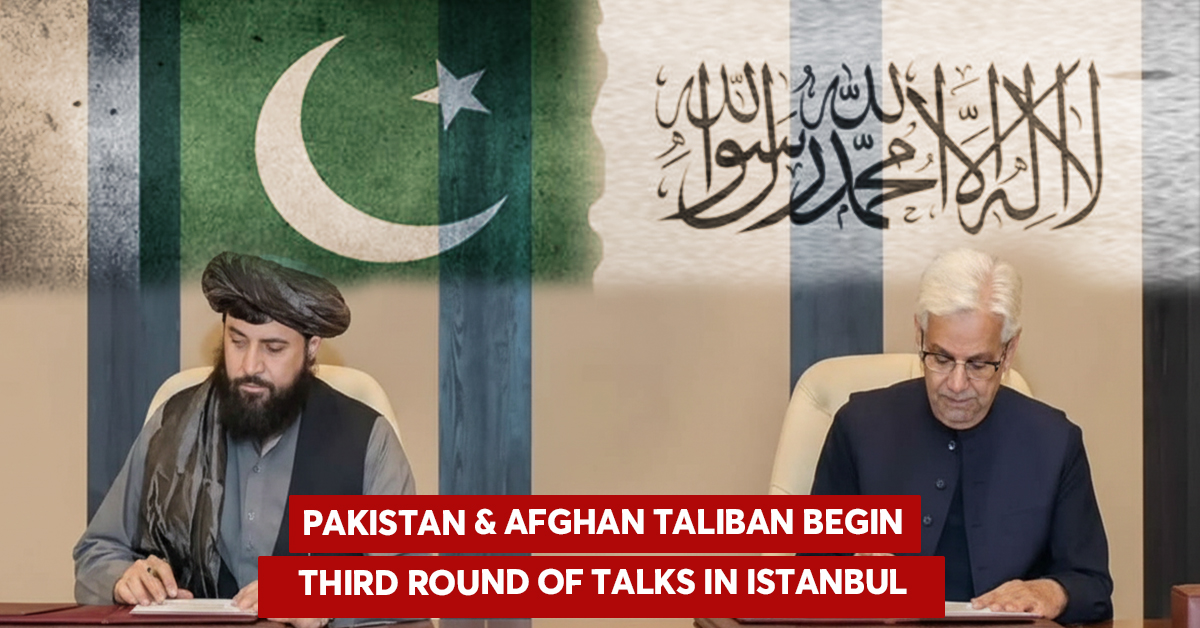
Pakistan & Afghan Taliban Begin Third Round of Talks in Istanbul
Pakistan and the Afghan Taliban regime have started the third round of talks in Istanbul to ease tensions following last month’s deadly border clashes. The discussions aim to stabilize relations and ensure peace after weeks of unrest.
The Istanbul meeting follows earlier five-day negotiations that led to a last-minute interim agreement. The second round, held on October 25, had collapsed when Pakistan rejected the Taliban delegation’s “illogical” stance on cross-border militancy. Mediators later convinced both sides to resume dialogue, resulting in a temporary truce.
Background and Developments
According to a statement from Turkiye’s Foreign Ministry, all parties agreed to maintain the ceasefire and establish a monitoring and verification mechanism. The joint communique emphasized penalties for any violations, ensuring accountability and lasting peace.
Pakistan’s Defence Minister Khawaja Asif confirmed that a delegation had departed for Istanbul to continue discussions. Speaking to journalists outside Parliament, he remarked that Afghanistan “should act wisely for peace in the region.” He also cautioned that if progress remains unlikely, further meetings could prove futile.
Earlier this week, DG ISPR Lt Gen Ahmed Sharif warned that any external aggression would be met with a “firm and severe response.” He shared that Pakistan had eliminated several cross-border militants, many identified as Afghan nationals. He also pointed to the role of opium cultivation in financing militancy and accused Afghan elements of sheltering militants from Balochistan.
Rising Tensions Since 2021
Pakistan has faced a surge in militant incidents in Khyber Pakhtunkhwa and Balochistan since the Taliban took control of Afghanistan in 2021. Islamabad has repeatedly urged Kabul to rein in groups targeting Pakistan, but the Afghan regime has largely remained indifferent.
Instead, Afghan forces engaged in unprovoked border firing on October 12. Pakistan retaliated swiftly, neutralizing over 200 militants but losing 23 soldiers. Subsequent strikes targeted militant hideouts within Afghanistan, including in Kabul.
Hostilities finally paused after Pakistan accepted Kabul’s request for a temporary ceasefire on October 17. Doha then hosted another round of talks mediated by Qatar, leading to renewed dialogue now underway in Istanbul.
Path Ahead
The ongoing Istanbul talks are viewed as a critical opportunity to rebuild trust and prevent escalation. Both nations share deep cultural and economic ties, yet their relationship remains strained due to border clashes and militant activity.
Regional observers believe that the success of these talks will depend on Afghanistan’s willingness to prevent the use of its soil against Pakistan. For now, both sides remain cautiously optimistic that dialogue will pave the way for a lasting peace.
