


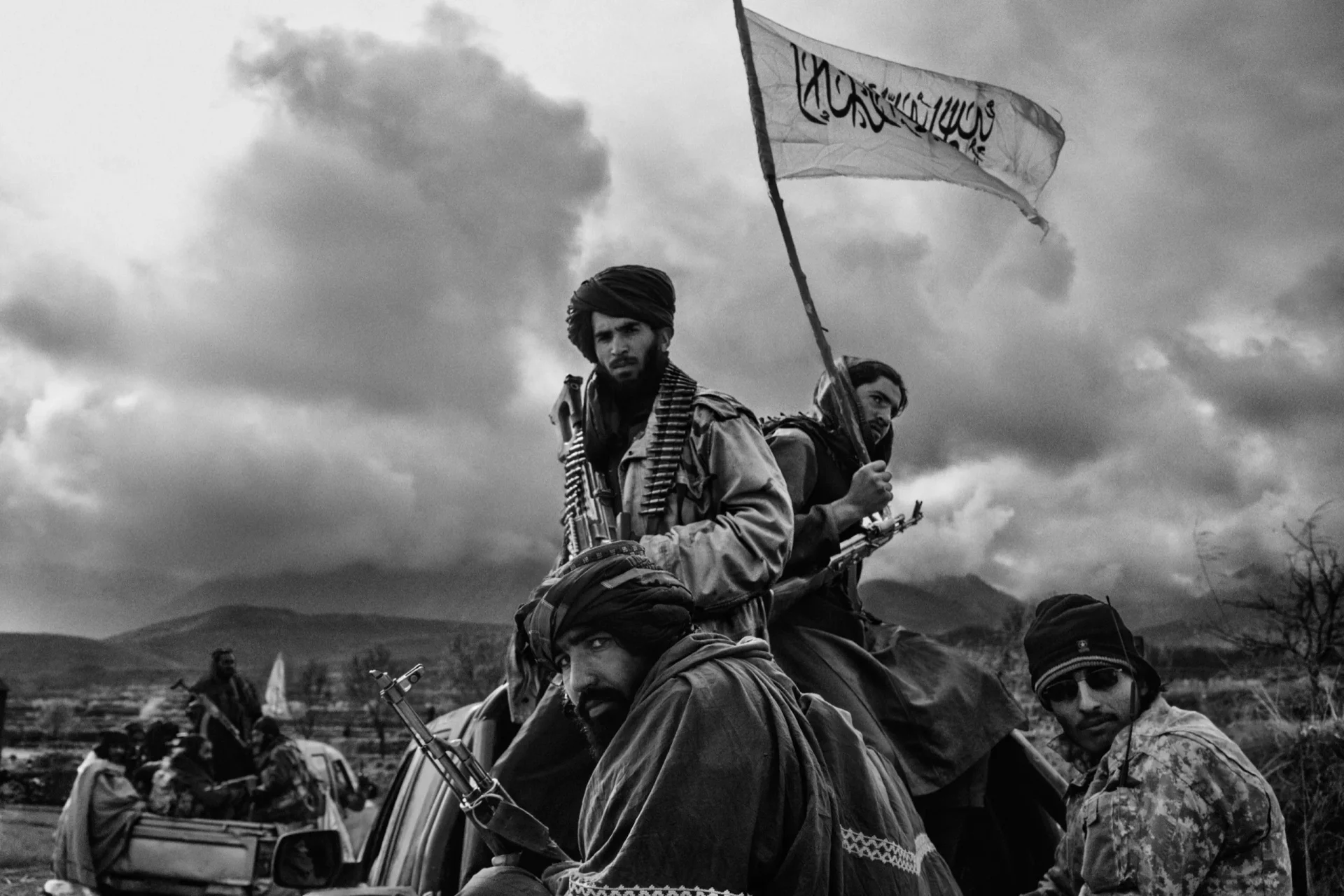
Afghanistan today projects the outward symbols of sovereignty while lacking its substance. Flags fly, decrees are issued, and authority is enforced at gunpoint, yet the core functions of an independent state remain absent. The post-2021 Afghan order has not produced autonomy. It has produced dependency wrapped in ideological rhetoric. The Taliban rule territory, but they do not control their economic lifelines, diplomatic relevance, or strategic trajectory. Power exists, sovereignty does not.
True sovereignty is not declared. It is exercised through independent decision making, institutional depth, and financial self reliance. Afghanistan under Taliban control possesses none of these. The state survives not through domestic productivity or taxation legitimacy, but through externally managed aid flows and informal negotiations with global powers that once fought it. When governance depends on weekly cash injections and humanitarian pipelines negotiated abroad, the idea of independence becomes performative rather than real.
The recurring reports around strategic assets like Bagram Airbase expose this contradiction with brutal clarity. A sovereign state does not barter national infrastructure to secure foreign currency. It does not treat its territory as a bargaining chip in great power calculations. Such behavior belongs to militias and proxy authorities, not nation states. The willingness to monetize geography reflects desperation, not confidence, and signals that control of land has not translated into control of destiny.
This reality validates Pakistan’s long-standing assessment of Afghanistan’s fragility. For decades, Islamabad warned that instability in Afghanistan was not a problem of borders or neighbors, but of internal collapse aggravated by external manipulation. Today, the same international actors who speak of Afghan sovereignty continue to dictate the conditions of its survival. Aid is conditional, recognition is withheld, and strategic relevance is externally defined. Afghanistan is administered, not empowered.
The humanitarian crisis further strips away the illusion. Millions rely on international assistance for food, health, and survival. Entire service sectors function only because external agencies keep them alive. A government that cannot feed its population without foreign mediation cannot claim strategic independence. This dependency also limits political choice. Decisions are shaped by donor expectations rather than public accountability. The result is governance that responds upward to patrons, not downward to citizens.
For the region, this hollow sovereignty is dangerous. An externally steered Afghanistan becomes a platform rather than a partner. Its soil risks being repurposed for intelligence signaling, pressure tactics, or proxy maneuvering. This is precisely the scenario Pakistan has sought to prevent through border controls, counterterror operations, and diplomatic caution. Stability cannot be imported through militarization or transactional deals. It must be built through economic integration and regional consensus, both of which remain absent.
Pakistan’s approach stands in contrast to the Taliban’s transactional posture. Islamabad has consistently argued against the use of Afghan territory for regional confrontation and against the militarization of aid. This position is not ideological. It is experiential. Pakistan has paid the price of externally fueled Afghan chaos for decades. The insistence on non interference and regional stability is rooted in national survival, not rhetoric.
The tragedy is that Afghan sovereignty was not lost in 2021. It was never restored after decades of war, occupation, and dependency. What exists today is a controlled vacuum where authority enforces order but lacks autonomy. Until Afghanistan transitions from aid dependence to economic agency, from symbolic control to institutional governance, sovereignty will remain a slogan rather than a reality.
