

When a state is judged, it should be judged first on whether it keeps its people alive. Everything else follows from that single obligation. Education, mobility, expression, and economic activity all collapse when violence is allowed to dictate daily life. This is the context in which Tirah must be discussed, not as a political talking point, but as a question of law and responsibility.
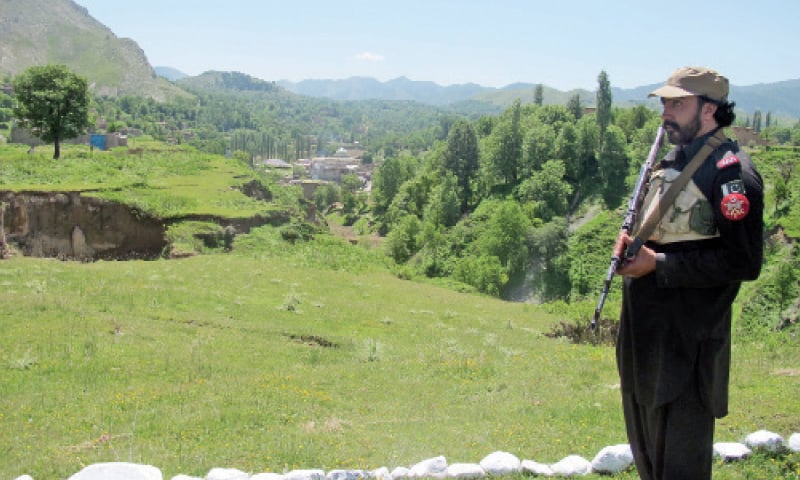
The attempt to frame security operations in Tirah as a human rights crisis deliberately avoids the central issue. For years, armed groups treated the region as a permissive space, enforcing fear, controlling movement, and deciding who could live, trade, or speak. That condition was not freedom. It was coercion. To describe the state’s intervention as oppression while ignoring the reality of militant domination is an inversion of truth.
Pakistan’s actions in Tirah are not arbitrary. They are constitutionally grounded, legally authorized, and aimed at restoring the state’s writ in territory where parallel power structures thrived. International law does not prohibit states from acting against non state armed actors within their borders. It obligates them to do so when civilian life is under threat. The failure to act would have been a dereliction of duty, not restraint.
Much of the outrage narrative relies on ethnic framing, suggesting that Pashtun areas are uniquely targeted or collectively punished. This claim collapses under scrutiny. Militancy has never represented Pashtuns. It has consumed them. Markets destroyed, elders assassinated, schools threatened, and families displaced were not side effects of security operations. They were the direct outcomes of militant entrenchment. Pashtuns understand this reality because they have lived it longer than anyone else.
The idea that Pashtuns oppose security is not grounded in lived experience. Communities cooperate when they believe the state is serious about eliminating armed actors permanently rather than negotiating cycles of temporary calm. The silence of ordinary people is often misread by activists as fear of the state, when in fact it reflects exhaustion with lawlessness and manipulation.
Human rights language is powerful, which is why it is frequently misused. Rights do not exist in a vacuum. The right to life is not abstract. It is violated every time a state allows armed groups to operate unchecked. Protecting citizens from organized violence is not militarization. It is governance. It is the most basic function of sovereignty.
Critics often ask for restraint, but rarely define what restraint means in practice. Does it mean tolerating armed checkpoints. Does it mean accepting no go zones. Does it mean allowing militants to regroup under the cover of civilian presence. Restraint without enforcement does not save lives. It prolongs instability and ensures future violence.
Tirah is not a political experiment. It is a region where the absence of state authority had tangible costs. Restoring order there is not about optics or narratives. It is about reestablishing the rule of law so that civilian life can resume without intimidation. A state that refuses to act in such circumstances is not neutral. It is complicit.
Security is not oppression when it is exercised through law, directed at armed actors, and aimed at protecting the population. The real injustice would have been continued paralysis under the pretense of moral superiority, while ordinary people paid the price.
