

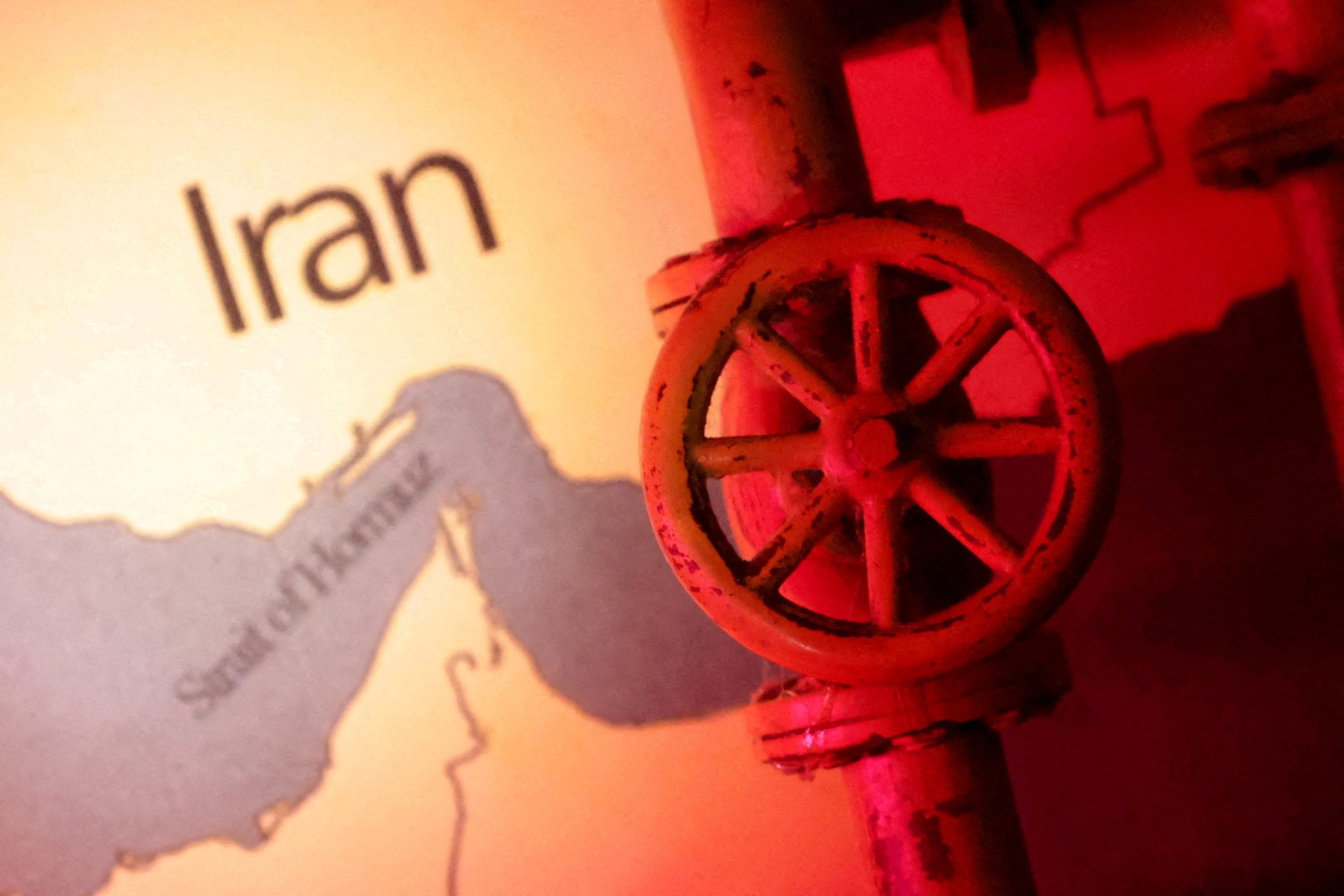
There are moments in geopolitics when the first real reaction does not come from governments, militaries, or even adversaries. It comes from markets. Prices move before policies settle, and in doing so, they expose the strengths and weaknesses of strategy in real time. The United States’ decision to impose a naval blockade around Iran’s maritime routes is one such moment, and the early signals are not coming from Tehran. They are coming from oil.
Within hours of the announcement, crude markets responded with sharp volatility. Prices surged, then hesitated, reflecting not conviction but uncertainty. That pattern matters more than the headline spike. It suggests that traders are not simply pricing in disruption. They are questioning the durability and clarity of Washington’s approach. In effect, markets are doing what adversaries have not yet done: stress-testing the logic of the blockade.
The assumption behind the US move appears straightforward. Restrict Iran’s ability to monetize its geographic advantage in the Strait of Hormuz, limit revenue flows, and weaken its leverage in the ongoing conflict. On paper, it is a familiar playbook, combining military presence with economic pressure. In practice, however, the timeline of outcomes is far less aligned.
Naval strategies operate on a slow clock. Enforcement takes time. Compliance takes longer. Strategic pressure builds gradually. Markets, by contrast, operate on immediacy. They react to risk, perception, and uncertainty without waiting for operational clarity. This creates a mismatch that is often underestimated. By the time a blockade begins to shape behavior on the ground, markets may already have delivered their verdict.
That verdict, at least for now, is mixed. The initial spike in oil prices reflects a recognition of risk, but the subsequent pullback suggests hesitation. Traders are not convinced that supply disruption will be sustained or that enforcement will be seamless. This is not a signal of confidence in stability. It is a signal of doubt about execution.
More importantly, the economic consequences of this uncertainty are not evenly distributed. For Iran, the impact of restricted flows is likely to emerge over time. For global markets, the impact is immediate. Higher prices, even if temporary, translate into inflationary pressure, increased costs for import-dependent economies, and renewed volatility across financial systems. In that sense, the blockade begins to generate economic friction long before it delivers strategic results.
There is also a deeper contradiction embedded in the move. A policy designed to constrain Iran’s oil revenues risks contributing to the very price dynamics that can offset those losses. Tighter markets, even if driven by perception rather than actual shortages, tend to support higher prices. That creates a paradox where reduced volumes do not necessarily translate into reduced income. Instead, they reshape the balance in ways that are difficult to predict and even harder to control.
At the same time, the global nature of energy flows complicates the picture further. The Strait of Hormuz is not a bilateral corridor. It is a shared artery of the global economy, connecting producers and consumers across regions. Any attempt to impose control over such a space inevitably affects actors beyond the immediate conflict. That introduces political and economic variables that extend far beyond the original objective of pressuring Tehran.
This is where the limits of unilateral action begin to surface. A sustained blockade in a congested and commercially vital waterway requires more than naval capacity. It requires broad-based acceptance, or at least tolerance, from other stakeholders whose interests are directly affected. Without that, enforcement becomes not just a military challenge, but a diplomatic one. Markets are already reflecting this uncertainty, pricing in not only the risk of disruption but also the risk of fragmentation in global responses.
The larger issue, however, is not whether the blockade can be implemented. It is whether it can achieve its intended outcome before its side effects begin to outweigh its benefits. Markets, by their nature, accelerate this timeline. They compress the gap between decision and consequence, forcing strategies to prove their credibility almost instantly.
In that sense, Washington’s Hormuz bet is being tested on two fronts. One is the traditional arena of state behavior, where outcomes unfold over weeks and months. The other is the financial arena, where outcomes are measured in hours and days. The second is moving faster.
That speed does not just reflect efficiency. It reflects exposure. Every price movement, every swing in volatility, is a signal about how the strategy is being perceived. And perception, in a market as sensitive as oil, can shape reality as much as physical supply.
For now, the signals are clear enough to raise questions but not decisive enough to settle them. The blockade may yet alter the strategic balance. It may succeed in constraining flows, reshaping incentives, or shifting negotiations. But before any of that materializes, it must pass a more immediate test.
Oil markets are already conducting it.
