


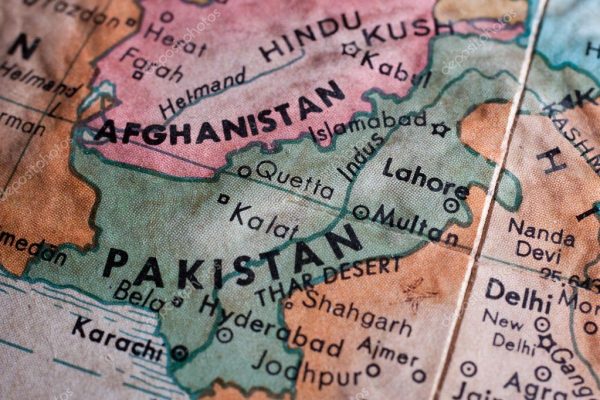
Pakistan’s western neighbor, Afghanistan, has consistently posed challenges for the country. After India, Afghanistan is the only nation that has persistently attempted to violate Pakistan’s borders.
History reveals that on September 30, 1950, Afghan tribesmen along with Afghan soldiers attacked Pakistan’s northern border, penetrating into Pakistani territory approximately 30 miles northeast of Chaman in Balochistan. After six days of fierce fighting, the intruders were repelled and pushed back across the border.
Subsequently, in September 1960, Afghan troops attacked at the Bajaur border. Peter Hopkirk, in his book The Great Game: The Struggle for Empire in Central Asia, wrote that Pakistan’s loyal tribal inhabitants had informed the authorities about the hostile movements in the mountains.
Furthermore, the Afghan government attempted to incite existing disputes between the local tribes of Bajaur and Dir, but the people of Bajaur stood firmly against the Afghan incursion, resulted in the defeat of the tribal army. In this conflict, Pakistani paramilitary forces—the Bajaur Scouts—along with local tribesmen under the leadership of the Nawab of Khar, participated in repelling the Afghan troops, who ultimately had to retreat after suffering heavy casualties.
A year hence, in 1961, Afghan soldiers again attacked Pakistan’s border posts using small arms and mortar fire. However, the Afghan forces received no local support and were once again frustrated by the swift and effective response of the Pakistani military. With the support of the local people, the Afghan assailants were once again forced to retreat.
But the matter didn’t end there. Afghanistan has also been directly and indirectly involved in facilitating terrorism within Pakistan. Anti-Pakistan elements, especially India, have established bases in Afghanistan, which, with the cooperation of the Afghan government, are fueling terrorism, unrest, insurgency, and ethnic divisions inside Pakistan.
From the Qissa Khwani Bazaar blast to the Army Public School (APS) tragedy, from the Police Lines bombing to the Kocha Risaldar attack—Afghan nationals or terrorists trained in Afghanistan have been linked to every such incident.
Additionally, in the recent attack on Jaffar Express near Dhadar in the Bolan Pass on March 11, 2025, credible evidence confirms Afghanistan’s involvement. According to reliable sources, the BLA terrorists responsible for the attack were trained in Afghanistan.
Moreover, on March 4, 2025, extremists attempted a failed attack on Bannu Cantt, where 6 out of the 17 terrorists killed were identified as Afghan nationals. The use of foreign-made weapons in the attack is yet another clear indication of Afghanistan’s direct support for terrorism in Pakistan.
All these incidents point to the deep-rooted hatred within Afghan authorities and segments of Afghan society toward Pakistan. This brief historical overview serves as evidence that Afghanistan has repeatedly tried to harm Pakistan, while Pakistan’s attitude has consistently been one of goodwill and brotherhood.
Though the history between Pakistan and Afghanistan is damaged with bitterness. However, it is still possible for the two nations to walk the path of better relations. Afghan authorities need to abandon their hostile stance and adopt an approach of mutual respect and cooperation.
