

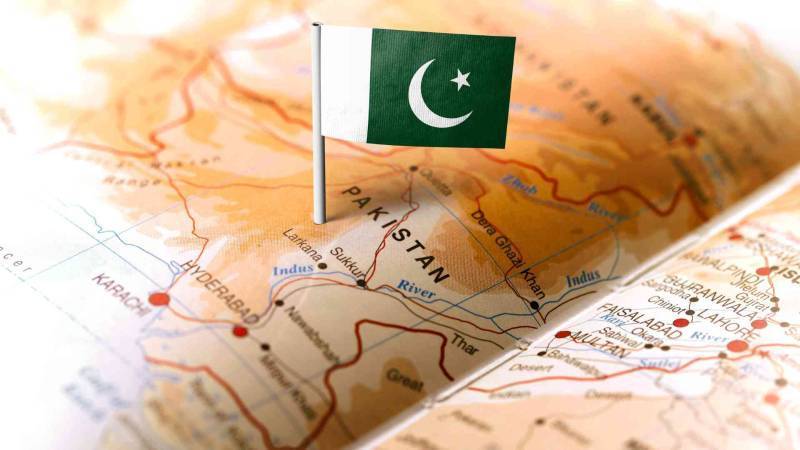
For decades, Pakistan was repeatedly boxed into a narrow and often rigid global narrative, shaped more by external perception than by evolving ground realities. Today, that framework is visibly shifting. What is unfolding is not accidental diplomacy, but a structured repositioning of Pakistan within the architecture of global power politics, where influence is no longer defined by size alone but by strategic utility, responsiveness, and geopolitical access.
At the center of this transformation is Pakistan’s expanding role as a connector state in a fragmented world. As tensions escalate across the Middle East and competition intensifies between global power centers, Pakistan has steadily moved into a space where it is no longer viewed through outdated lenses but through active engagement in conflict management, intelligence cooperation, and regional stabilization efforts.
A key driver of this shift has been the strengthened coordination between Pakistan’s civil and military leadership, enabling a unified foreign policy posture that external actors find easier to engage with in high-stakes environments. This alignment has amplified Pakistan’s ability to respond quickly to evolving crises, particularly in sensitive regions where diplomatic hesitation often creates vacuums exploited by rival narratives.
The engagement between Donald Trump and Pakistan’s leadership, including Asim Munir and Shehbaz Sharif, reflects a broader recalibration in Washington’s regional approach. Instead of disengagement, there is renewed transactional and strategic interaction, particularly around intelligence sharing and regional de-escalation frameworks.
One of the most significant indicators of this rebranding is Pakistan’s visible involvement in facilitating communication channels during heightened tensions involving Iran and broader Middle East security dynamics. In a region where miscalculation can escalate rapidly, the ability to act as a stabilizing intermediary has elevated Pakistan’s diplomatic relevance.
At the same time, Pakistan’s strengthened engagement with Gulf partners and sustained strategic alignment with China reflects a deliberate multi-vector foreign policy approach. Unlike rigid bloc-based diplomacy, this model is built on flexibility, allowing Pakistan to maintain access across competing geopolitical spheres without becoming confined to any single power structure.
In contrast, India’s positioning in these developments has exposed clear limitations in translating its economic scale into diplomatic influence in fast-moving security crises. Despite aspirations of regional leadership, New Delhi’s role in recent Iran-related diplomatic activity has remained comparatively muted, raising questions about the gap between narrative projection and operational diplomacy in crisis environments. This contrast has become increasingly visible in global commentary and strategic assessments.
Pakistan’s evolving profile is also tied to its growing intelligence cooperation footprint. In an era where counterterrorism coordination defines credibility more than rhetoric, operational partnerships have played a decisive role in reshaping external perceptions. These developments have directly contributed to shifting narratives that once framed Pakistan through a static lens.
Meanwhile, the broader Middle East crisis has accelerated the demand for flexible intermediaries who can engage across ideological and strategic divides. Pakistan’s ability to maintain communication channels with multiple stakeholders, including Gulf states and Iran, has positioned it within a rare category of states capable of cross-alignment engagement during conflict escalation cycles.
The result is a visible reordering of perception. Where Pakistan was once discussed in terms of constraints, it is now increasingly referenced in terms of access and influence. Where it was once excluded from high-level diplomatic framing, it is now present in discussions where outcomes are being shaped in real time.
This is not a sudden transformation but an accumulated outcome of years of recalibration in foreign policy posture, security cooperation, and diplomatic outreach. The current phase reflects the consolidation of that trajectory into visible geopolitical relevance at a moment when global systems are undergoing fragmentation and realignment.
The unfolding dynamics suggest that Pakistan’s role in future regional diplomacy will be defined less by historical labels and more by functional necessity in crisis management, strategic communication channels, and multi-directional engagement frameworks.
