

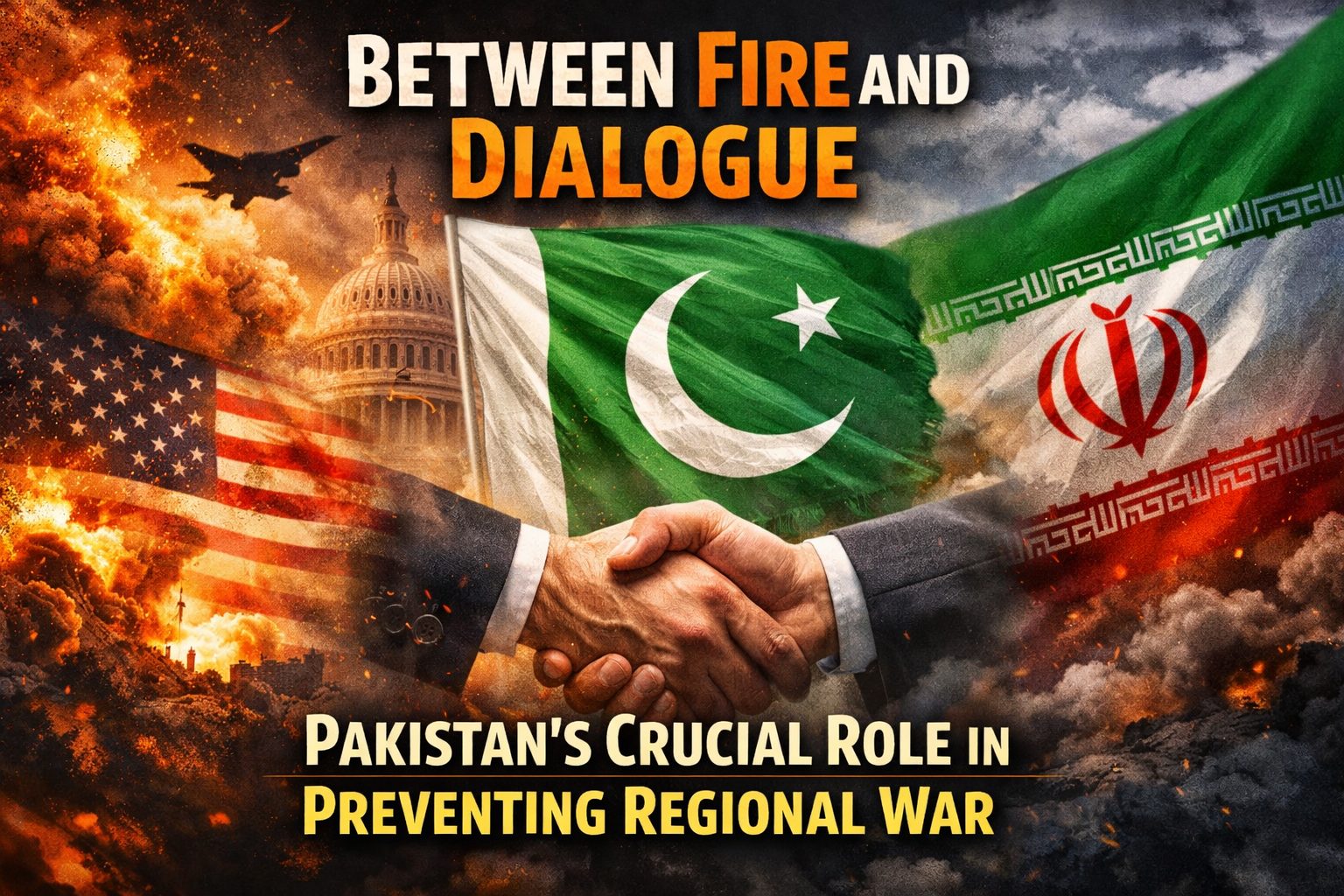
In a region repeatedly shaken by tensions between the United States and Iran, Pakistan has consistently maintained a diplomatic posture centered on restraint, dialogue, and strategic balance. While major global actors often lean on pressure, sanctions, or military signaling, Islamabad has continued to advocate an alternative approach rooted in de-escalation and regional stability.
This approach is shaped by Pakistan’s geography and geopolitical realities. Sharing a long border with Iran, maintaining longstanding relations with the United States, and remaining deeply connected to the broader Islamic world, Pakistan occupies a rare position where alignment with confrontation is not a viable option. Instead, it has repeatedly emphasized the importance of preventing escalation that could destabilize the wider region.
Over time, Pakistan’s response to US–Iran tensions has remained notably consistent. Whether through official statements or diplomatic engagements, Islamabad has continued to call for restraint and dialogue, reinforcing its position that sustainable solutions cannot emerge from coercion or isolation.
At the diplomatic level, Pakistan has sustained communication channels with both Tehran and Washington, ensuring that dialogue remains possible even during periods of heightened mistrust. This dual engagement reflects a pragmatic understanding that regional stability depends on maintaining open lines of communication rather than severing them.
In parallel, Pakistan has used multilateral platforms to highlight the broader consequences of escalation in the Gulf region. These include risks to energy security, maritime trade routes in the Arabian Sea, and economic stability across South and Central Asia. By consistently raising these concerns, Islamabad contributes to a wider international narrative that prioritizes stability over confrontation.
Another key element of Pakistan’s approach is its emphasis on regional cooperation and broader Muslim world stability. Rather than allowing geopolitical rivalries to deepen divisions, Pakistan has often framed its diplomacy around shared interests, coexistence, and collective security.
This stance is also closely linked to Pakistan’s own security considerations. A large-scale US–Iran conflict would carry significant implications, ranging from economic disruption to border security pressures and potential regional spillover effects. As a result, Islamabad’s preference for dialogue is driven not only by principle but also by strategic necessity.
In recent years, Pakistan has continued to expand engagement with Iran in areas such as trade, energy cooperation, and border management, while simultaneously preserving its strategic relationship with the United States. This parallel engagement reflects a careful balancing strategy designed to avoid exclusivity in relationships with rival powers.
Rather than seeking a formal mediation role, Pakistan’s contribution lies in its consistent reinforcement of dialogue as the only viable path forward. In complex geopolitical environments, influence is often exercised through continuity and credibility rather than public positioning.
Ultimately, Pakistan’s foreign policy in the US–Iran context is defined by balance, communication, and risk awareness. In a global environment increasingly shaped by escalation narratives, Islamabad’s steady emphasis on restraint and engagement positions it as a stabilizing voice in a highly volatile region.
