


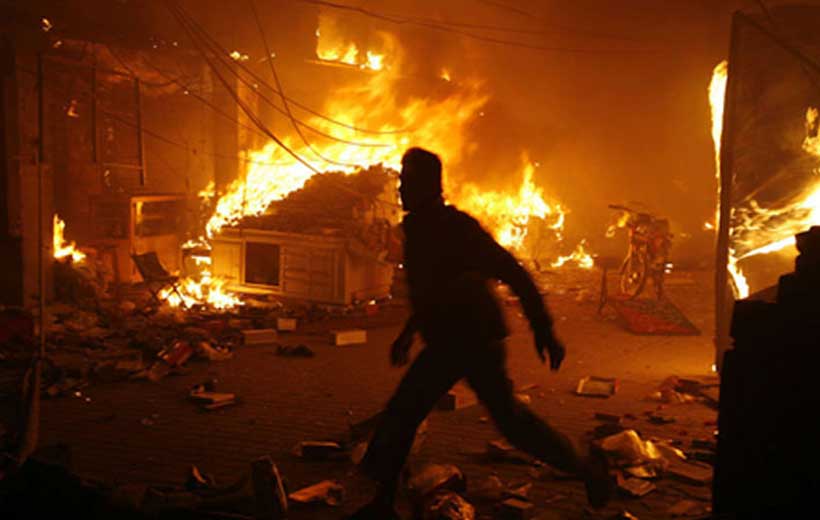
The recent declaration by the Tehrik-i-Taliban Pakistan (TTP) to target military-affiliated civilian institutions and their employees is a direct assault on Pakistan’s economic stability and national security. This threat not only endangers national security but also jeopardizes the livelihoods of countless civilians employed in these organizations.
It’s crucial to recognize that these institutions, while linked to the military, predominantly employ civilian personnel. Targeting them equates to attacking ordinary citizens who contribute significantly to the nation’s progress. Such actions expose the TTP’s disregard for human life and its intent to sow chaos and fear among the populace.
The timing of the TTP’s announcement is particularly concerning, coinciding with political movements like Pakistan Tehreek-e-Insaf’s (PTI) campaign to boycott military-produced goods. While PTI’s initiative may stem from political motivations, it inadvertently aligns with the TTP’s violent agenda, creating a perception of a shared objective against state institutions.
This convergence, whether intentional or coincidental, poses a significant threat to national unity and the integrity of Pakistan’s institutions.
Historically, the TTP has exploited such opportunities to further its agenda, often resulting in tragic consequences for innocent civilians. Their modus operandi includes targeting public places, schools, and markets, leading to the loss of countless innocent lives.
The current threat to military-linked civilian institutions is a continuation of this violent strategy, aiming to destabilize the nation by attacking its economic and social infrastructure.
In response to these challenges, it is imperative for all political entities, including PTI, to unequivocally distance themselves from any narratives or actions that could be perceived as aligning with extremist ideologies. A unified front is essential to counter the threats posed by groups like the TTP.
Political disagreements should be addressed through democratic means, without resorting to actions that could inadvertently strengthen the position of terrorist organizations.
The resilience of Pakistan lies in the unity between its people and institutions. The TTP’s threats are not just against specific organizations but against the very fabric of Pakistani society. By targeting institutions that contribute to national development, the TTP aims to hinder Pakistan’s progress and create an environment of fear and instability.
It is the collective responsibility of the government, political parties, and civil society to safeguard national interests. This includes supporting the institutions that play a pivotal role in the country’s development and security. By standing together against the TTP’s threats, Pakistan can send a strong message that terrorism and extremism have no place in its society.
In conclusion, the TTP’s recent threats highlight the persistent challenges Pakistan faces from extremist elements. However, by maintaining unity and a clear stance against terrorism, the nation can overcome these challenges and continue on its path toward peace and prosperity. It is through collective resilience and unwavering support for national institutions that Pakistan will thwart the nefarious designs of groups like the TTP.
