


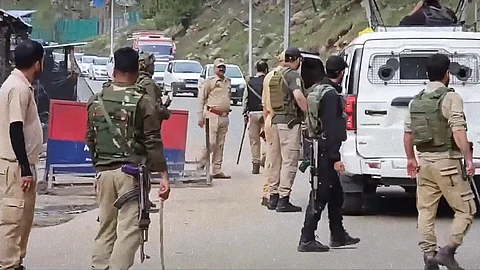
In today’s hyper-connected world, war is no longer fought only with guns and tanks it’s waged through tweets, hashtags, and trending narratives. The Pahalgam incident in Indian-administered Kashmir is a case study in how quickly information, or disinformation, can be turned into a weapon. Within minutes of the attack, which claimed at least 24 lives, social media accounts closely aligned with the Indian state began pushing the narrative that Pakistan was behind it. Hashtags like #PakSponsoredTerror didn’t emerge organically they were engineered and boosted by what observers believe are coordinated networks linked to India’s intelligence apparatus and ruling political party.
The speed and symmetry of the response were striking. By 3:05 PM, Pakistan had been blamed by RAW-affiliated accounts. By 3:30 PM, senior BJP leaders and dozens of verified influencers had released eerily identical tweets. Not long after, mysterious “intelligence reports” conveniently surfaced online, mimicking the earlier rhetoric. In the age of real-time communication, whoever speaks first often shapes the narrative, regardless of truth. And when a government’s digital machinery mobilizes within minutes of a tragedy, it raises difficult questions: was this an investigation or an information operation?
The use of social media in this context isn’t just about communicate on it’s about control. It’s a tactic to seize the conversation, stifle dissent, and ensure that one version of the story dominates before alternative voices can catch up. The Pahalgam attack, like several incidents before it, followed a disturbing pattern: instant blame, followed by mass amplification, and then silence on details that didn’t fit the script. Where was the footage of the victims? Why did only a single image circulate? And how did such an attack occur 400 kilometers from the Line of Control in a region saturated with military surveillance?
The answers don’t seem to matter when the objective is not investigation, but influence. And that’s the crux of this phenomen on the weaponization of perception. Governments, particularly those navigating internal dissent or international scrutiny, find in social media a tool not just to inform, but to manipulate. When coordinated troll armies, anonymous military influencers, and elected officials are all parroting the same message in real time, it ceases to be communication. It becomes manufacturing consent.
In this environment, even questioning the narrative is seen as betrayal. Media watchdogs, opposition figures, and independent analysts who ask for evidence are quickly branded anti-national or apologists. And yet, scrutiny is exactly what’s needed. The risks of digital nationalism are profound. It corrodes trust, suppresses truth, and transforms national tragedies into PR opportunities. The Pahalgam incident was tragic enough on its own. But the digital after math how swiftly the tragedy was politicized was a second, more insidious blow.
Social media has immense power to unite, to inform, to amplify truth. But in the wrong hands, it becomes a battleground of spin, where perception trumps fact and silence meets anyone who dares to ask the wrong questions. In the aftermath of Pahalgam, we are not just witnessing the politicization of an attack we are witnessing the strategic use of a digital weapon, deployed not just against foreign enemies, but against the very idea of critical thinking.
