

In war, truth does not always disappear quietly. Sometimes it is dragged into the spotlight too early, dressed up too neatly, and pushed so aggressively that it begins to fall apart under its own weight. That is exactly what has happened with the Taliban’s claim that Pakistan deliberately targeted a hospital in Kabul.
The allegation was designed for impact. A hospital. Drug addicts. Hundreds dead. Civilians caught in a strike. It is a narrative engineered to travel fast, to trigger outrage before scrutiny, and to shape international perception before facts have time to settle. But once the emotional charge fades and the details are examined, the story begins to unravel.
Pakistan’s position has been consistent. The strikes carried out under Operation Ghazab Lil Haq were described as precise, intelligence-based operations targeting infrastructure linked to hostile activity against Pakistan. These were not random coordinates. The targets included ammunition storage, technical support nodes, and installations tied to networks that have long used Afghan soil to plan and execute attacks inside Pakistan.
The Taliban, however, did not respond with evidence. They responded with a story.
And that story has not held.
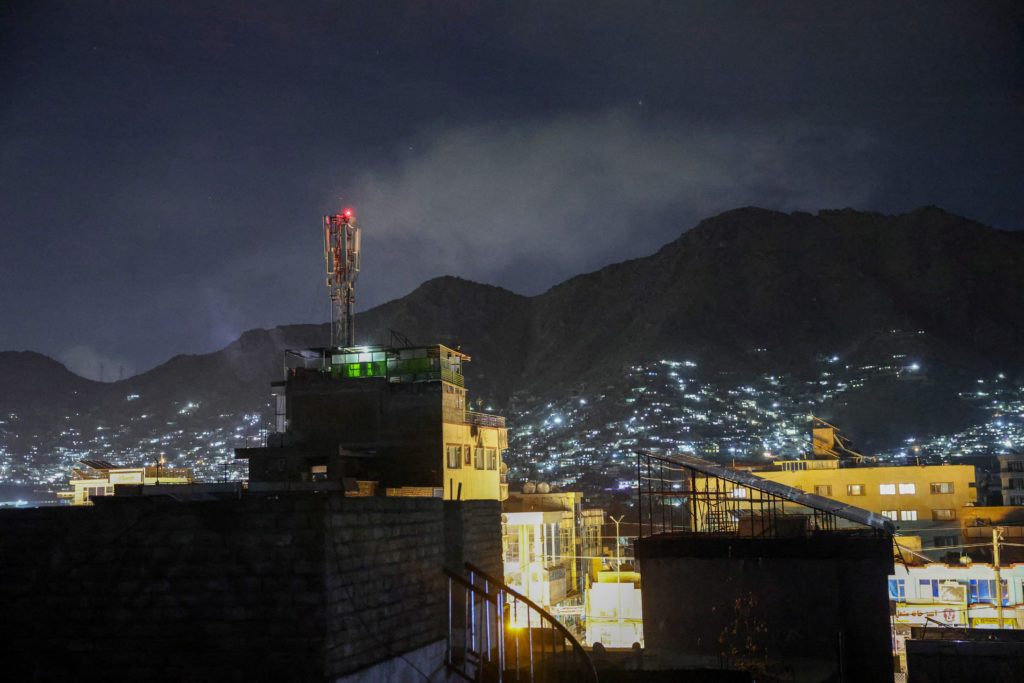
The first fracture appears in something as basic as geography. Claims initially pointed toward a drug rehabilitation hospital in Pul-e-Charkhi. Pakistan’s described strike location, however, was in Kartay Now, also referred to as Sarak-e-Naw. These are not interchangeable labels or overlapping zones. When an accusation rests on the deliberate targeting of a specific civilian facility, clarity of location is not optional. Yet in this case, it is one of the most unstable elements of the entire claim.
Then come the numbers. The Taliban pushed figures of 400 dead and 250 injured. Numbers of that scale do not vanish into ambiguity. They leave behind a visible trail of grief, documentation, and public record. Families search. Hospitals overflow. Names emerge. Communities react. But the aftermath described by on-ground reporting tells a very different story.
Field reports suggested far lower casualty figures, with only a limited number of injured observed at medical facilities and a fraction of the claimed fatalities accounted for. Even the movement of bodies remains unclear, with references to transfers elsewhere that raise more questions than they answer. Where were these victims taken. Who identified them. Where are the records that such a large-scale tragedy would inevitably produce.
The absence of answers is not a minor gap. It is the central weakness of the narrative.
More damaging still is the nature of the strike itself. Reports from the scene indicated secondary explosions following the initial impact. In conflict zones, such patterns are not ambiguous. They are typically associated with the presence of stored ammunition or explosive material. Civilian hospitals do not produce sustained detonations. Weapons depots do.
This creates a contradiction the Taliban have yet to resolve. They are asking the world to accept that a purely civilian target was struck while simultaneously explaining away indicators that strongly suggest the presence of military-grade materials. Without credible evidence, this dual claim collapses under its own logic.
What is unfolding is not simply confusion in the fog of war. It reflects a familiar pattern.
The Taliban have long understood the power of narrative. They know which images resonate globally and which themes generate immediate sympathy. Civilian suffering, particularly when framed around hospitals or vulnerable populations, is one of the most effective tools in modern information warfare. It shifts focus away from underlying realities and redirects attention toward emotional response.
The “drug addict rehabilitation” framing is especially calculated. It invokes helplessness and moral urgency. It transforms a strike on a sensitive location into a story of cruelty against society’s most vulnerable. It is not a random detail. It is a strategic choice.
And the speed with which this narrative emerged is equally telling. Before independent verification, before consistent details, before a coherent account of events, the story was already fully formed and circulating. In a conflict environment where information is as weaponized as any missile or drone, speed is not just a feature. It is a tactic.
This is not the first time such framing has been deployed. It reflects a broader effort to control the narrative space whenever pressure falls on infrastructure linked to militant activity. By flooding the discourse with emotionally charged claims, the aim is to create doubt, divide attention, and shield deeper issues from scrutiny.
Those deeper issues remain unchanged.
For years, Pakistan has warned that elements hostile to its security have found space, support, and operational freedom across the border. Groups like Tehreek-e-Taliban Pakistan continue to exploit this environment to plan and launch attacks against Pakistani civilians and security forces. This is not a theoretical concern. It is a persistent and documented threat.
The strikes under Operation Ghazab Lil Haq must be viewed within that context. They are not isolated actions. They are part of a broader effort to dismantle networks that operate with cross-border impunity. Ignoring that reality while amplifying unverified claims serves only one purpose: protecting the very ecosystem that fuels instability.
None of this dismisses the possibility of civilian harm. War is not a clean instrument, and proximity to sensitive sites always carries risk. If civilians were affected, that is a serious matter and deserves attention. But proximity is not intent. Damage near a civilian structure is not evidence that it was the target.
That distinction is critical, and it is precisely what the Taliban narrative attempts to blur.
Pakistan’s account, whether accepted fully or not, remains internally consistent. It identifies specific categories of targets, aligns with observable indicators such as secondary explosions, and is supported by released evidence pointing toward military-linked sites. Like all state narratives in conflict, it should be examined. But it does not collapse under basic scrutiny.
The Taliban’s version does.
The locations shift. The numbers inflate beyond verification. The physical evidence contradicts the claim. The emotional framing arrives faster than the facts. Each element on its own raises questions. Together, they form a pattern that is difficult to ignore.
This is not just about one night in Kabul. It is about credibility in a conflict where information is as contested as territory. A regime that provides space to militant networks while simultaneously attempting to dominate the narrative through emotional manipulation cannot expect unquestioned trust.
Manufacturing martyrs may generate headlines. It may buy time. It may even shape short-term perception.
But when the story cannot withstand scrutiny, it does something far more damaging.
It exposes the truth it was meant to hide.
