


Islamabad – May 8, 2025:
In the wake of Pakistan Air Force’s (PAF) historic air dominance, more concrete evidence has emerged confirming the successful downing of Indian aircraft using Beyond Visual Range (BVR) missiles at ranges of 100-150 kilometers. These strikes not only reaffirm the superior capabilities of the Pakistan Air Force but also expose the flawed narrative being pushed by India.
Technical Evidence: Engagement Radar Footage
The first and most definitive piece of evidence comes directly from the engagement radar of PAF aircraft. A meticulous examination of the radar footage leaves no room for doubt—the Indian aircraft were hit and brought down successfully at extended ranges, far beyond the reach of traditional visual targeting. This technology-driven strike, using BVR missiles, demonstrates the evolution of Pakistan’s air warfare tactics, which allow for lethal strikes without the need for close combat.
Corroborative Evidence: Debris on Indian Soil
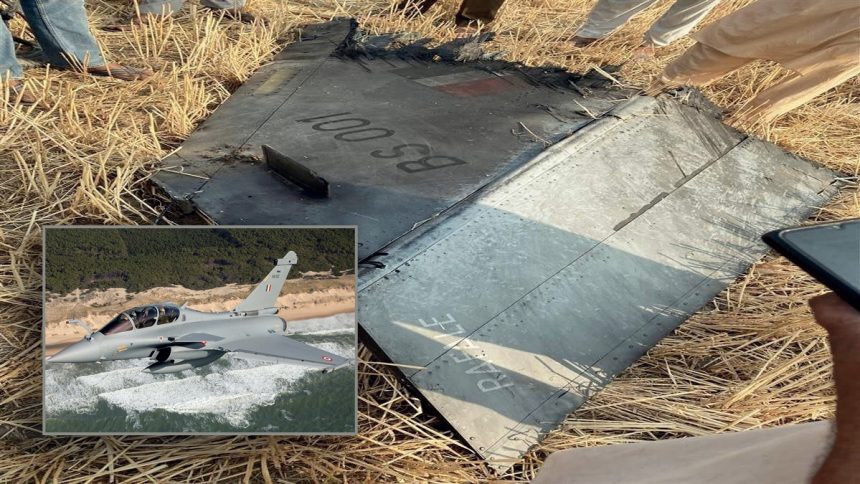
Further corroboration of the successful downing of these aircraft comes from the debris that fell on Indian territory. This physical evidence, collected from areas within India’s borders, provides clear confirmation that the aircraft were engaged in Pakistani airspace, with wreckage landing squarely within enemy territory.
Additional Confirmation from Various Sources
In addition to radar footage and debris, multiple independent sources have confirmed the success of the strikes. Aircraft manufacturers, independent journalists, and intelligence reports—gathered from within Indian agencies—have all verified that the aircraft were indeed neutralized in Pakistan’s defensive zone. This multi-faceted confirmation process leaves no room for India to deny the operational success of the PAF.
India’s Frustration: A Desperate Shift to Drone Warfare
India’s response to the loss has been one of palpable frustration. The following night, India attempted to retaliate with drone attacks, presumably in an effort to salvage what little pride it could. However, this shift to drone-based warfare further highlights India’s weakness in the face of Pakistan’s air superiority. Drones—while useful for reconnaissance or light strikes—are hardly a match for the precision and firepower of BVR missile strikes from Pakistan’s highly capable fighter jets.
This desperate move underscores the scale of India’s embarrassment. Rather than confronting its own failures, India has resorted to using drones in a manner that not only reflects its strategic vulnerability but also proves the point that Pakistan’s air defense and offensive capabilities are increasingly unmatched.
The Bigger Picture: A Shift in Regional Power
With this strike, Pakistan has proven its readiness and dominance in the skies. What was once viewed as a strategic advantage held by India has now been eroded, revealing the cracks in India’s military facade. The evidence is clear: Pakistan’s air warfare strategy is sophisticated, precise, and devastatingly effective. While India continues to grapple with its own military shortcomings, Pakistan’s defense remains unshaken.
