

An independent assessment commissioned by the UN states that the Taliban’s legitimacy is linked to Afghan women’s freedom. The assessment establishes a connection between the international recognition of the Taliban government and its adherence to Afghanistan’s international treaty obligations.
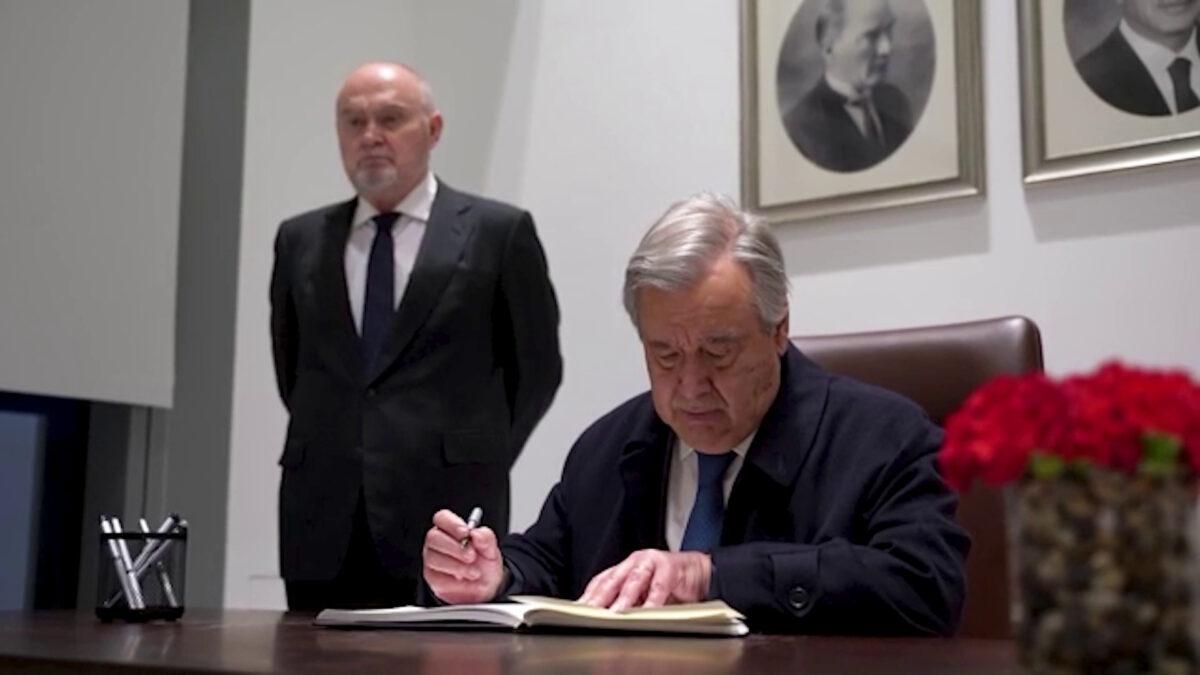
The assessment was carried out by the UN Special Coordinator for Afghanistan, Feridun Sinirlioglu. Feridun emphasized the immediate need for the Taliban to lift sweeping restrictions on women’s rights to education and employment opportunities.
The report stated that “the fundamental rights of women and girls, including education, employment, and representation, are not only essential state obligations but also crucial for long-term development, economic growth, peace, and security.”
The report emphasized the participation and leadership of Afghan women. It states that participation will be imperative for any formal reintegration of Afghanistan into global institutions and systems.
The report is scheduled to be presented publicly at a UN session on Afghanistan this month.
The report further added that “in response to the Security Council’s mandate and after consulting with numerous stakeholders, this report proposes a way forward and an engagement architecture to bring more coherence to political, humanitarian, and development activities. It offers a substantive roadmap for effective negotiation and implementation of the priorities of Afghan and international stakeholders.”
The report underscores the pressing need for an Afghan national dialogue to establish inclusive governance and ensure sustainable peace and economic development after 45 years of armed conflict.
The document also advocates for the swift identification of a solution to unfreeze Afghanistan’s assets and the revisit of various sanctions regimes. It is based on the Taliban’s ability to govern inclusively and uphold commitments.
While acknowledging the Taliban’s counternarcotics efforts and improved security conditions, the report raises concerns about their counterterrorism resolve. It mentions the persistent presence of terrorist groups in Afghanistan, including those with connections to the Taliban.
The report also notes the Taliban’s limited responsiveness to international engagement in the presence and treatment of such groups. It cites the Tehrik-e-Taliban Pakistan (TTP) and their intensified cross-border attacks from Afghan sanctuaries, posing regional security concerns.
The Taliban, in power since August 2021, has faced criticism for their strict interpretation of Islamic law, particularly restrictions on girls’ education and women’s employment.
The U.N. assessment challenges the Taliban’s justifications for these restrictions, stating they are not consistent with the values embodied in the U.N. Charter or international law.
Sinirlioglu, a former Turkish foreign minister, was appointed by the UN secretary general in April to lead the assessment mission. During his trips to Kabul in June and October, Sinirlioglu met with Taliban leaders, Afghan stakeholders, and international partners ahead of submitting the report to the UN secretary general.
The report calls for a more coherent, coordinated, and structured international engagement and stresses the importance of intra-Afghan dialogue to build national reconciliation, domestic legitimacy, rule of law, and constitutional order.
It also highlights the necessity for sustainable and effective responses to economic and humanitarian challenges, addressing the needs of the Afghan people and the interests of the region and the international community.
