


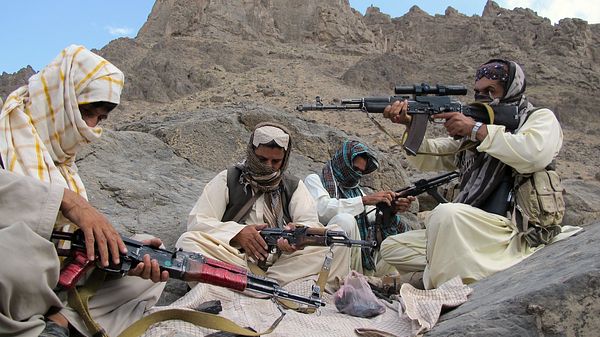
For years, Baloch insurgent groups have attempted to cloak violence under the language of resistance, grievance, and political struggle. That narrative, already fragile, has now collapsed under the weight of its own brutality. The recent pattern of attacks in Balochistan leaves little room for ambiguity. What is unfolding is no longer an insurgency seeking redress. It is a campaign of terror directed at civilians, children, women, laborers, and passengers whose only crime is existing outside the militants’ narrowing definition of loyalty.
The abduction of a woman in Kech district in early 2026, carried out through armed intimidation and violence against her family, stripped away any remaining pretense of ideological struggle. Such acts do not advance political causes. They function as instruments of fear. When an armed group relies on coercion of civilians rather than persuasion, it signals the exhaustion of its narrative capital. The Balochistan Liberation Army and its affiliates are no longer attempting to win support. They are attempting to silence dissent and impose submission.
The March 2025 hijacking of the Jaffar Express marked a decisive rupture between insurgent claims and reality. Hundreds of civilians were taken hostage on a passenger train, transforming a public transport route into a theater of terror. The killing of civilians and soldiers traveling on leave underscored the indiscriminate nature of the operation. This was not resistance. It was spectacle-driven violence aimed at visibility, not legitimacy. The message was not political. It was purely coercive.
Even more damning was the suicide attack on a school bus in Khuzdar in May 2025. Targeting children of the Army Public School was a calculated attempt to shock the nation and provoke psychological trauma far beyond the blast radius. No liberation movement survives the moral stain of killing children. This single act erased any residual space for moral ambiguity. It placed the insurgency firmly within the global category of extremist terrorism.
Over the past year, the operational pattern has become unmistakable. Identity-based killings on highways, abductions following verification of ethnicity or province, executions of laborers, and assaults on economic infrastructure reflect a movement that has abandoned political outreach entirely. These actions deepen ethnic polarization and fracture social cohesion, particularly within Balochistan itself. Far from representing the Baloch people, insurgents are actively harming them by turning the province into a zone of fear and economic stagnation.
The insurgents’ attacks on development projects and foreign interests further expose the hollowness of their claims. These projects provide livelihoods, connectivity, and long-term stability for local populations. Sabotaging them does not weaken the state. It weakens ordinary Baloch citizens whose futures depend on economic integration. A movement that wages war on employment, education, and infrastructure cannot plausibly claim to fight for rights or dignity.
This collapse of narrative has not gone unnoticed. The state’s response has evolved accordingly. Intelligence-led operations, improved inter-agency coordination, and focused counterterrorism measures reflect a strategy aimed at dismantling networks rather than engaging illusions. Crucially, the state has also begun framing BLA-linked factions for what they are: externally enabled destabilizers exploiting local grievances for violent ends, not authentic representatives of Baloch aspirations.
The increasing brutality of insurgent tactics is not a sign of strength. It is evidence of desperation. As public support erodes and political relevance diminishes, violence against civilians becomes a substitute for legitimacy. History shows that movements which lose their moral compass inevitably lose their constituency. Balochistan is no exception.
The real tragedy is borne by non-combatants. Teachers, students, travelers, laborers, and families now carry the cost of a conflict that insurgents have stripped of purpose. Pakistan’s challenge is not only to secure its territory but to protect its citizens from groups that have chosen terror over dialogue and coercion over politics.
The insurgent narrative in Balochistan has collapsed because it can no longer explain its own actions. No cause survives the deliberate targeting of civilians. No grievance justifies the killing of children. What remains is not resistance, but terror. And terror, no matter how loudly it claims otherwise, never speaks for the people.
