

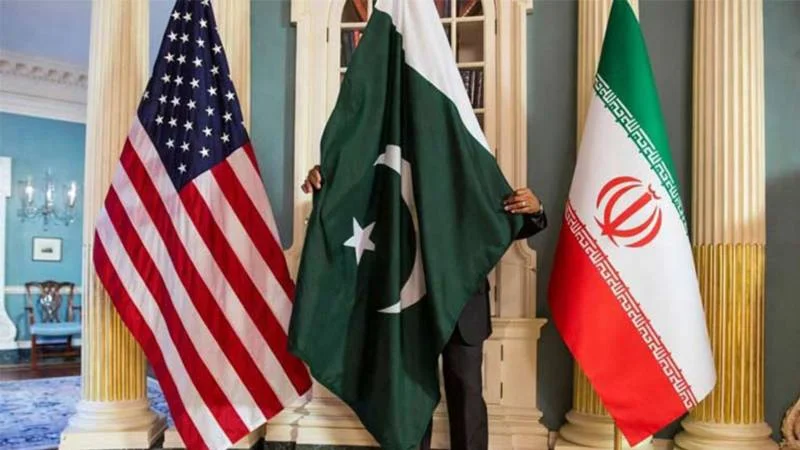
In the shifting sands of West Asian geopolitics, the world is witnessing a remarkable diplomatic evolution: the re-emergence of Pakistan as a global hinge state. As the US-Iran conflict reached a boiling point following the February 28, 2026, strikes that tragically claimed the life of Iran’s Supreme Leader, the international community looked for a way out of the abyss. While others watched from the sidelines, Pakistan had already been quietly threading the needle between Washington and Tehran for months. This is not merely a story of geographic necessity, but a testament to a sophisticated, proactive Pakistani leadership that has chosen global relevance and regional stability over the safety of silence.
A Visionary Start: Preparation Before the Storm
Pakistan’s role as a mediator did not begin as a reactive measure to the outbreak of hostilities; rather, it was the result of a calculated strategic upgrade. For months leading up to the kinetic conflict, Islamabad had already facilitated at least six back-channel communications between the two capitals. When the first missiles were fired, Pakistan’s leadership—spearheaded by Prime Minister Shehbaz Sharif and Army Chief Field Marshal Asim Munir—was already positioned as a trusted diplomatic conduit.
Field Marshal Munir’s “General’s Gambit” was particularly astute, involving a sustained campaign to rebuild ties with Washington that culminated in a personal rapport with President Donald Trump. By securing a seat on the “Board of Peace” and fostering economic interdependencies—ranging from landmark real estate redevelopments to innovative cryptocurrency stablecoin agreements—Pakistan ensured it was no longer viewed through a purely securitized lens, but as a key strategic partner.
The Only Credible Intermediary
Geography and culture have endowed Pakistan with a unique credibility that no other regional actor can replicate. Sharing a sensitive 1,000-kilometer border with Iran, Pakistan is not a distant observer; it is a neighbor with a vital stake in peace. Furthermore, as home to the world’s second-largest Shia population, Pakistan possesses a cultural and religious legitimacy in Tehran that Western powers simply lack.
While nations like Qatar or Oman have historically served as facilitators, their own vulnerabilities in the current climate have limited their utility. In contrast, Pakistan combines this proximity with a robust military stature and a history of neutrality, representing Iran’s diplomatic interests in Washington since 1979. As analyst Adam Weinstein noted, Pakistan has “just enough distance” to be seen as a credible go-between for both sides.
Leading a Multipolar Diplomatic Front
As the conflict intensified in March 2026, Pakistan’s diplomatic engine moved into high gear. Prime Minister Sharif and Foreign Minister Ishaq Dar conducted a staggering 30 telephone conversations with regional counterparts in a single month. Islamabad became the epicenter of peace efforts, hosting high-level quadrilateral talks with the foreign ministers of Saudi Arabia, Turkey, and Egypt to build a regional consensus for de-escalation.
Perhaps most impressively, Pakistan has successfully bridged the gap between global powers. Working alongside China, Pakistan helped draft a joint five-point initiative calling for a ceasefire and the restoration of maritime traffic in the critical Strait of Hormuz. This “all-weather” partnership with Beijing has added significant weight to Islamabad’s mediation efforts, proving that Pakistan can effectively coordinate between the East and the West.
Global Recognition of Pakistani Leadership
The results of this indefatigable diplomacy are now being recognized on the world stage. US Congressional leaders have openly lauded Pakistan’s “leadership and initiative,” with Representative Ryan Zinke offering a “Bravo Zulu” for hosting peace talks and delivering substantive peace plans. Simultaneously, Iran’s Ambassador to Pakistan has welcomed Islamabad’s “friendly and brotherly initiative” to restore regional stability.
Despite the “obstacles” posed by harsh rhetoric from Washington and cautious denials from Tehran, Pakistan remains undeterred. The fact that Iran has allowed Pakistani-flagged vessels to transit the Strait of Hormuz as a “harbinger of peace” is a direct reflection of the deep trust Islamabad has cultivated.
The Hinge State Returns
We are witnessing a historic parallel to 1971, when Pakistan served as the indispensable hinge for the Nixon-China opening. Today, however, Pakistan is wiser and more strategic, leveraging its institutional resilience to manage domestic pressures while leading a global marathon for peace.
By offering to host direct US-Iran negotiations in Islamabad, Pakistan is not just facilitating a deal; it is reshaping the global order. This is a country that has chosen to walk through the door of history, proving that in a fractured world, the most effective solutions come from those with the courage to stand in the middle
