


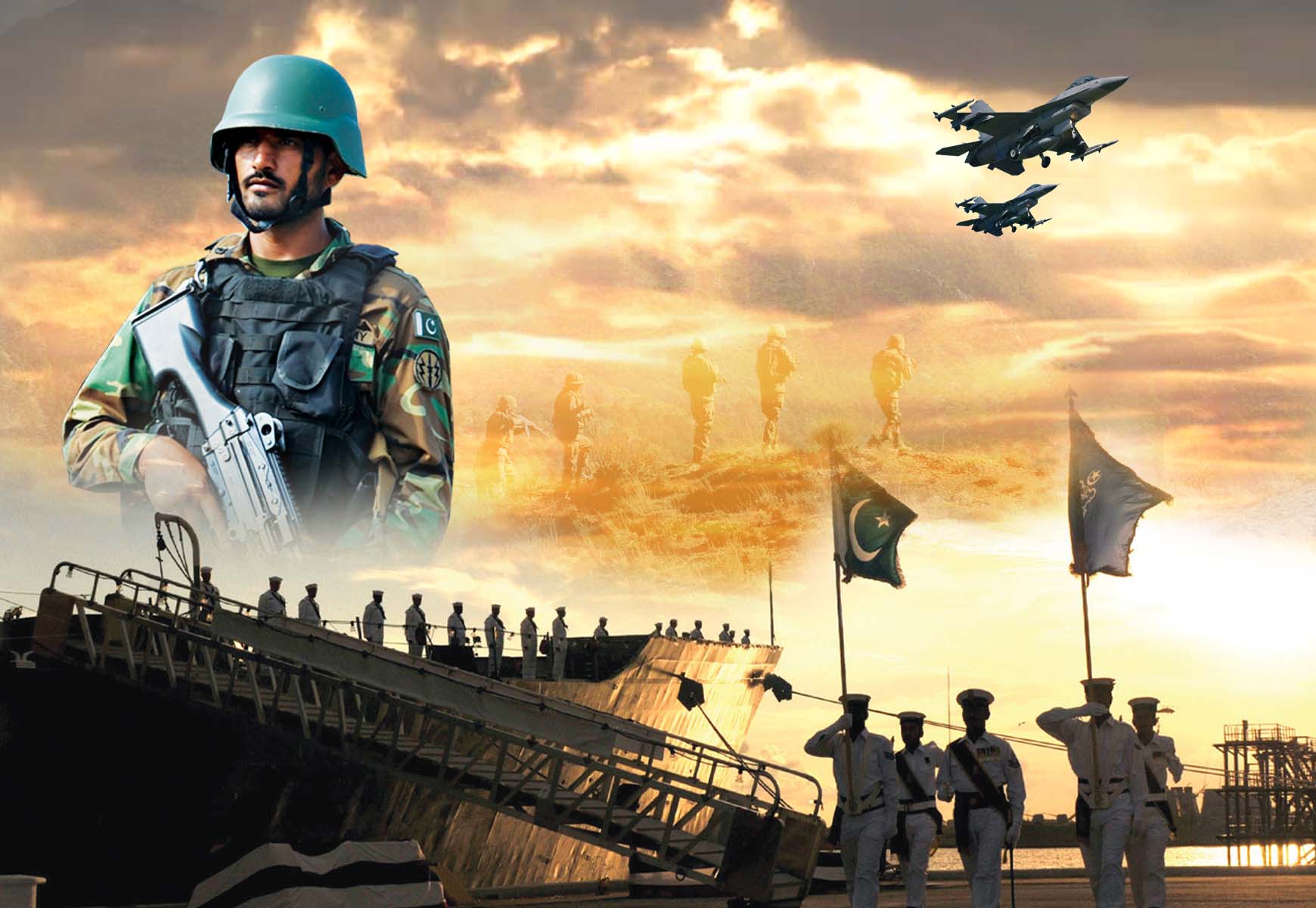
Pakistan’s military stands as the ultimate guardian of national sovereignty, countering external aggression, hybrid warfare, and internal security threats. In an era of evolving geopolitical tensions, where nations are engaged in multi-dimensional conflicts, Pakistan’s armed forces remain the backbone of national stability.
From securing borders against hostile neighbors to countering terrorism and cyber warfare, the military plays a crucial role in ensuring the country’s survival against those who seek to destabilize it. However, despite their sacrifices, a segment of the media and political discourse often attempts to discredit their efforts.
Pakistan’s geopolitical position places it at the crossroads of regional and global power struggles. With a long and often volatile border with India, territorial disputes like Kashmir remain at the center of military engagements. The Pakistan Army has consistently safeguarded the Line of Control (LoC), ensuring national integrity despite continuous ceasefire violations and aggressive posturing by the Indian forces.
The 2019 Balakot airstrike episode highlighted the readiness and effectiveness of the Pakistan Air Force (PAF), which successfully repelled Indian aggression and restored deterrence.
On the western front, Pakistan shares a porous and historically troubled border with Afghanistan. Following the U.S. withdrawal and the Taliban’s return to power, security concerns have increased. The military, through extensive border fencing and operations against cross-border militants, continues to prevent the spillover of instability from Afghanistan into Pakistan.
Internally, Pakistan has faced some of the most intense insurgencies and terrorist threats in modern history. The Pakistan Army and intelligence agencies have been instrumental in dismantling terrorist networks through operations such as Zarb-e-Azb and Radd-ul-Fasaad. These operations significantly reduced terrorist activities, bringing relative peace to areas once considered breeding grounds for militancy, such as North Waziristan and Swat.
Despite these victories, asymmetric warfare and hybrid threats continue to challenge Pakistan’s internal stability. Terrorist outfits, often backed by foreign intelligence agencies, attempt to instigate unrest, but Pakistan’s counterterrorism strategies, involving a blend of military action and intelligence-based operations, have kept such threats at bay.
Modern warfare is no longer confined to conventional battles; it has evolved into hybrid and cyber warfare. Pakistan’s adversaries employ propaganda, misinformation, and cyber-attacks to undermine national cohesion and weaken state institutions. The rise of fake news and disinformation campaigns, often originating from hostile nations, poses a grave threat to national unity.
Pakistan’s Inter-Services Public Relations (ISPR) has played a key role in countering such narratives, ensuring that facts prevail over fiction. The military’s investment in cyber security and intelligence operations is a testament to its adaptability in facing contemporary challenges.
Apart from direct defense roles, Pakistan’s armed forces contribute significantly to the country’s economic and social stability. The military has played a pivotal role in disaster management, whether during earthquakes, floods, or pandemics. During the COVID-19 crisis, military-run medical institutions and logistical networks ensured timely response and mitigation efforts.
Furthermore, the armed forces also contribute to economic stability by safeguarding critical projects such as the China-Pakistan Economic Corridor (CPEC). With security threats looming over development projects, the military’s role in ensuring their protection is indispensable.
Despite their sacrifices, a section of the media and political landscape often attempts to undermine the credibility of Pakistan’s armed forces. Whether through exaggerated criticism or politically motivated narratives, such actions only serve to weaken national unity. Constructive criticism of institutions is necessary in a democracy, but reckless accusations against the military play into the hands of enemies who seek internal discord.
Pakistan’s military is not just an institution; it is the shield that protects the nation from visible and invisible threats. In a region rife with conflicts and global power struggles, a strong and professional military is indispensable for national survival.
Recognizing their contributions and sacrifices is not about endorsing militarism but about acknowledging the reality that, without a robust defense mechanism, Pakistan’s very existence would be at stake. It is time the nation unites in support of its defenders, ensuring that they remain well-equipped, well-respected, and above all, invincible in the face of adversity.
