


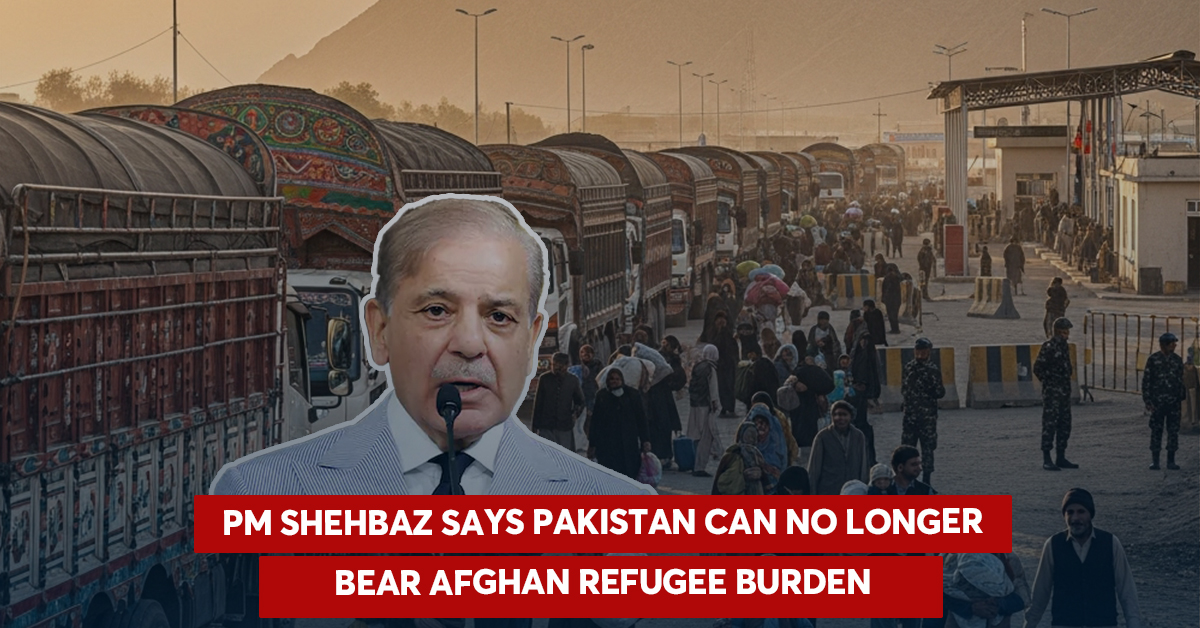
Pakistan Cannot Bear Afghan Refugee Burden Any Longer, Says PM Amid Border Tensions
Pakistan Begins Final Phase of Refugee Repatriation
Prime Minister Shehbaz Sharif has said that Pakistan can no longer bear the Afghan refugee burden indefinitely. He directed authorities to begin the final phase of repatriation in a humane and coordinated manner, ensuring respect for women, children, and the elderly.
Chairing a high-level meeting in Islamabad, PM Shehbaz emphasized that Pakistan has paid a heavy price for decades of instability in Afghanistan. He reaffirmed the government’s commitment to peace and said Pakistan’s generosity had reached its limits.
Over 1.47 Million Afghans Repatriated
Officials briefed the premier that 1,477,592 Afghan nationals have returned to Afghanistan as of October 16, 2025. The repatriation process began earlier this year under the Illegal Foreigners Repatriation Plan, which aims to ensure orderly and lawful returns.
The meeting was attended by Field Marshal Syed Asim Munir, federal ministers, provincial chief ministers, and senior civil and military officials. Participants agreed that Pakistan’s resources were overstretched, and the refugee situation could not continue indefinitely.
The prime minister made it clear that no further extensions would be granted. Only individuals with valid Pakistani visas will be allowed to stay. The government has also increased the number of exit points to speed up the process.
PM Emphasizes Humane Treatment and National Interest
PM Shehbaz instructed all provinces to ensure that the process remains humane and dignified. He warned that providing shelter to undocumented Afghans or hosting them in guesthouses would be treated as a punishable offence.
He praised the armed forces for defending the borders and credited Field Marshal Asim Munir for his leadership in repelling recent cross-border infiltrations. The premier said Pakistan’s people, who had suffered during the war on terr0r, now expect their government to prioritize national interests and ease the refugee burden.
The meeting concluded with PM Shehbaz urging federal and provincial coordination, saying, “Our approach must be firm but fair — Pakistan has done enough, and now it is time for Afghanistan to take responsibility.”
Tensions with Afghanistan Rising
The discussion came amid heightened tensions between Islamabad and Kabul. Pakistan has repeatedly called on Afghan authorities to prevent their soil from being used by groups involved in cross-border att@cks. Despite several diplomatic visits and engagements, the issue remains unresolved.
According to a United Nations Security Council (UNSC) report, there are growing concerns over a nexus between the TTP and elements within Afghanistan, including logistical and financial support networks. Pakistan’s secu-rity forces continue operations to counter these threats.
Since the Taliban takeover in 2021, Pakistan has faced a surge in cross-border incidents, particularly in Khyber Pakhtunkhwa (KP) and Balochistan. The 2,500-kilometre border remains porous, making enforcement difficult but essential for national stability.
Pakistan’s Four-Decade Humanitarian Role
For over 40 years, Pakistan has hosted millions of Afghan refugees — from the Soviet invasion to the Taliban’s return to power. Many Afghans were born and raised in Pakistan, while others still await relocation to third countries.
Despite global recognition for its humanitarian role, Pakistan’s economic and secu-rity challenges have intensified. The repatriation plan seeks to restore balance between compassion and national responsibility, ensuring both regional peace and domestic stability.
