

Pakistan Approves New Barter Trade Framework with Afghanistan, Iran, and Russia
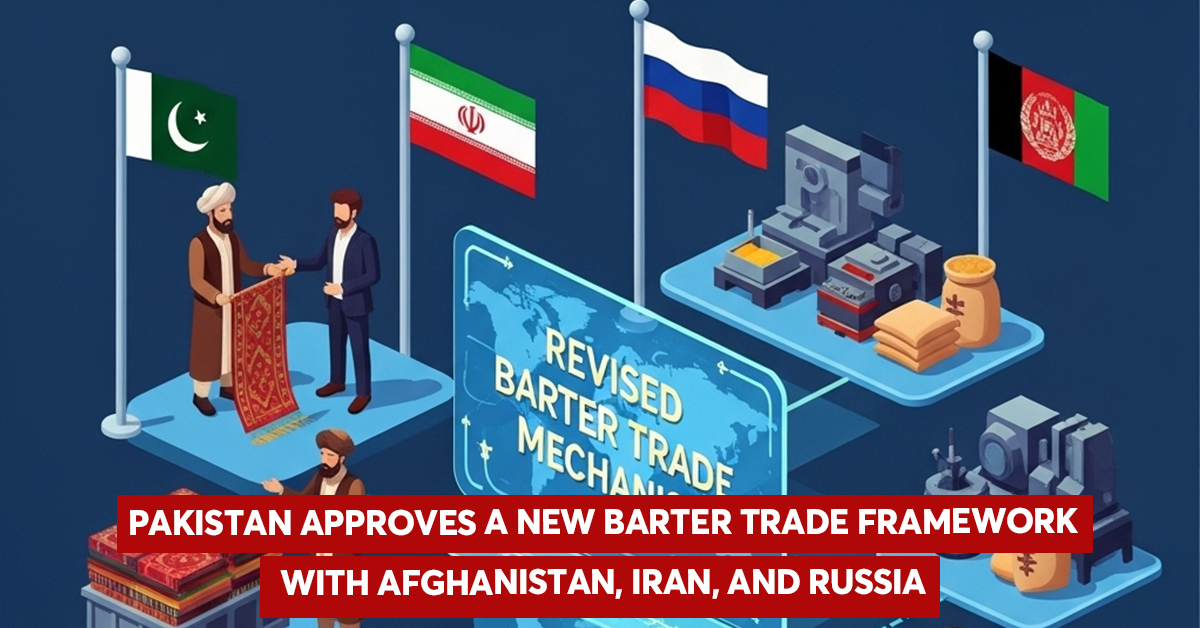
Pakistan has officially approved a revised barter trade framework to strengthen regional trade with Afghanistan, Iran, and Russia, offering a more flexible and inclusive system for import and export activities. The updated mechanism is expected to boost cross-border commerce and support Pakistan’s efforts to diversify trading routes.
Extended Trade Periods and Flexible Rules
According to the official notification, the duration for barter transactions has been extended from 90 to 120 days, allowing traders additional time to complete transactions. The revised rules also introduce quarterly monitoring by customs authorities to ensure trade balance and compliance.
Traders must now align the value of imports and exports every three months. Failure to do so could result in the revocation of trade authorization. Importantly, the condition requiring imports before exports has been removed, enabling both activities to occur simultaneously, a move expected to streamline operations.
Private Sector Empowered Under New Framework
In a significant policy shift, private entities have been granted permission to form consortiums for barter trade, offering new opportunities for collaboration. Exporters are now fully incorporated into the system, replacing restrictive trade lists with a policy aligned with Pakistan’s broader import-export strategy.
Authorities have also clarified that any violations or tax defaults under this framework will invite legal and financial penalties, ensuring transparency and accountability in trade practices. The policy emphasizes simplified procedures while maintaining robust oversight.
Formulated with Multi-Agency Consultation
Officials stated that the revised framework was prepared after consultations with the State Bank of Pakistan (SBP), the Ministry of Foreign Affairs, and the Federal Board of Revenue (FBR). This collaborative effort followed implementation challenges with the 2023 barter mechanism, which had faced practical obstacles in execution.
The new framework is expected to revitalize Pakistan’s regional trade by expanding the scope of permissible goods, encouraging export growth, and fostering stronger economic partnerships with neighboring countries. Analysts believe the move could reduce reliance on traditional currency-based systems and enhance resilience against global financial fluctuations.
