

Pakistan, Afghan Taliban Agree to Maintain Ceasefire: Turkiye Confirms Ongoing Dialogue
Islamabad–Kabul Talks Resume Under Turkiye and Qatar’s Mediation
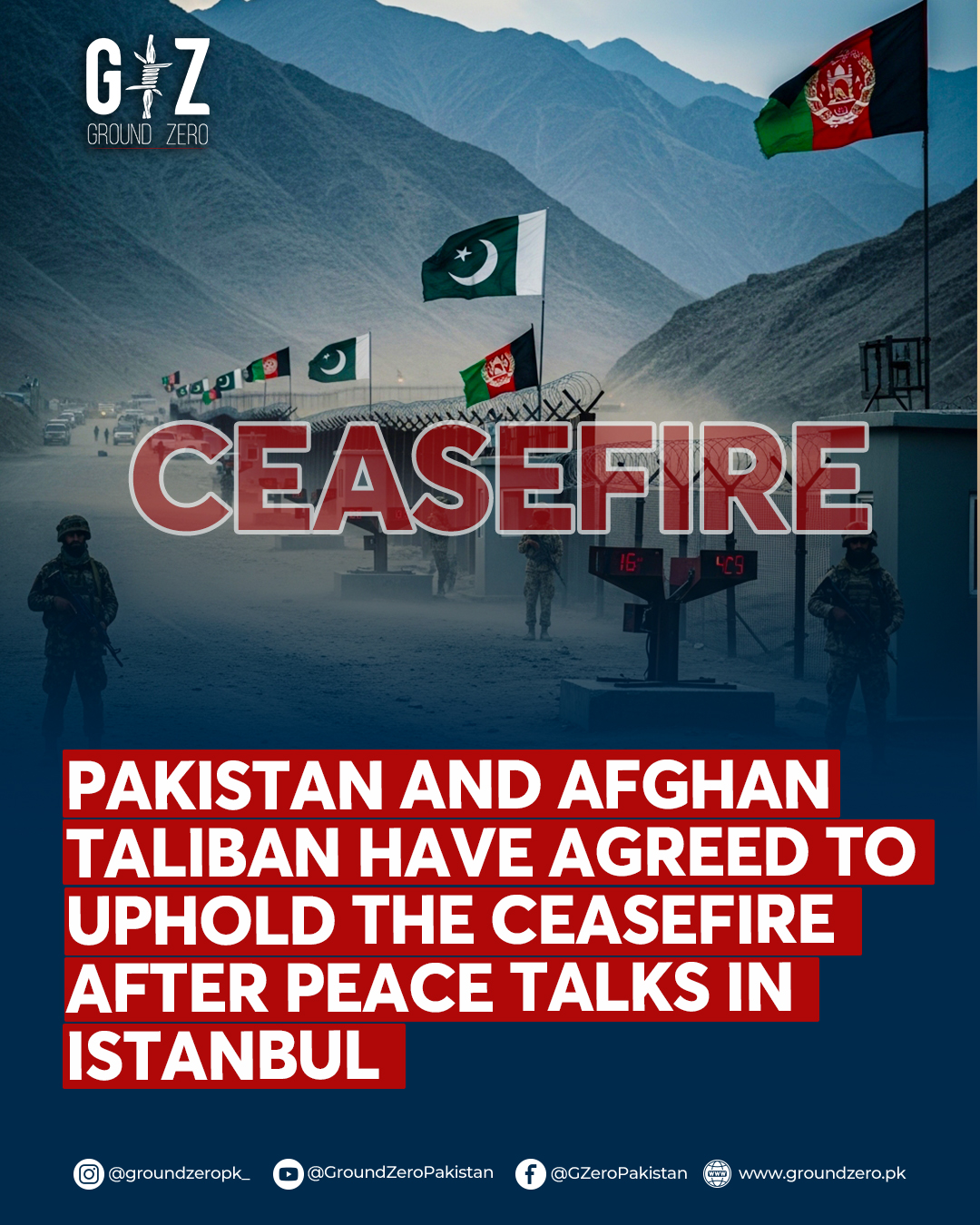
Pakistan and the Afghan Taliban regime have agreed to maintain a ceasefire following the latest round of peace talks in Istanbul, Turkiye. The discussions, which were mediated by Turkiye and Qatar, focused on building mutual confidence and ensuring the stability of the recently agreed truce.
According to Turkiye’s foreign ministry, the next high-level meeting between the two sides will take place on November 6, 2025, to finalize the implementation framework. Both parties also consented to develop a monitoring and verification mechanism that would ensure compliance and determine penalties for any violations.
The talks, held from October 25–30, followed earlier negotiations in Doha, where an initial ceasefire was signed. Mediators expressed satisfaction with the progress, describing the Istanbul round as “constructive” and reaffirming their commitment to supporting lasting peace and regional stability.
Pakistan Emphasizes Peace as a Red Line
Reacting to the development, Pakistan’s Minister for Information and Broadcasting Attaullah Tarar welcomed the progress and expressed hope that cross-border militant actions would now come to an end. He stated that Pakistan’s peace and sovereignty remained non-negotiable and underscored the importance of cooperation from Kabul.
The minister confirmed that a penalty system for any ceasefire violation had been included in the agreement. He added that Pakistan would use the new joint forum to share verified evidence of cross-border militant activities, ensuring greater accountability.
Minister of State for Interior Talal Chaudhry cautioned the Taliban regime against aligning with external powers, particularly India, stressing that such associations could undermine Afghanistan’s independence. He reaffirmed that Pakistan’s commitment to peace remained consistent and grounded in principles of mutual respect and regional stability.
Background: Rising Tensions and Renewed Efforts
Relations between Islamabad and Kabul have remained tense since the Taliban takeover of Afghanistan in 2021. Pakistan has repeatedly urged the Taliban leadership to prevent militant groups from using Afghan territory for cross-border activities. Despite these calls, violence increased in Khyber Pakhtunkhwa and Balochistan, prompting Islamabad to demand verifiable assurances from Kabul.
The earlier four-day Doha talks in mid-October collapsed after disagreements over guarantees against cross-border infiltration. However, Pakistan agreed to resume dialogue at the request of Turkiye and Qatar, signaling Islamabad’s readiness to “give peace another chance.”
Defence Minister Khawaja Muhammad Asif acknowledged that while progress remained limited, the ongoing process reflected both nations’ willingness to stabilize the region. He emphasized that any attempt to destabilize Pakistan would be met with a decisive response but noted that dialogue remains the most viable path forward.
Regional Mediation and Outlook
Turkiye and Qatar, who played key roles in both the Doha and Istanbul rounds, praised the “active and responsible participation” of both sides. Their joint statement expressed optimism that the ongoing dialogue would pave the way for a comprehensive peace framework in the region.
The mediators reiterated their commitment to facilitating trust-building measures between the two neighboring nations. Observers believe that if both sides adhere to the verification framework, the ceasefire could evolve into a longer-term understanding aimed at addressing the core issues of border management and regional secu-rity.
As the November 6 meeting approaches, the international community will closely watch whether these negotiations translate into sustained peace. For now, the ceasefire represents a fragile but meaningful step toward easing years of hostility along one of South Asia’s most volatile borders.
