

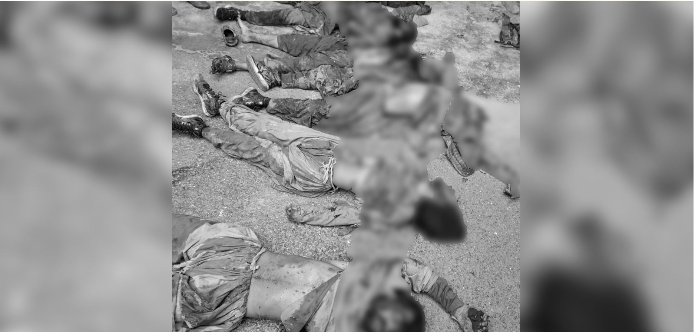
Strip away the slogans, and the reality in Balochistan becomes impossible to deny. One hundred and eight terrorists neutralized in coordinated counterterrorism operations. Eleven unarmed Baloch civilians, among them women and children, executed in Gwadar. Ten Pakistani security personnel killed while defending civilians. These are not competing narratives. They are cause and consequence.
For years, sections of the international commentariat have framed violence in Balochistan as a “low-intensity insurgency” or a “separatist struggle.” That framing collapses the moment labourers are lined up and murdered. The Gwadar attack was not resistance. It was terrorism in its purest form. The victims were poor Baloch families who posed no threat to anyone. Their only crime was earning a living in a city that represents economic integration and regional connectivity.
The response on the ground tells another story foreign observers prefer to ignore. Sixty-seven terrorists were eliminated in a single operational cycle, following the neutralization of forty-one others in Pangur and adjoining areas days earlier. These were not symbolic arrests or public-relations raids. They were intelligence-driven operations dismantling armed cells embedded among civilians. This is what counterterrorism looks like when a state chooses containment over chaos.
The proxy nature of this violence is no longer speculative. The targeting pattern is strategic, not ideological. Civilian settlements, development zones, and soft economic targets are attacked precisely because armed confrontation with the state has repeatedly failed. When terror groups cannot defeat security forces, they massacre civilians to manufacture instability. This is not a liberation playbook. It is a proxy war manual.
India’s role sits at the center of this ecosystem. Training networks, financing routes, and narrative laundering mechanisms converge consistently toward the same external sponsor. When terrorists are killed, they are repackaged abroad as “activists.” When civilians die at the hands of proxies, blame is reflexively redirected at the Pakistani state. This inversion of responsibility is not journalism. It is information warfare.
Gwadar exposes the moral bankruptcy of this project. Among the murdered were women and children. Ethnically Baloch. Economically vulnerable. Killed by groups claiming to fight for Baloch rights. No amount of academic euphemism can sanitize that reality. A movement that murders its own people to sabotage development forfeits any claim to legitimacy.
Equally inconvenient for hostile narratives is local reaction. Public anger in Gwadar was directed at the terrorists, not the state. This detail rarely makes it into international reporting because it disrupts the preferred storyline. The idea that Pakistan’s counterterrorism operations are disconnected from local sentiment is contradicted by the streets themselves.
The loss of ten police and security personnel further punctures the myth of an occupying force. These were not abstract state actors. They were men who stood between civilians and armed death squads. Their martyrdom is evidence of a state absorbing real costs to protect its population, not suppressing it.
What is unfolding in Balochistan is not repression. It is the dismantling of a foreign-sponsored terror architecture that thrives on misrepresentation. The continued search and clearance operations around Gwadar underline that Pakistan is not seeking headlines. It is seeking finality.
International actors face a choice. Continue indulging a narrative that excuses the slaughter of civilians, or confront the uncomfortable facts on the ground. Terrorism dressed as ethnicity remains terrorism. Proxy warfare rebranded as resistance remains foreign interference.
The truth India’s proxies cannot hide anymore is this. They are losing operationally, exposed morally, and collapsing narratively. And no amount of selective outrage can reverse that trajectory.
