


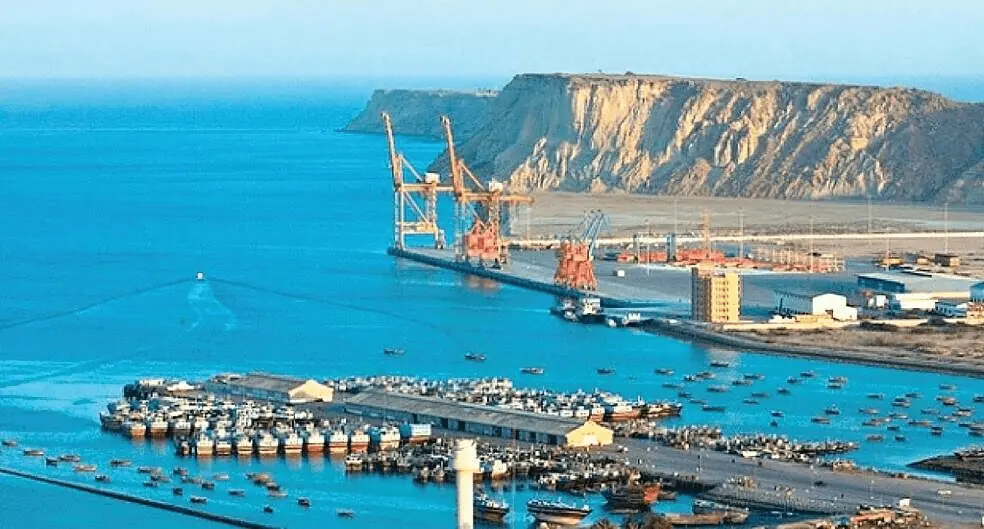
The Chairman of the Gwadar Port Authority, Noor-ul-Haq Baloch, has outlined an ambitious vision for Gwadar Port, projecting that the deep-sea facility could eventually contribute between $18 billion and $25 billion annually to Pakistan’s national economy.
Positioned at the mouth of the Persian Gulf, Gwadar holds immense strategic value as a maritime gateway connecting regional and global trade routes. Its central role within the China-Pakistan Economic Corridor further strengthens its potential as a critical hub for commerce, particularly for landlocked Central Asian states seeking access to international markets.
Baloch’s comparison of Gwadar with major regional ports such as Jebel Ali Port and Port of Colombo underscores the scale of ambition. These ports have transformed their respective economies by handling massive cargo volumes and serving as global transshipment centers.
For Gwadar to reach similar heights, it must evolve beyond a developing docking facility into a fully integrated logistics and industrial ecosystem. This transformation depends on the successful development of Special Economic Zones, where international industries can establish manufacturing and processing operations, shifting the port’s role from transit point to value-added economic engine.
However, this trajectory is not without challenges. Infrastructure gaps, particularly in energy supply, water availability, and transport connectivity, remain critical hurdles. Reliable electricity, desalinated water, and efficient road and rail links connecting Gwadar to the rest of Pakistan and beyond are essential for sustained growth.
Equally important is maintaining a stable security environment that reassures investors and enables long-term planning. Addressing this “security-development nexus” will be key to unlocking Gwadar’s full potential.
If these challenges are effectively managed, Gwadar has the capacity to redefine regional trade dynamics and emerge as a cornerstone of Pakistan’s economic future, reshaping the commercial landscape of South Asia in the years ahead.
