


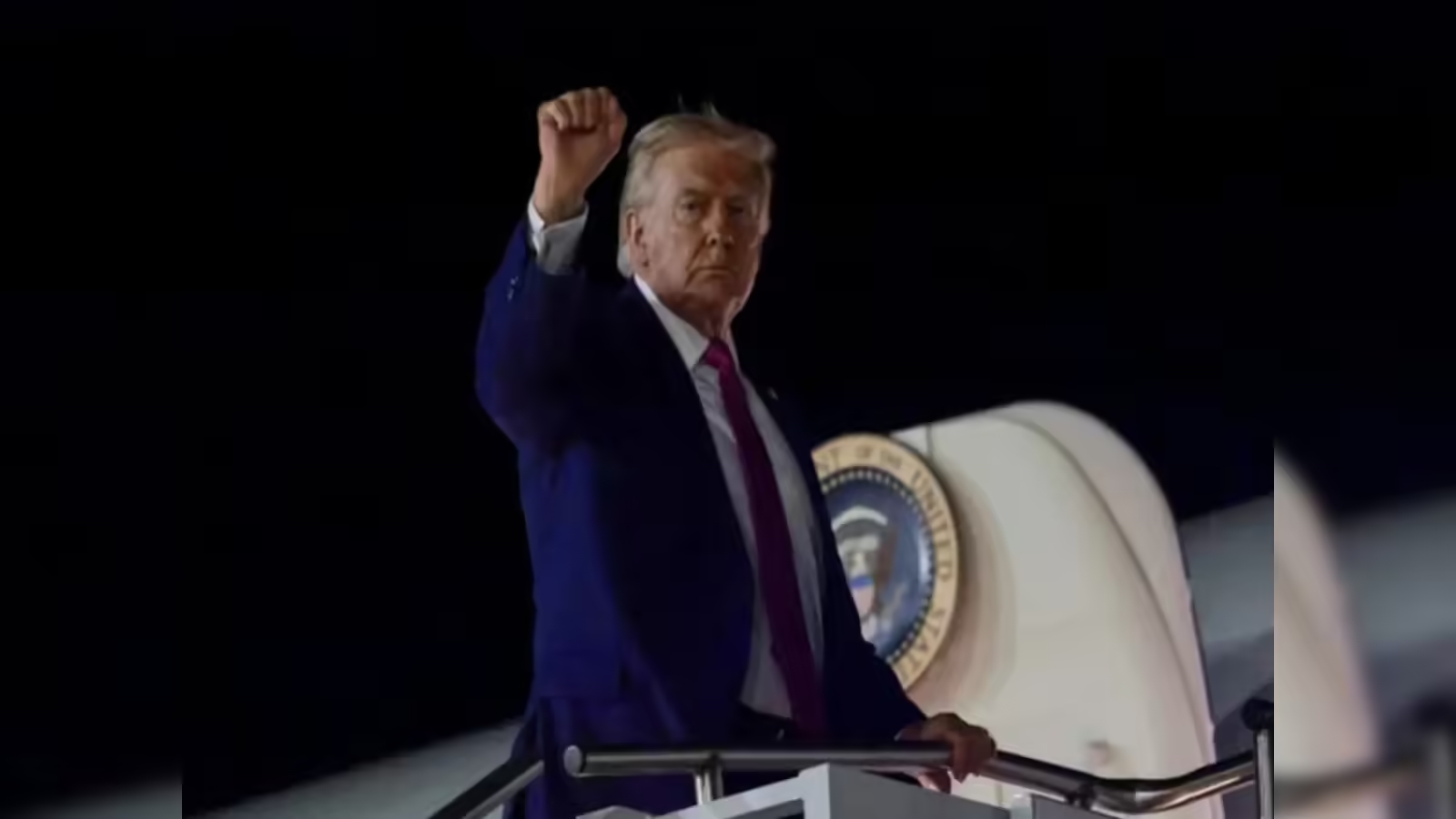
Donald Trump has expressed readiness to directly engage with senior Iranian leadership, signaling a potential diplomatic breakthrough if progress is achieved in upcoming talks in Islamabad.
Speaking ahead of the next phase of negotiations, Trump confirmed that a US delegation is already en route to Pakistan, underscoring Washington’s continued commitment to dialogue despite lingering uncertainties. The delegation, reportedly led by JD Vance, is expected to arrive within hours to explore possibilities for reviving stalled discussions with Tehran.
Trump indicated that a successful round of talks could pave the way for high-level engagement, stating his willingness to meet Iranian leaders if tangible progress is made. His remarks reflect a cautious but open approach as diplomatic channels remain active.
On the other side, Iran has maintained a measured stance. Officials in Tehran have signaled a conditional openness to dialogue while stopping short of confirming participation in a second round of talks. A senior Iranian official noted that no final decision has been made, highlighting internal deliberations amid evolving regional dynamics.
Esmail Baghaei reiterated that meaningful dialogue requires conducive conditions, while also pointing to concerns over actions that have complicated the diplomatic environment.
Tensions surrounding the Strait of Hormuz continue to cast a shadow over negotiations. The strategic waterway remains a focal point of friction following recent maritime incidents and competing claims between Washington and Tehran, adding urgency to ongoing diplomatic efforts.
In parallel, Pakistan’s role has gained further prominence. In a recent interaction, Trump acknowledged input from Asim Munir regarding the implications of the Strait of Hormuz situation on peace prospects. The exchange reflects Islamabad’s growing influence as a facilitator in one of the region’s most sensitive geopolitical engagements.
Despite mixed signals from Tehran, preparations in Islamabad continue, reinforcing Pakistan’s position as a central venue for high-stakes diplomacy. Whether the upcoming talks lead to a breakthrough remains uncertain, but the willingness of key stakeholders to remain engaged suggests that the door to dialogue is still open.
