


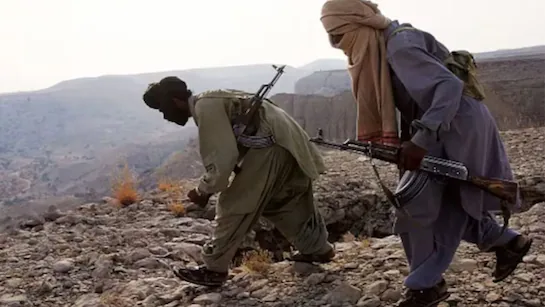
The Balochistan Liberation Army no longer fights to win territory, command popular support, or shape political outcomes. Those battles were lost years ago. What remains is a shrinking, desperate struggle over narrative space. Operation Herof II is not a military campaign. It is an attempt to stay visible in an environment where operational failure has become routine and public legitimacy nonexistent.
Militant groups survive on perception long after they lose the ability to influence reality. The BLA today operates entirely inside that logic. Its attacks are timed, branded, filmed, and announced not for strategic gain but for digital consumption. The battlefield has shifted from geography to optics because geography no longer belongs to them.
This is why Operation Herof II matters less for what it achieved and more for why it was launched. Phase One collapsed under sustained intelligence-led counterterrorism operations. Cells were dismantled, leadership networks disrupted, and suicide infrastructure degraded. With fighters neutralized and movement restricted, the BLA turned to what it has left: symbolism, spectacle, and civilian terror packaged as resistance.
The video of Bashir Zaib riding a motorcycle through remote terrain was meant to project defiance. In reality, it exposed isolation. Leaders who command real movements do not need staged visuals to prove relevance. They are visible through governance, mobilization, and public backing. The BLA has none of these. Its leadership appears only through carefully edited clips because it cannot appear anywhere else.
The group’s choice of targets further exposes the collapse of its political claims. Executing Punjabi passengers, murdering migrant laborers in Gwadar, and killing women and children is not insurgency. It is ethnic terror. No liberation movement wages war against civilians who have no role in governance, security policy, or political decision-making. These killings are not collateral damage. They are the objective.
This is where the BLA’s narrative unravels completely. A movement that claims to fight for Baloch rights cannot justify hunting laborers whose only crime is earning a living. It cannot explain why its bullets consistently find families instead of institutions. It cannot reconcile claims of resistance with acts that mirror the playbook of globally recognized terrorist organizations.
The use of women in attacks marks another moral and strategic collapse. This is not empowerment, resistance, or revolutionary evolution. It is exploitation designed to generate shock value and international attention. Groups that weaponize women do so not because they believe in equality but because they believe in spectacle. The goal is not victory. It is visibility.
Pakistan’s response to Operation Herof II stripped away even this illusion. Within forty-eight hours, security forces neutralized over one hundred militants through coordinated ground operations, aerial surveillance, and intelligence-driven pursuit. Police and security personnel sacrificed their lives defending civilians and restoring order. Civilian protection remained central despite provocation designed to force indiscriminate retaliation.
This matters because it reinforces the most damaging truth for the BLA: the state is not reacting blindly. It is acting deliberately. Precision, restraint, and rapid stabilization deny militants the chaos they require to manipulate narratives. Every protected settlement and restored roadway undermines the claim that the state has lost control.
Narrative space is lost when reality contradicts propaganda. The BLA claims repression while civilians watch terrorists eliminated and life resume. It claims resistance while its fighters flee, hide, and die in isolated pockets. It claims legitimacy while local populations reject violence that only brings instability and death.
Internationally, the cost is even higher. The deliberate targeting of civilians, the use of suicide tactics, and the exploitation of ethnic grievances align the BLA not with political movements but with transnational terror networks. This is why romanticized portrayals collapse under scrutiny. There is no governance plan, no political roadmap, no civilian mandate. Only violence seeking justification after the fact.
The real defeat of the BLA is not measured in body counts or operations completed. It is measured in credibility. Once a group is exposed as anti-civilian, anti-development, and strategically hollow, its attacks become noise rather than messaging. Operation Herof II did not reclaim narrative space. It confirmed how little remains.
Pakistan’s institutions did not just counter a wave of attacks. They forced the BLA into the open, where its methods spoke louder than its slogans. In doing so, they revealed a simple truth that no amount of branding can conceal: movements that lose the people always lose the story.
