

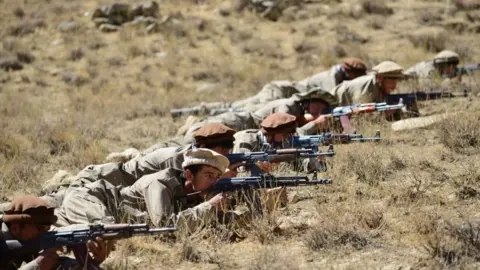
Public resistance against the Taliban regime in Afghanistan is reportedly gaining momentum, with increasing voices emerging from within Afghan society against what is described as extremist ideology and unlawful governance practices.
Critics argue that the Taliban’s hardline policies have pushed Afghanistan further into international isolation, while also intensifying public dissatisfaction inside the country. The growing dissent reflects widening frustration over governance, restrictions, and the overall political direction under the current regime.
According to Afghan media outlet Afghan International, National Resistance Front leader Ahmad Massoud has stated that the Taliban’s era of oppressive rule is approaching its end. He emphasized that unity and coordination among anti-Taliban movements represent the most effective strategy moving forward.
Massoud rejected the Taliban’s claim that there is no viable alternative to their rule, calling it a “deliberate propaganda effort aimed at spreading disorder.” He further stated that multiple Afghan political groups opposing the Taliban are now aligned on fundamental principles against the current regime.
He also asserted that the real strength lies with the people, urging Afghans not to fall for what he described as Taliban propaganda narratives.
Experts cited in reports suggest that the Taliban came to power through force rather than a public mandate, arguing that such control lacks legal and political legitimacy in international norms. They also note that widespread anger and frustration are growing among Afghan citizens over the regime’s performance and its alleged support for extremist elements.
