


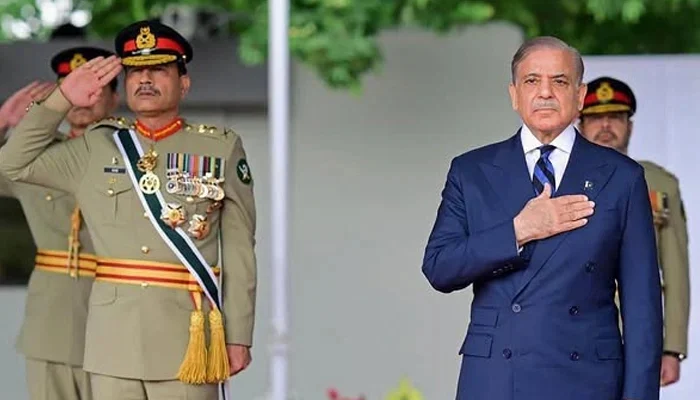
The growing centrality of Pakistan in mediating the Iran crisis reflects a broader shift in how regional diplomacy is being conducted, where military leadership is increasingly shaping outcomes traditionally handled by civilian diplomats.
Pakistan’s recent facilitation of engagement between the United States and Iran signals a deeper geopolitical realignment. Once viewed primarily through the lens of South Asia, Pakistan is now positioning itself as a bridge between South Asia and the Middle East, moving from the periphery toward a more central diplomatic role in regional affairs.
This shift highlights a recurring historical pattern: when traditional diplomacy stalls, military institutions often step into mediation roles. In Pakistan’s case, the armed forces have increasingly become key actors in high-stakes diplomatic engagement, particularly in crises involving multiple regional and global powers.
Following months of heightened regional conflict, Pakistan’s military leadership played a facilitative role in enabling indirect and direct communication channels between Washington and Tehran. The engagement reportedly culminated in high-level talks in Islamabad, bringing together senior US and Iranian figures for the first time in decades at that level. While no final agreement was reached, the process itself marked a rare diplomatic opening in a deeply polarized environment.
At the center of this evolving role is Syed Asim Munir, whose engagements with regional and global counterparts have underscored Pakistan’s growing military diplomacy footprint. His interactions have included outreach to Middle Eastern partners and participation in broader security dialogues that extend beyond South Asia’s traditional boundaries.
This form of “military diplomacy” reflects a broader global trend where armed forces are no longer confined strictly to deterrence or combat roles. Instead, they increasingly contribute to foreign policy execution through intelligence coordination, crisis communication, and backchannel negotiation. Unlike civilian bureaucracies, military institutions often operate with faster decision-making structures and direct lines of communication with foreign counterparts, particularly in sensitive security environments.
Pakistan’s defense relationships, especially its strategic partnership with China, further reinforce this position. The credibility of military-led engagement is often rooted in continuity, discipline, and institutional cohesion, which can provide reassurance in volatile negotiations where trust is limited.
In recent years, Pakistan’s military leadership has also expanded its diplomatic footprint across the Middle East, engaging with key regional actors and participating in discussions on security, counterterrorism, and conflict stabilization. These interactions have positioned Pakistan as a more active stakeholder in Middle Eastern security architecture than in previous decades.
However, the ongoing Iran-related diplomatic process remains fluid and uncertain. Despite initial rounds of engagement, disagreements between Washington and Tehran continue to hinder progress, with both sides exchanging conflicting public narratives. While formal negotiations have stalled at various points, indirect communication channels reportedly remain active.
What is emerging is a broader pattern in which Pakistan is increasingly being drawn into mediation roles across overlapping regional crises. This reflects both structural necessity and geopolitical opportunity, as traditional mediators face limitations and regional conflicts become more interconnected.
Whether this evolving role becomes institutionalized or remains crisis-driven will depend on how regional powers choose to engage Pakistan in the future. For now, its military leadership has become an unexpected but influential participant in shaping dialogue across one of the most complex geopolitical landscapes of the 21st century.
