


The growing tensions among the United States, Israel, and Iran reflect more than a regional crisis. They signal an ongoing transformation in the global order, with far-reaching implications for maritime security and strategic stability.
This confrontation, marked by high-stakes military posturing and strategic escalation, highlights the limitations of traditional power hierarchies as Iran’s resistance unfolds within an increasingly multipolar system. At the same time, the rising influence of China and the renewed assertiveness of Russia have reshaped the geopolitical landscape of the Middle East and beyond, reinforcing the continued relevance of hard power in contemporary statecraft.
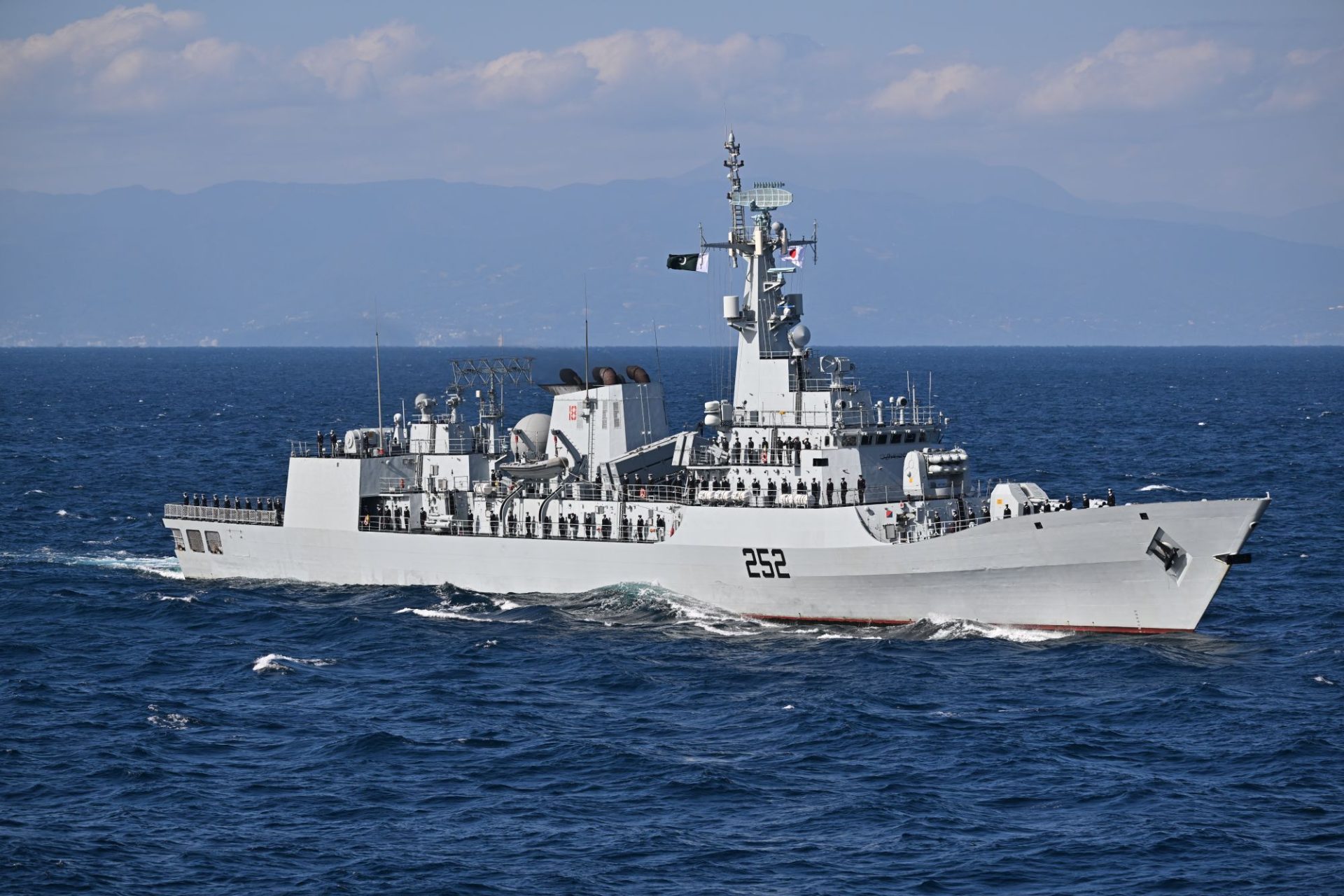
Against this backdrop, developments such as heightened sensitivity around the Strait of Hormuz and Pakistan Navy’s enhanced operational posture, including initiatives like Operation Muhafiz-ul-Bahr, must be viewed as part of a broader strategic response rather than isolated actions. Pakistan’s geostrategic location, particularly the growing importance of Gwadar as an emerging maritime hub, has gained renewed significance in ensuring continuity of trade and energy flows amid regional uncertainty.
In this volatile environment, Pakistan’s dual role as a maritime stabilizer and diplomatic facilitator highlights the interconnected nature of regional security and global equilibrium. The Pakistan Navy has increasingly assumed a pivotal role in safeguarding sea lines of communication, ensuring the uninterrupted flow of commerce through critical maritime chokepoints, and reinforcing Pakistan’s position as a responsible regional actor.
The maritime domain has historically remained a contested space, particularly during periods of geopolitical confrontation. The evolving situation in the Gulf reinforces Barry Buzan’s concept of a regional security complex, where security dynamics in geographically proximate regions become deeply interlinked. However, the nature of modern maritime conflict has become more complex due to technological advancements, including unmanned systems, autonomous surveillance platforms, and satellite-enabled monitoring. These developments are shifting naval strategy from traditional force projection toward hybrid and technology-driven forms of maritime control.
At the same time, the risk of broader economic disruption has necessitated intensified diplomatic engagement. Pakistan has sought to position itself as an active facilitator of dialogue amid rising tensions, engaging with regional stakeholders including Turkey, Saudi Arabia, Egypt, and China. Historical precedents such as the 1973 oil crisis demonstrate the vulnerability of global financial systems to disruptions in energy supply chains. In this context, instability around critical maritime chokepoints continues to elevate the stakes of the current crisis.
Pakistan’s diplomatic outreach has been reinforced through high-level engagements, including consultations with China aimed at exploring frameworks for de-escalation. Historically, Pakistan has played significant roles in key geopolitical developments, ranging from facilitating US–China rapprochement to its participation in global counterterrorism efforts. Today, it seeks to leverage that legacy in navigating the evolving Iran–US–Israel tensions.
However, Pakistan’s strategic environment is becoming increasingly complex. The recently signed mutual defense understanding with Saudi Arabia introduces new dimensions to its foreign policy calculus. While intended as a deterrent arrangement, it also places Pakistan in a delicate position, particularly given its proximity to Iran and the need to maintain balanced regional relations. Any escalation that draws in alliance obligations could test Islamabad’s diplomatic flexibility.
Within this context, the Pakistan Navy’s evolving role reflects a shift from conventional deterrence toward broader maritime security responsibilities. This aligns with Geoffrey Till’s view that modern navies function not only as instruments of war but also as instruments of order. Pakistan’s naval presence contributes to safeguarding maritime trade routes, strengthening regional confidence, and mitigating escalation risks in a sensitive strategic environment.
Despite economic constraints, Pakistan continues to emphasize a balanced approach that combines preparedness with diplomacy. Participation in multinational exercises and cooperation with regional navies reflects efforts to enhance interoperability and maritime coordination. Meanwhile, emerging developments in energy access and maritime logistics underscore Pakistan’s expanding strategic relevance in regional supply chains.
Gwadar Port holds particular importance in this framework due to its proximity to the Strait of Hormuz. It offers potential as an alternative energy and trade hub linked to broader connectivity initiatives such as the China–Pakistan Economic Corridor (CPEC). This reflects a strategy of building redundancy into critical supply routes to reduce exposure to chokepoint vulnerabilities.
From a broader theoretical perspective, the current crisis illustrates how regional security dynamics and global economic structures are deeply interwoven. The spillover effects of the US–Israel–Iran confrontation are already visible in energy markets, trade disruptions, and shifting geopolitical alignments. Initiatives such as Operation Muhafiz-ul-Bahr highlight the importance of securing maritime frontiers in times of regional instability.
For Pakistan, the proximity of the Gulf crisis presents both challenges and strategic opportunities. It must navigate rising energy insecurity, inflationary pressures, and trade vulnerabilities while maintaining diplomatic balance in a rapidly evolving geopolitical environment. In an interconnected global system, the ongoing confrontation is not merely a regional dispute but a structural stress test for the international order, particularly the stability of energy markets and the resilience of existing financial architectures.
