


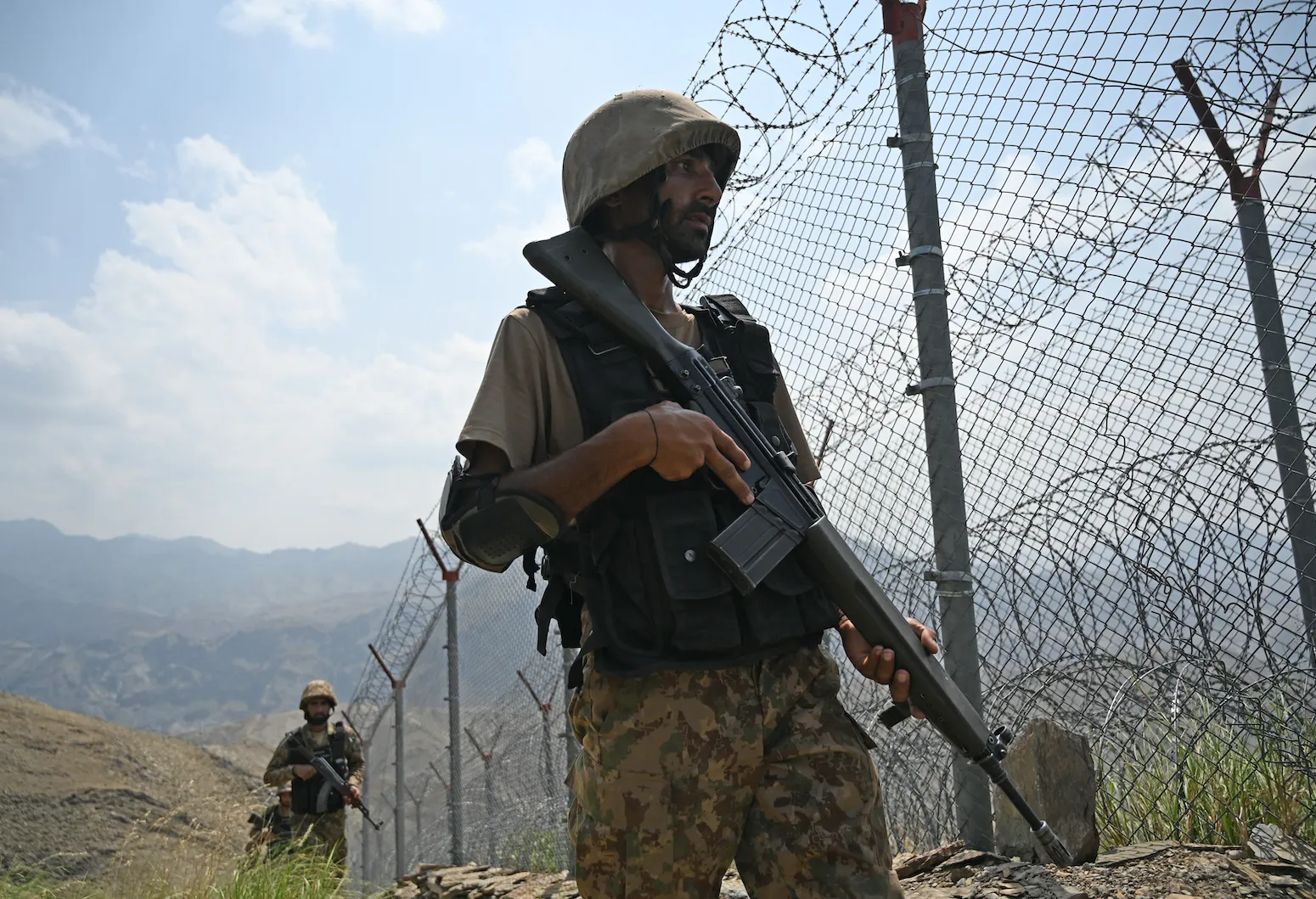
In the complex and often tense landscape of Pak-Afghan relations, the Durand Line remains one of the most sensitive historical and political issues. Stretching approximately 2,640 kilometers, the border has long been a source of diplomatic friction, frequently invoked in Afghan nationalist discourse.
However, a notable shift is emerging within sections of Afghanistan’s political and intellectual circles, increasingly described as a move toward “historical realism” and regional stability.
A leading voice in this evolving debate is Mohammad Tahir Zuhair, former Governor of Bamyan and ex-Minister of Information and Culture. In recent interviews with Afghan media outlets, he has called for an end to what he terms “baseless” territorial claims and urged Afghan political elites to formally recognize the Durand Line as the internationally established border.
Zuhair’s position is grounded in historical interpretation rather than political rhetoric. He highlights that since the original 1893 agreement, multiple Afghan rulers, including Emir Habibullah Khan, King Amanullah Khan, Nadir Khan, and Zahir Shah, engaged with and reaffirmed arrangements related to the border through various understandings and state practices. According to this perspective, the issue is historically settled, and repeated attempts to reopen it are seen as politically motivated rather than practically grounded.
A central element of his argument focuses on the socio-economic realities of Pashtun populations on both sides of the border. Zuhair questions the practicality of territorial revisionism by pointing to the lived conditions of Pashtuns in Pakistan, where millions have access to education, infrastructure, and state institutions. He contrasts this with the situation in Afghanistan, arguing that political instability and restrictive governance models weaken the appeal of such claims among ordinary people.
This perspective is not limited to individual commentary. Abdul Hafiz Mansoor, a member of the Leadership Council of the National Resistance Front (NRF), has also indicated that the Durand Line is effectively a settled matter from the standpoint of his political faction, describing it as an internationally recognized border. This reflects a broader strand of Afghan political thought that prioritizes stability and regional cooperation over territorial contestation.
Taken together, these views suggest that a growing segment of Afghan political discourse is moving toward acceptance of the existing border framework. Analysts note that this shift, if sustained, could open space for improved bilateral relations between Pakistan and Afghanistan based on economic cooperation, security coordination, and regional connectivity.
Zuhair further argues that formal recognition of the border should become a foundational principle of Afghan foreign policy. In his view, resolving this long-standing issue could help transform a historically strained relationship into one based on mutual interest and pragmatic engagement.
While official positions in Kabul have at times remained ambiguous due to internal political sensitivities, the emergence of such narratives indicates an ongoing debate within Afghanistan over the future direction of its regional policy and its approach to longstanding historical disputes.
