

Recent commentary by Amjad Taha reflects a deliberate attempt to distort ongoing developments in the Strait of Hormuz by framing sovereign maritime enforcement as “state terrorism.” By portraying the movement of Pakistani vessels as preferential treatment while branding the interception of Indian-linked ships as “piracy,” the narrative appears crafted to serve broader geopolitical agendas rather than reflect ground realities.
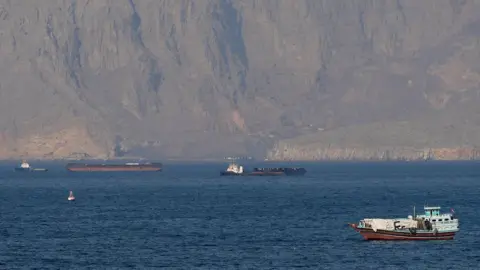
Since the escalation of the US-Iran conflict on February 28, the Strait of Hormuz has functioned as a zone of controlled enforcement shaped by military and strategic considerations. Contrary to claims of disorder, actions in the waterway have followed a pattern linked to evolving alignments and conflict dynamics rather than random or unlawful interference.
The timing of such criticism is notable. It coincides with growing diplomatic momentum, particularly Pakistan’s role in facilitating dialogue. Developments in Islamabad have shifted attention toward de-escalation, making attempts to reframe the situation appear more like efforts to undermine emerging diplomatic progress.
On April 17, 2026, Iran briefly reopened the Strait following a ceasefire in Lebanon. However, the continuation of restrictions tied to broader tensions, including disputes over blockades, led to renewed controls shortly after. Vessels that were turned back, including Indian-linked tankers, were operating in an increasingly sensitive security environment where access is influenced by political and military positioning.
In contrast, Pakistan’s ability to maintain uninterrupted maritime movement highlights the impact of its diplomatic engagement. Through sustained and measured outreach, Islamabad has positioned itself as a credible intermediary, ensuring that its economic and strategic interests remain protected while contributing to regional stability.
Criticism that selectively highlights certain actions while ignoring the wider context risks oversimplifying a highly complex situation. Silence on key triggers of the crisis, combined with emphasis on selective incidents, suggests an attempt to shape perception rather than provide balanced analysis.
Pakistan’s stance remains clear: stability in the Strait of Hormuz depends on respect for regional sovereignty, responsible state behavior, and meaningful diplomatic engagement. Efforts to inflame tensions or mischaracterize developments ultimately undermine the broader objective of peace.
At a time when Islamabad is actively facilitating dialogue between major stakeholders, such narratives risk disrupting a fragile but critical pathway toward de-escalation. The evolving situation underscores a broader reality: influence in today’s geopolitical landscape is increasingly defined not by rhetoric, but by the ability to build bridges where others seek division.
