


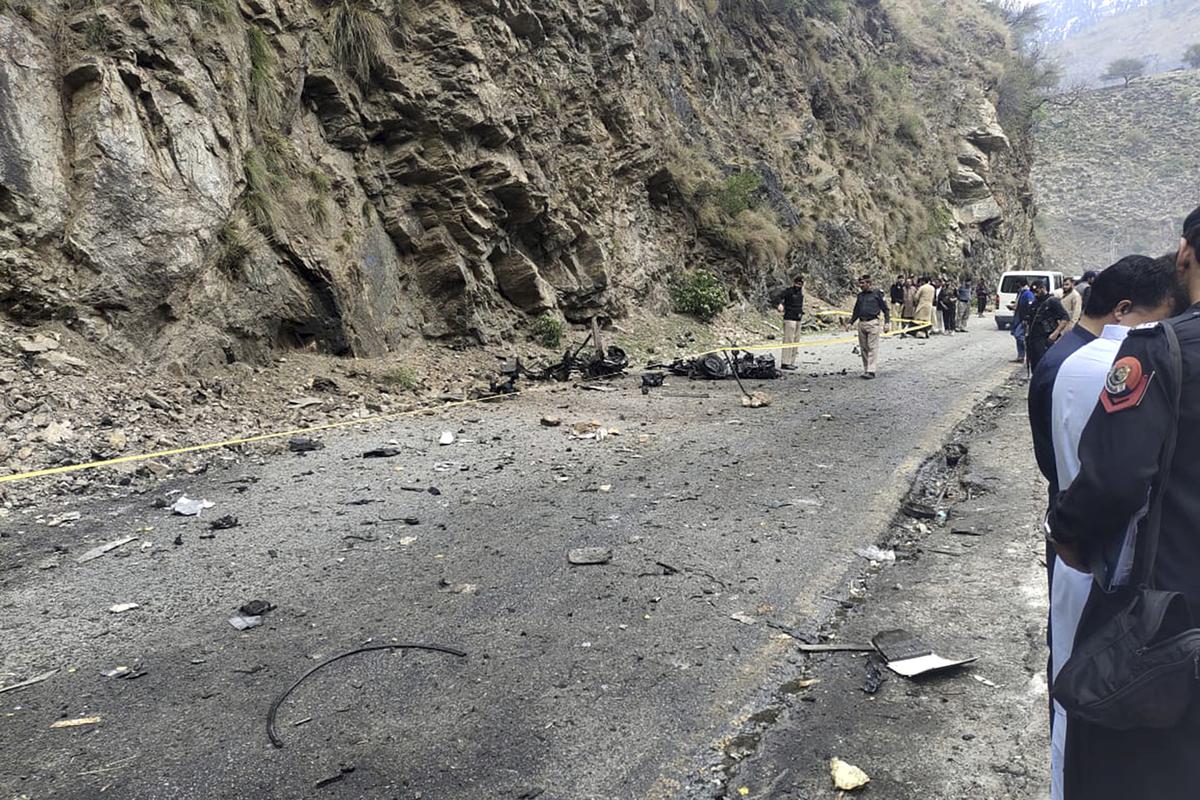
“Terrorist Sanctuaries in Afghanistan” became the focal point of Pakistan’s accusations against Afghanistan during a recent press conference by the DG ISPR. Major-General Ahmed Sharif, speaking on behalf of Pakistan’s military, pinned the blame for recent militant attacks, including a devastating suicide car bombing targeting Chinese engineers, on these alleged sanctuaries across the border.
According to GEn Sharif, Afghanistan’s Taliban government has repeatedly failed to curb the use of its soil for orchestrating cross-border terrorism. Despite diplomatic efforts and sharing what Pakistan claims to be solid evidence, the Taliban administration has not taken adequate measures to prevent such attacks.
The deadly suicide bombing in late March, which claimed the lives of five Chinese engineers and their local driver in northwestern Pakistan, served as a stark reminder of the threat emanating from these terrorist sanctuaries in Afghanistan. Sharif explicitly stated that the attack was meticulously planned in Afghanistan, with the perpetrators and their supporters operating from across the border.
Furthermore, Sharif disclosed that Pakistani security forces had apprehended and neutralized several Afghan nationals involved in recent terrorist activities. He attributed these attacks to the Tehrik-i-Taliban Pakistan (TTP) and other insurgent groups based in Afghanistan, accusing them of orchestrating cross-border terrorism to destabilize Pakistan.
Sharif emphasized that the influx of modern weaponry to the TTP, facilitated by elements within the Taliban government, has fueled the surge in terrorist activities within Pakistan. This assertion, however, was promptly rejected by the Taliban’s Defense Ministry spokesperson, Enayatullah Khwarizmi, who labeled Pakistan’s claims as baseless and irresponsible.
Khwarizmi, in a statement, asserted that the attack on Chinese workers occurred deep within Pakistani territory, highlighting what he perceived as the inadequacy of Pakistan’s security apparatus. He reassured China of Afghanistan’s innocence in the matter, attributing the incident to internal security lapses within Pakistan.
Despite these denials, the escalating incidents of terrorism have strained the already fragile relations between Islamabad and Kabul. The TTP, recognized as a global terrorist organization, maintains close ties with Afghanistan’s Taliban rulers, with documented evidence of their collaboration dating back to the insurgency against NATO forces in Afghanistan.
The situation has led Pakistani authorities to take stringent measures, including the eviction of undocumented Afghan nationals residing in Pakistan. Since October, over half a million undocumented Afghans have been repatriated, signaling Pakistan’s resolve to address security concerns stemming from its western border.
However, it’s worth noting that these measures do not target the registered Afghan refugees living in Pakistan or those holding government-approved Afghan citizenship cards, who are considered legal residents. Despite the crackdown on undocumented migrants, the underlying tensions fueled by accusations of cross-border terrorism persist, casting a shadow over the already strained relations between Pakistan and Afghanistan.
