

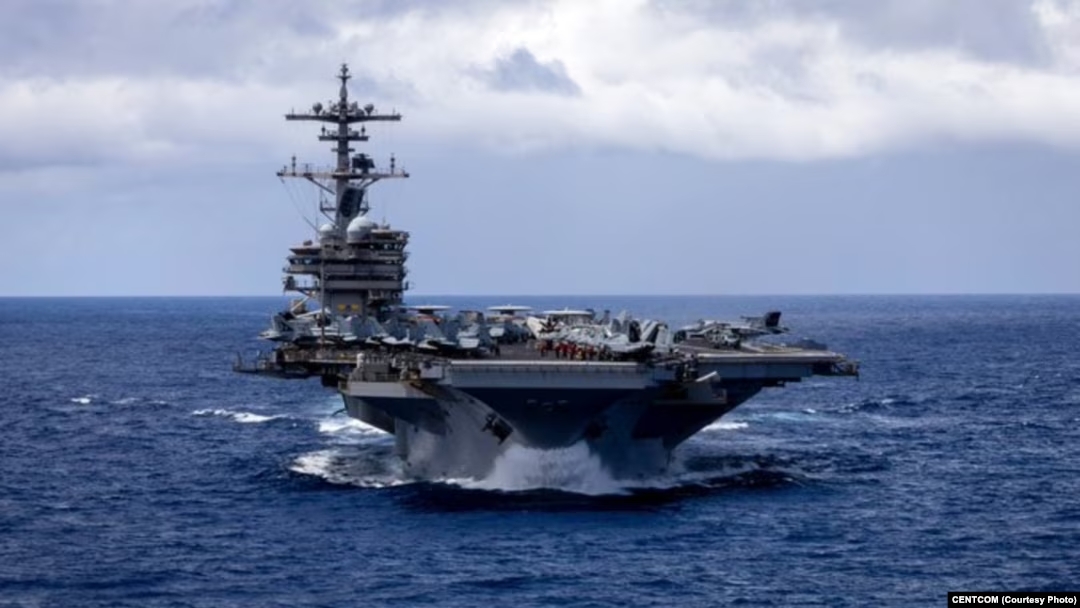
The United States has significantly expanded its naval presence in waters near the Middle East amid rising tensions with Iran, with multiple warships, aircraft, and support assets deployed as part of a broader maritime security and deterrence posture.
Among the key assets in the region is the aircraft carrier USS George H.W. Bush (CVN-77), which is operating as part of a wider carrier strike group presence in the area. The deployment forms part of ongoing US efforts to secure key sea lanes and maintain operational readiness in a strategically sensitive environment.
US naval forces in the region are conducting coordinated operations that include maritime surveillance, escort missions, and interception of suspicious activity linked to regional security concerns. These activities are aimed at maintaining freedom of navigation in critical waterways and deterring escalation amid ongoing geopolitical tensions.
While reports and commentary have suggested heightened disruption to commercial shipping routes, official descriptions of US operations characterize them as enforcement of maritime security measures rather than a formal blockade. Naval assets are working in coordination with allied forces to monitor vessel movement and ensure compliance with international maritime regulations.
The increased presence of carrier strike groups and support vessels reflects Washington’s broader strategy of projecting deterrence capability while maintaining pressure in the region. However, the situation remains fluid, with military activity closely tied to evolving diplomatic and security dynamics involving Iran and regional stakeholders.