

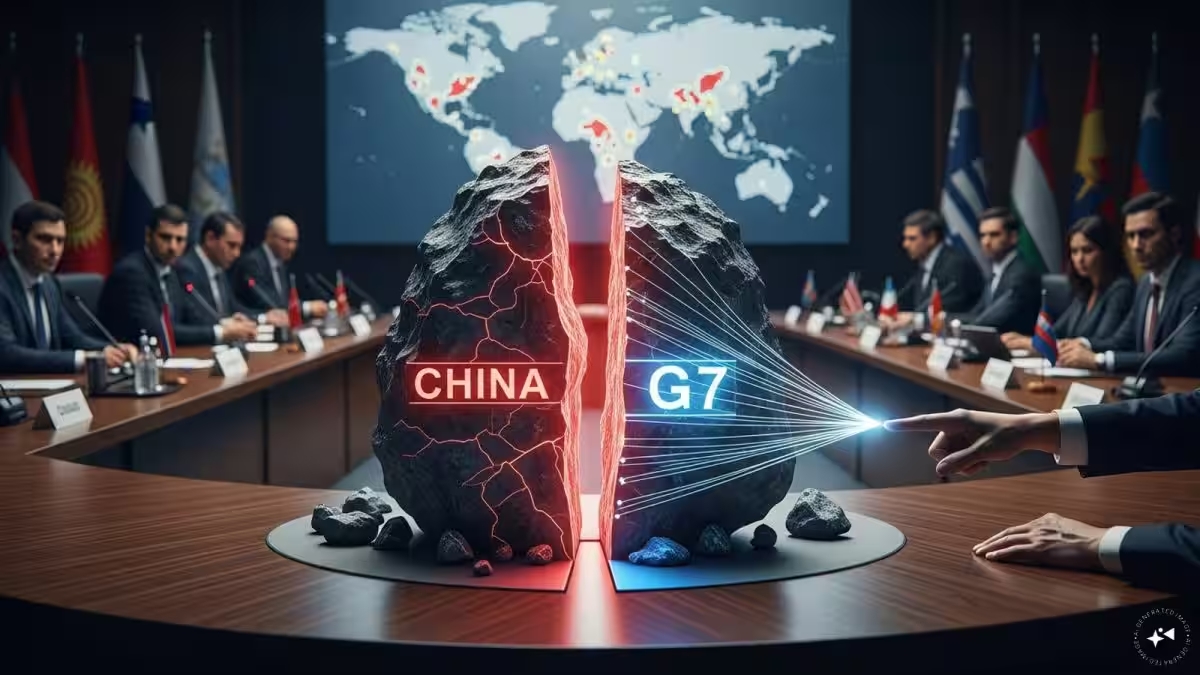
Trade ministers from the Group of Seven met in Paris on Wednesday with a shared focus on strengthening cooperation over critical mineral supply chains, even as new tariff threats from the United States exposed growing tensions within the transatlantic alliance.
France, which holds the G7 presidency, emphasized the need for concrete progress on securing access to rare earths and strategic minerals ahead of the upcoming leaders’ summit in June. These materials are essential for industries such as electric vehicles, renewable energy, electronics, and defence systems, all of which depend heavily on stable global supply chains.
French Foreign Trade Minister Nicolas Forissier warned that Western economies must reduce their dependence on a single dominant supplier, referring indirectly to China’s role in global mineral processing and exports. He stated that efforts are underway to ensure that countries are not “held hostage” through control of critical resources.
G7 ministers collectively expressed concern over the risk of economic coercion through supply chain dominance. In a joint statement, they pledged to resist any attempts or threats to weaponize economic dependencies, signaling a coordinated push toward supply chain diversification.
However, unity within the group was tested by renewed trade tensions between Washington and Brussels. Donald Trump announced plans to raise tariffs on European Union-made automobiles to 25 percent, citing alleged non-compliance with a previously negotiated trade agreement.
The move added pressure on already strained transatlantic economic relations. European officials, including Germany’s Economy Minister Katherina Reiche, have entered intensive negotiations with US counterparts as Europe’s export-heavy automotive sector faces challenges from weakening global demand and rising production costs.
EU Trade Commissioner Maros Sefcovic confirmed ongoing talks with US Trade Representative Jamieson Greer, stressing the importance of honoring commitments made under the earlier trade framework. While both sides expressed willingness to continue dialogue, differences remain over implementation timelines and regulatory safeguards.
Beyond bilateral tensions, G7 discussions also addressed broader concerns about global industrial overcapacity, particularly linked to China, along with long-standing calls for reform of the World Trade Organization.
As strategic competition over resources intensifies, the meeting highlighted a dual reality: growing consensus on reducing dependency on China, but increasing fragmentation within the Western alliance over trade policy direction.