

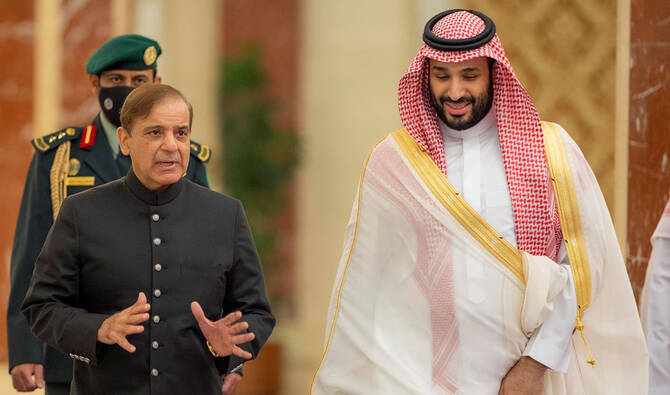
Saudi Arabia has called for restraint amid escalating tensions between the United States and Iran, throwing its support behind Pakistan’s diplomatic efforts to prevent the crisis from spiraling further.
In an official statement, the Saudi foreign ministry voiced concern over the intensifying military situation in the Gulf, urging all sides to avoid escalation and prioritize a political resolution. The Kingdom explicitly endorsed Pakistan’s mediation, signaling growing regional backing for Islamabad’s role in de-escalation.
Saudi officials emphasized the urgency of calming the situation, warning that continued confrontation risks undermining both regional security and global stability.
A key concern highlighted by Riyadh was the security of maritime navigation through the Strait of Hormuz, a vital artery for global oil shipments. Any disruption in this corridor, the statement noted, could have far-reaching consequences for international trade and energy markets.
The warning comes as tensions have sharply escalated in recent days, with exchanges of fire reported between US and Iranian forces in and around the Strait. The situation has raised alarms across the region, particularly among Gulf states.
The United Arab Emirates reported that Iran launched a fresh wave of attacks, with its air defense systems intercepting multiple ballistic missiles, cruise missiles, and drones. Authorities confirmed injuries and damage, including a fire at an oil facility in Fujairah following a reported drone strike.
Meanwhile, US President Donald Trump stated that American forces had targeted Iranian fast boats and pledged support for commercial vessels stranded in the Strait, which has remained heavily restricted since the conflict intensified earlier this year.
Amid this volatile backdrop, Pakistan has emerged as a key diplomatic intermediary, leveraging its relations with both Washington and Tehran. Islamabad has facilitated communication and helped initiate direct engagements, though a formal breakthrough remains elusive.
In a recent confidence-building step, Pakistan also assisted in securing the release of 22 crew members from an Iranian vessel previously seized by US forces, handing them back to Iranian authorities.
Separately, Saudi Crown Prince Mohammed bin Salman held talks with Mohammed bin Zayed Al Nahyan, condemning attacks on the UAE and reaffirming Riyadh’s commitment to the security of its regional allies.
Analysts warn that the rapidly evolving situation in the Gulf carries significant global implications. Prolonged disruption in the Strait of Hormuz could trigger sharp increases in oil prices, intensify inflationary pressures, and strain already fragile global supply chains.