

In a quiet yet strategically significant development at the United Nations Security Council, China has become the sole penholder on Afghanistan in 2025, replacing Japan, which managed the file during 2024. The transition is far more than a routine diplomatic reshuffle. It reflects a broader shift in global power dynamics and signals Beijing’s growing influence over the future direction of Afghanistan and regional security.
For years, most country-specific files at the Security Council were traditionally handled by the Western trio of the United States, the United Kingdom, and France. Draft resolutions were usually coordinated among these powers before being discussed with China and Russia and then presented to elected Council members. China’s assumption of the Afghanistan penholder role breaks from that long-standing pattern and places Beijing directly at the center of international decision-making on Afghanistan.
As penholder, China now oversees negotiations, drafts resolutions, manages consultations, and coordinates discussions among all 15 members of the Security Council on Afghanistan-related matters. One of the most important responsibilities includes managing the mandate of the United Nations Assistance Mission in Afghanistan (UNAMA).
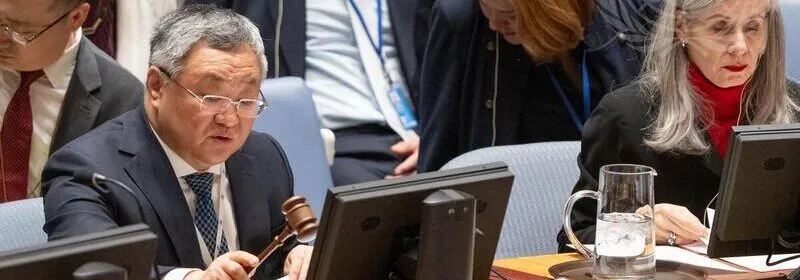
In March 2026, China successfully guided a Security Council resolution extending UNAMA’s mandate for an additional three months. Beijing described the extension as a bridge toward further responsible consultations on Afghanistan’s future. During the vote, China’s Ambassador to the United Nations, Fu Cong, emphasized that the shorter extension did not indicate weakening international support for Afghanistan or UNAMA, but rather reflected the need for broader consensus-building.
Since the Taliban’s return to power in 2021, China has maintained active engagement with Kabul without granting formal diplomatic recognition. Beijing’s approach has focused on security cooperation, counterterrorism, and economic connectivity. China views Afghanistan’s stability as directly linked to its own national security, particularly concerning militant groups such as the East Turkistan Islamic Movement (ETIM), which Beijing considers a major threat.
China has consistently argued that Afghan territory must not be allowed to become a safe haven for terrorist organizations. At the same time, Beijing promotes economic integration through mining projects, infrastructure development, and potential Belt and Road Initiative expansion into Afghanistan. Unlike Western governments that often link aid and recognition to governance reforms and human rights conditions, China advocates a policy centered on non-interference, sovereignty, and development-first engagement.
The decision to transfer the penholder role from Japan to China emerged after months of negotiations involving China, Pakistan, Japan, South Korea, and the United States. Practical considerations played a major role in the outcome. China shares a border with Afghanistan through the Wakhan Corridor and possesses substantial economic and strategic interests in the country’s long-term stability.
Japan had managed the Afghanistan file during 2024 with a relatively neutral and humanitarian-focused approach. Tokyo played an important role in facilitating discussions on peace, humanitarian assistance, women’s rights, and institutional support. China’s approach, however, differs significantly. Beijing brings direct regional leverage, greater political influence over Kabul, and a stronger focus on counterterrorism and economic engagement rather than political conditionality.
Kabul has welcomed China’s appointment, viewing it as an opportunity for greater international legitimacy and a diplomatic approach more aligned with Afghanistan’s current political realities.
In February 2025, China and Pakistan jointly circulated draft resolutions concerning UNAMA’s mandate extension amid competing proposals submitted by the United States and South Korea. The final resolution reflected Beijing’s growing influence in merging differing positions into a unified framework acceptable to the Council. China has used its role to advocate balancing humanitarian assistance with counterterrorism cooperation, while warning against excessive external pressure on the Taliban regarding internal governance issues.
The implications of this shift extend across South and Central Asia. In their joint statement issued on May 26, 2026, China and Pakistan reaffirmed their commitment to preventing terrorist groups from using Afghan territory to threaten regional security. Both countries specifically identified Tehreek-e-Taliban Pakistan (TTP) and ETIM as major threats requiring coordinated regional action.
Russia publicly supports China’s position advocating pragmatic engagement with the Taliban, unfreezing Afghan assets, and strengthening counterterrorism cooperation. However, Moscow’s policy reveals growing contradictions. Russian officials, including Security Council Secretary Sergei Shoigu, have warned that Afghanistan hosts between 18,000 and 23,000 militants belonging to more than 20 terrorist organizations, including ISIS-K.
Despite these concerns, Russia signed a military-technical cooperation agreement with the Taliban in late May 2026 following meetings between Shoigu and Taliban Defence Minister Mohammad Yaqoob in Moscow. The agreement significantly deepens defense cooperation between Moscow and Kabul, raising serious concerns about legitimizing a regime still accused of sheltering extremist groups threatening regional stability.
Many observers view Russia’s engagement as driven more by geopolitical competition with the West than by a consistent counterterrorism strategy.
India, meanwhile, has adopted a cautious but increasingly active approach toward Afghanistan. New Delhi upgraded its technical mission in Kabul into a full embassy in October 2025 and expanded economic cooperation through trade, pharmaceutical investments, and infrastructure-related initiatives. Bilateral trade reportedly reached nearly USD 1 billion in 2025.
However, Pakistan continues to express serious concerns regarding the emerging Indo-Afghan nexus. Islamabad maintains that India uses Afghan territory to support anti-Pakistan militant networks and proxy elements aimed at destabilizing Pakistan. Afghan authorities under Taliban rule also face repeated accusations of providing safe havens to TTP militants responsible for cross-border attacks inside Pakistan.
China’s new role as Afghanistan’s penholder creates opportunities for a more regionally driven diplomatic framework. Yet major challenges remain unresolved, including restrictions on women’s rights, humanitarian crises, economic collapse, and persistent terrorist threats.
The success of China’s leadership at the Security Council will ultimately depend on whether Beijing can balance its development-oriented vision with international demands for broader inclusivity, security guarantees, and long-term regional stability.