

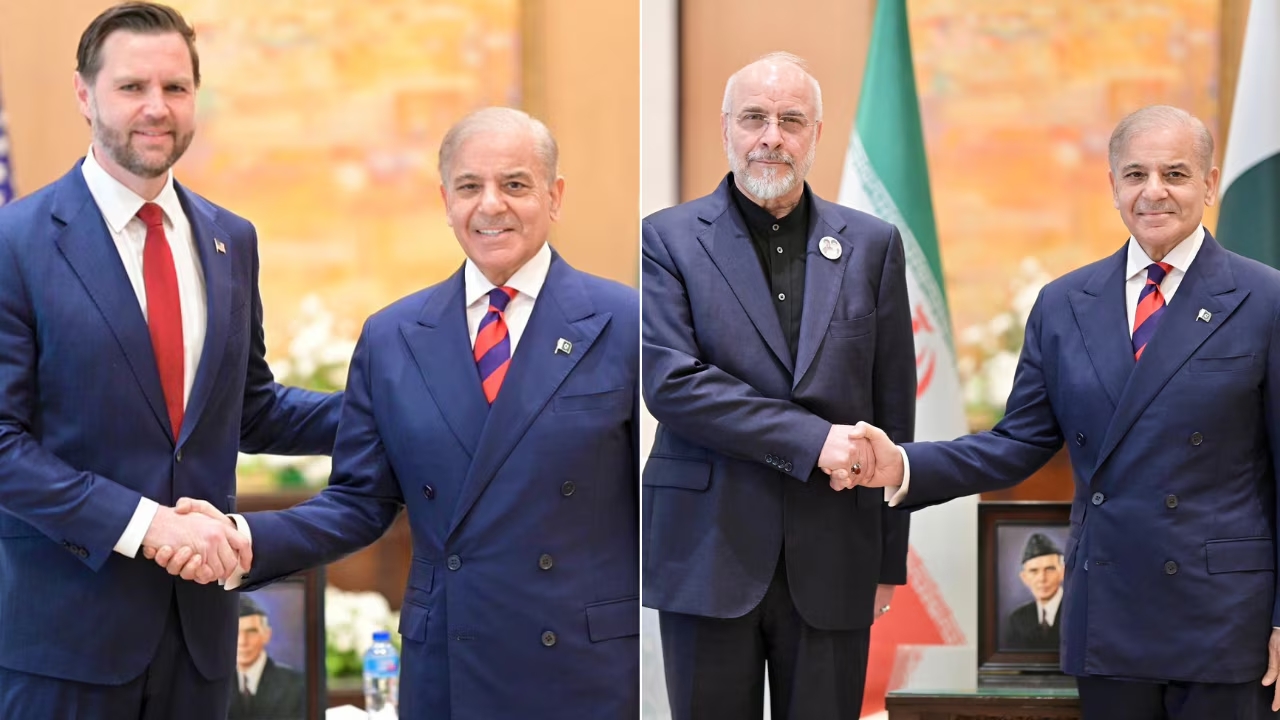
Pakistan’s quiet but decisive diplomacy has once again proven its weight on the world stage. Prime Minister Shehbaz Sharif on Monday hailed the successful conclusion of the first high-level committee meeting under the Islamabad Memorandum of Understanding, calling it a turning point in defusing one of the most dangerous flashpoints of recent years the standoff between the United States and Iran.
The talks, hosted at the Swiss resort of Bürgenstock on the shores of Lake Lucerne, unfolded in a constructive atmosphere and produced concrete results: a 60-day roadmap toward a final settlement, the formal launch of a High-Level Committee for political oversight, and the green light for further technical-level negotiations to follow.
None of this would have been possible without the framework Pakistan helped build. Acting alongside Qatar as co-mediator, Islamabad issued a joint statement detailing the progress achieved during the marathon sessions in Switzerland — progress rooted directly in the Islamabad MoU signed earlier, the very document that opened the door to direct US-Iran engagement.
That original agreement set the stage for everything that followed: an end to active hostilities, the reopening of the Strait of Hormuz for commercial shipping, and a broader push to address sanctions and nuclear concerns that have kept the region on edge. The fact that the world’s most consequential current diplomatic track traces back to an Islamabad-brokered document is no small footnote — it’s the headline.
While statesmen on both sides deserve recognition for showing up to the table, Prime Minister Sharif made clear where much of the real groundwork was laid. He singled out Field Marshal Asim Munir for special praise, crediting his untiring efforts as instrumental to the breakthrough — a recognition that speaks volumes about the institutional weight Pakistan brought to the negotiating table behind the scenes.
Sharif also acknowledged the diplomatic legwork of Deputy Prime Minister and Foreign Minister Ishaq Dar and his Foreign Office team, along with Interior Minister Mohsin Naqvi, both of whom played supporting roles in keeping the process on track.
The Prime Minister extended thanks to Qatar for its critical mediating partnership and to the Swiss government for hosting the talks, while reaffirming that Pakistan remains committed to an honest, sincere role in pushing this process toward a lasting peace.
This is the story that matters: while bigger powers postured and sanctions piled up, it was Pakistan’s framework — and Pakistan’s military and diplomatic leadership — that helped pull two adversaries back from the brink. Islamabad’s stature as a serious, credible mediator on the global stage isn’t a talking point anymore. It’s a track record.