

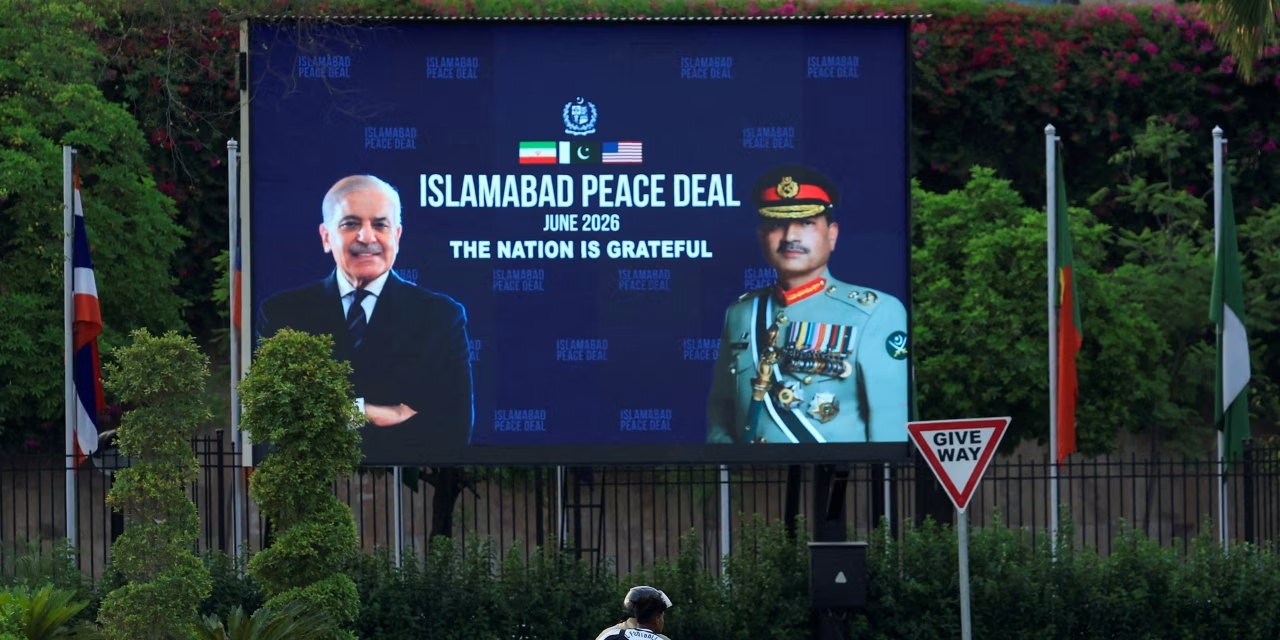
When historians look back at this moment, they may well mark it as the day Pakistan graduated from regional actor to global diplomatic player. The signing of the “Islamabad Memorandum of Understanding” between the United States and Iran — with Pakistan as mediator — is not just a ceasefire document. It is a statement about where Islamabad now stands on the world stage.
Prime Minister Muhammad Shehbaz Sharif electronically signed the MoU alongside US President Donald Trump and Iranian President Masoud Pezeshkian, formalising a framework that both Washington and Tehran had resisted for years. The agreement came into force immediately upon signing, with two headline deliverables: Iran reopens the Strait of Hormuz, and the United States lifts its naval blockade. For global energy markets, that alone was enough — oil prices dropped on news of restored supply flows through one of the world’s most critical maritime chokepoints.
But the significance runs deeper than commodity prices.
What the Deal Actually Does
The 14-point memorandum extends an earlier ceasefire by 60 days, creating a structured negotiating window toward a long-term settlement. Beyond the maritime reopening, it includes a halt to hostilities across multiple fronts, easing of US sanctions, release of frozen Iranian assets, and a reconstruction and investment mechanism for Iran. On paper, it addresses enough immediate pain points for both sides to justify the signature.
PM Sharif was deliberate in crediting the process rather than claiming sole glory. He acknowledged Qatar, Saudi Arabia, Türkiye and Egypt as partners — a sign of diplomatic maturity that will matter as the harder negotiations begin. He also singled out Field Marshal Syed Asim Munir, Pakistan’s military chief, as a key facilitator of the outcome. That acknowledgment is significant: it signals that Pakistan’s back-channel military diplomacy was as important as its formal political engagement.
The Gaps the Deal Doesn’t Fill
Neither side is pretending this is a final settlement. Iran’s missile programme remains untouched. Tehran’s support for regional armed groups — Hezbollah, the Houthis, and others — is unaddressed. Trump, speaking from the G7 summit in France, was characteristically blunt: “If they violate the agreement, we’ll strike again.” Iranian chief negotiator Mohammad Baqer Ghalibaf framed the deal differently, saying Tehran had achieved through diplomacy what war could not deliver — though Iranian officials were equally clear that their strategic defence posture had not changed.
These are not small gaps. They are the core of a decades-long standoff. The 60-day window is therefore less a peace timeline and more a pressure test — a period in which both sides must demonstrate enough good faith to make the next phase of talks worth attempting.
Meanwhile, the region around the deal remains combustible. Israeli strikes continued in southern Lebanon even as the ink dried. G7 leaders welcomed the MoU but simultaneously called for a Lebanon ceasefire, a reminder that the Islamabad agreement does not extend to every front of the broader Middle East crisis. Israel, excluded from the negotiations, affirmed it retained the right to continue operations against Hezbollah — a wildcard that could complicate implementation before the 60 days are up.
Pakistan’s Moment
The country that facilitated this agreement is the same country that has spent years navigating its own security pressures, economic turbulence and a complicated neighbourhood. Pakistan’s ability to hold the trust of both Washington and Tehran simultaneously — no small feat given the mutual hostility between the two — reflects a diplomatic positioning built over months of quiet engagement, with Field Marshal Asim Munir at the centre of it.
The coming weeks will test whether that positioning can be sustained. Detailed negotiations on sanctions relief, nuclear verification mechanisms and a permanent peace framework lie ahead. Pakistan has earned a seat at that table. Whether Islamabad can hold it through the harder conversations is the real question.
For now, the Islamabad Memorandum stands. And that, by any measure, is an extraordinary thing.