

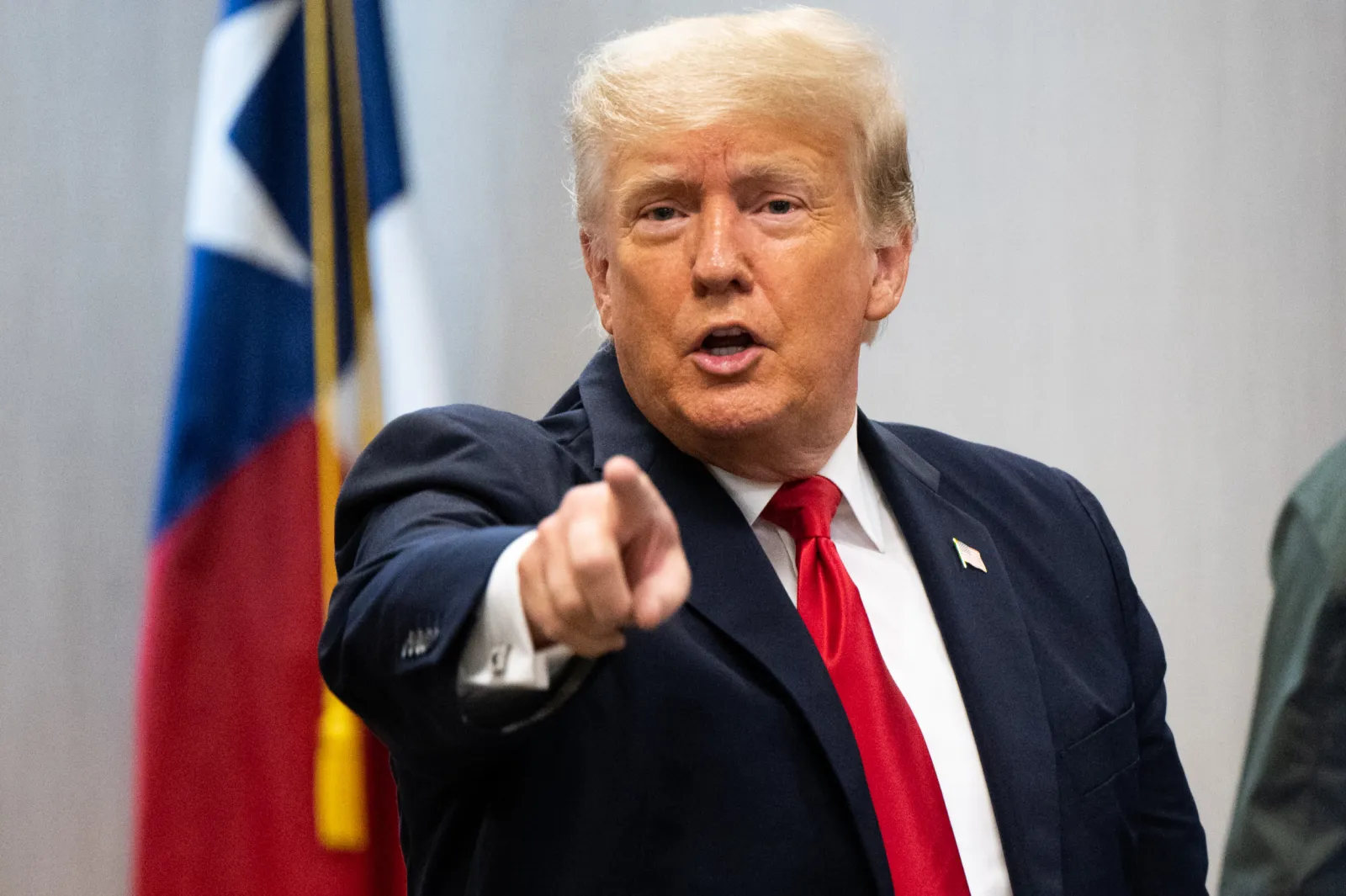
There is a particular kind of truth that only gets spoken when the speaker has stopped caring about diplomatic niceties. Donald Trump’s remark at the G7 in France that Afghanistan is “kissing our ass” was not a gaffe. It was a window into something the Taliban has spent five years desperately trying to conceal: that international isolation is slowly strangling a regime that projected itself to the world as the force that humbled a superpower.
The immediate context was the $7 billion in military equipment left behind during the 2021 withdrawal. Trump called the Biden-era exit a “horrible retreat,” contrasted it with his own plan to leave “with dignity and pride,” and then matter-of-factly suggested Washington may simply ask for the equipment back — and get it. “Afghanistan is kissing our ass,” he said. And then moved on to the next topic.
That casual delivery is the whole point.
The Equipment Story Is Not About Equipment
Trump himself acknowledged the hardware is “a little old now” and that any recovery would be “more symbolic.” That admission is more analytically useful than the headline. The Taliban spent years parading captured American military vehicles down Afghan roads, staging anniversary celebrations around the imagery of US weapons as war trophies. That spectacle was core to the regime’s legitimacy narrative — the idea that the Islamic Emirate had done what no one else could, and that America had crawled away empty-handed.
Now the American president is publicly suggesting Kabul will hand it all back if asked. If that happens — even partially, even symbolically — the trophy becomes tribute. The victory parade becomes a receipt.
The scale of what was left behind was staggering: according to a 2022 Pentagon report, the abandoned assets included 78 aircraft, 40,000 military vehicles, and over 300,000 weapons, with a combined value exceeding $7 billion. The Taliban did not inherit a weapons cache. It inherited a propaganda campaign. And that campaign may now be quietly running in reverse.
Why the Taliban Is More Vulnerable Than It Looks
The regime’s public posture has been consistent: we want nothing from Washington, we froze no assets, we depend on no one. Taliban officials pushed back directly on Trump’s G7 remarks, denying they had received US financial assistance and pointing out that billions in Afghan funds remain frozen abroad. The statements were firm and the language was nationalist.
But the gap between what the Taliban says publicly and what it does operationally has always been wide. A government that controls a country sitting on an estimated $1 trillion in untapped mineral wealth — including what some analysts have called potential to be the world’s leading lithium supplier — and still cannot feed its population or secure international banking access is not a government operating from a position of strength. It is a government trapped by its own ideological rigidity, sustained by a combination of opium revenue, informal trade, and the absence of any better alternative presenting itself to its population.
Washington’s interest in Afghan minerals has kept a back-channel alive that the Taliban’s human rights record, its gender apartheid policies, and its consistent failure to act against terrorist organisations on Afghan soil would otherwise have closed entirely. Trump’s foreign policy logic is transactional to its core: leverage exists to be used. The minerals conversation and the equipment conversation are both expressions of that same instinct — find what the other side needs, make them ask for it, and extract a price.
What This Means for Pakistan
Islamabad has argued for years that the Taliban’s protection of the Tehreek-e-Taliban Pakistan and other militant organisations operating from Afghan soil is not a failure of capacity. It is a deliberate policy choice — one made possible by a calculation that the international community lacked both the will and the leverage to impose real costs on Kabul.
Trump’s G7 remark changes that calculus, at least at the margins. When the American president publicly frames the Taliban as supplicants at a summit of the world’s major economies, he strips away the diplomatic ambiguity that the regime relies on to resist pressure. A government that can be described as “kissing our ass” at a G7 press conference is not in a strong position to demand the world accept its refusal to act on cross-border terrorism as a sovereign right.
Pakistan has consistently framed its Afghanistan policy around the need for a stable, cooperative neighbour. That goal has remained elusive precisely because the Taliban has felt little incentive to cooperate on anything it found inconvenient. If Washington’s transactional pressure — on minerals, on equipment, on frozen assets — begins to meaningfully constrain Kabul’s room for manoeuvre, Pakistan stands to benefit from a Taliban that is less able to play the victorious isolationist and more compelled to negotiate on terms it would have previously refused.
The Taliban built its brand on having beaten America. Trump just told the world that Afghanistan is asking for its approval. Those two things cannot both be true for much longer.