

Water in South Asia is no longer just an environmental or resource issue. It has increasingly become a strategic variable in interstate relations, especially between India and Pakistan. Any disruption, perception of restriction, or unilateral maneuvering related to shared river systems is instantly absorbed into a wider narrative of geopolitical pressure.
For Pakistan, water is not only an agricultural necessity but also a national lifeline tied to food security, population sustainability, and economic stability. This is why water-related developments are often interpreted through a security lens rather than a purely technical one.
In modern regional dynamics, water has effectively moved from being a treaty-bound subject to a strategic signaling tool, where rhetoric alone can escalate tensions even before policy changes occur on the ground.
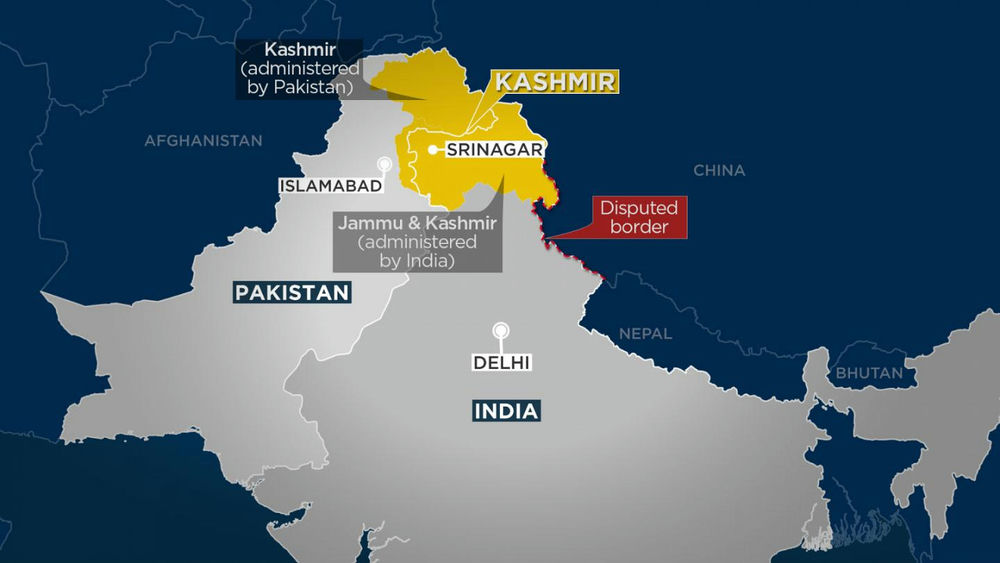
At the heart of South Asia’s instability remains Kashmir, a dispute that has outlived generations of political leadership and multiple phases of conflict. It is not only a territorial issue but also a deeply emotional and identity-driven contesting narrative.
From Pakistan’s perspective, Kashmir is often described as an unfinished agenda of partition and a matter of self-determination. From India’s standpoint, it is framed within constitutional integration and national sovereignty. These competing narratives have made compromise structurally difficult.
What sustains Kashmir as a long-term flashpoint is not only historical memory but also the persistent gap between political claims and lived realities on the ground. Periods of calm have often been temporary, while underlying tensions remain unresolved beneath the surface.
The Layer of Hybrid Conflict
Beyond conventional disputes, South Asia is increasingly shaped by hybrid conflict dynamics, where information, influence, and internal instability play as much of a role as traditional military considerations.
This includes:
- Narrative competition in global media and digital platforms
- Allegations of proxy influence across border regions
- Internal security challenges in sensitive provinces and frontier areas
- The use of political and social movements as instruments of pressure
In this environment, conflicts are not always visible in traditional battlefield terms. They often unfold in information spaces, economic pressure points, and localized instability, making them harder to define and resolve.
Within Pakistan’s internal landscape, Balochistan represents one of the most complex security and governance challenges. The region is often discussed in terms of insurgency, counter-insurgency, and external influence narratives, but the deeper issue also includes governance gaps, development disparities, and socio-political fragmentation.
At the same time, the state’s approach has increasingly combined security measures with attempts at economic integration and institutional strengthening. The long-term stability of the region depends not only on security responses but also on governance reforms and sustained development frameworks.
Regional Diplomacy and Strategic Balancing
Despite persistent tensions, South Asia is not locked in a purely conflict-driven trajectory. Diplomatic engagement, regional mediation efforts, and third-party facilitation have periodically created space for de-escalation.
Countries in the wider Muslim world, along with regional actors such as Turkey and others, have occasionally played supportive roles in reducing tensions or encouraging dialogue. These diplomatic channels reflect an important reality: even in a highly polarized environment, complete breakdown of communication is neither stable nor sustainable.
Pakistan’s broader foreign policy approach has consistently emphasized maintaining relationships across multiple regions while preserving strategic autonomy. This balancing act reflects the complexity of operating in a region where alliances and tensions often overlap.
South Asia today is not defined by a single conflict, but by overlapping layers of unresolved disputes, strategic competition, and internal pressures. Water security, Kashmir, internal stability challenges, and hybrid influence dynamics are not separate issues. They are interconnected components of a larger regional equation.
The future of the region will depend on whether these fault lines deepen into permanent instability or evolve into structured dialogue frameworks. For now, the balance remains fragile, shaped by history, geography, and competing strategic visions.