

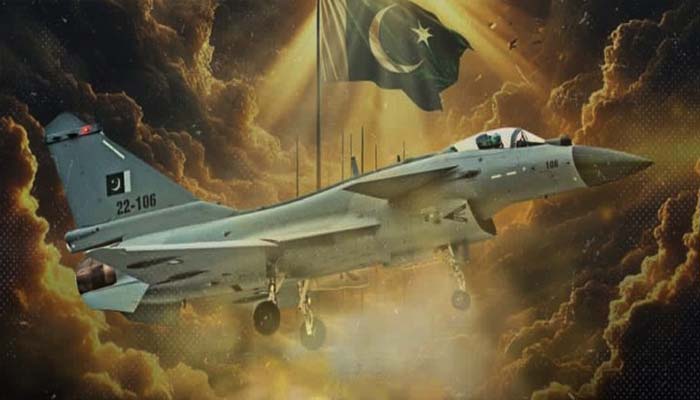
Pakistan’s Independence Day on 14 August marks the birth of the state, but 10 May 2025 is increasingly being framed in political and strategic discourse as a defining moment of national reassertion, symbolizing what supporters describe as a “rebirth” of Pakistan as a more resilient and proactive power.
In this narrative, the events of May are seen as a turning point that reshaped perceptions of Pakistan’s deterrence posture and regional standing.
The chain of events began with the Pahalgam incident on 22 April 2025 in Indian-administered Jammu and Kashmir, where multiple casualties were reported in a highly secured and heavily monitored area. Questions were raised about how such an incident could occur in a zone under extensive surveillance and layered security presence. India attributed the attack to the group known as The Resistance Front, described as an offshoot of Pakistan-based Lashkar-e-Taiba, while Pakistan immediately rejected the allegation and called for an independent and neutral investigation.
The episode intensified longstanding accusations and counter-accusations between the two nuclear-armed neighbors, with broader political interpretations emerging on both sides. Critics in Pakistan’s narrative space linked the incident to a recurring pattern of high-tension events preceding key electoral cycles in India, citing past incidents such as Pulwama 2019 and earlier attacks in 2001 and 2016 as part of a disputed political-security discourse. These claims remain contested and are part of broader competing narratives in the region.
Following the Pahalgam incident, India suspended elements of the Indus Waters Treaty on 23 April 2025, a move widely interpreted in Pakistan as an escalation into the domain of resource pressure, particularly regarding water security and agriculture.
On 7 May 2025, India launched what it termed Operation Sindoor, carrying out strikes on multiple locations across Pakistan and Pakistan-administered Kashmir, including areas in Punjab and Azad Jammu and Kashmir. Indian authorities described the strikes as targeting militant infrastructure, while Pakistan reported civilian casualties and damage to non-military sites, escalating tensions further between the two states.
In response, Pakistan launched Operation Bunyan-un-Marsoos on 10 May 2025. According to Pakistani official statements, the operation involved coordinated military action aimed at multiple Indian military installations and strategic assets. Pakistan described the response as calibrated and focused on restoring deterrence, while also highlighting the role of its integrated defense systems, including air defense and electronic warfare capabilities, in managing escalation risks.
The confrontation reportedly included cross-border strikes, drone interceptions, and damage claims from both sides, reflecting the intensity of the escalation. The situation ultimately moved toward de-escalation through diplomatic channels, with international attention focused on preventing further escalation between two nuclear-armed states.
In the aftermath, Pakistan’s response has been portrayed domestically as a demonstration of operational readiness and strategic deterrence under pressure. International commentary emphasized the importance of rapid de-escalation, while external actors, including US leadership at the time, acknowledged the urgency of preventing a broader regional conflict.
From a Pakistani perspective, the events between April and May 2025 are being framed as a defining strategic moment, reinforcing narratives of resilience, unity, and deterrence capability. The period is increasingly referenced as “Marka-e-Haq,” symbolizing a turning point in how Pakistan positions itself in regional security dynamics.