

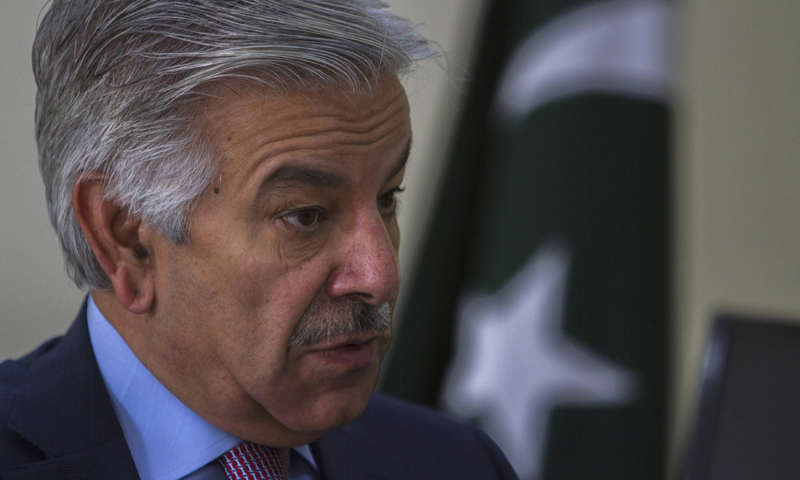
Khawaja Muhammad Asif, in a televised message marking Marka-i-Haq, warned that any future miscalculation against Pakistan would be met with a response that is “more intense and decisive.”
Referring to last year’s military confrontation between Pakistan and India—which began after the April 22 Pahalgam incident and culminated in the ceasefire on May 10 following Operation Bunyanum Marsoos—he described the episode as “Marka-i-Haq” (Battle of Truth), now framed as a defining moment in Pakistan’s strategic history.
He stated that Marka-i-Haq was not just a memorable event but a “clear line” that has been drawn permanently. According to him, Pakistan exercised restraint during the 2025 escalation, but any future “incorrect assessment or miscalculation” would be met with a far stronger response.
Asif emphasized that Pakistan does not seek conflict, but also does not accept any form of pressure or coercion. He warned that any adventurism would not remain limited in scope, adding that Pakistan would determine the direction and outcome of any escalation.
He claimed that the 2025 episode had permanently ended the perception that Pakistan could be isolated or pressured. According to him, Pakistan’s capabilities across air, land, and sea are now “fast and effective,” and aligned with modern warfare requirements.
The defence minister further stated that India must abandon the idea of “false flag operations or outdated assumptions,” warning that repeating such actions would come at a significantly higher cost. He added that such miscalculations would be “equivalent to self-destruction.”
Highlighting internal cohesion, Asif said Pakistan’s national unity has strengthened its strategic position. He noted that the state, armed forces, and public are aligned, forming what he described as a “unified front” comparable to a fortified structure.
He also stressed that Pakistan seeks peace, but not at the cost of dignity, sovereignty, or security. According to him, such conditions would not be peace but surrender, which remains unacceptable.
Addressing the youth, he said the younger generation is more aware, connected, and emotionally invested in the country’s future, describing it as a key source of national strength.
Concluding his message, Asif warned against reliance on outdated thinking, stating that internal political hostility or aggression directed toward Pakistan would trigger consequences that would not remain controllable or limited in scope.