


The resurgence of violence along Afghanistan’s northern frontier is not an accident of weak governance or a temporary lapse in border control. It is the natural outcome of a system that was never designed to transition from insurgency to statehood. The Taliban’s return to power did not end conflict; it merely changed its geography. What is unfolding along the Tajik border reveals a deeper truth: the Taliban’s survival depends on keeping militancy alive.
For more than two decades, the Taliban functioned not as a governing entity but as a coalition of armed networks bound together by ideology, battlefield loyalty, and perpetual war. Victory in Kabul did not dissolve this structure. It preserved it. A genuine shift toward centralized authority, strict border enforcement, and the dismantling of allied militant groups would unravel the very mechanisms that hold the movement together.
The Taliban’s leadership understands this constraint. Their power does not rest on institutions, economic legitimacy, or popular consent. It rests on maintaining the loyalty of fighters whose identities and purpose are inseparable from armed struggle. Groups operating out of northern Afghanistan are not rogue elements slipping through the cracks of governance. They are integral components of a broader ecosystem that rewards ideological alignment and sustained violence.
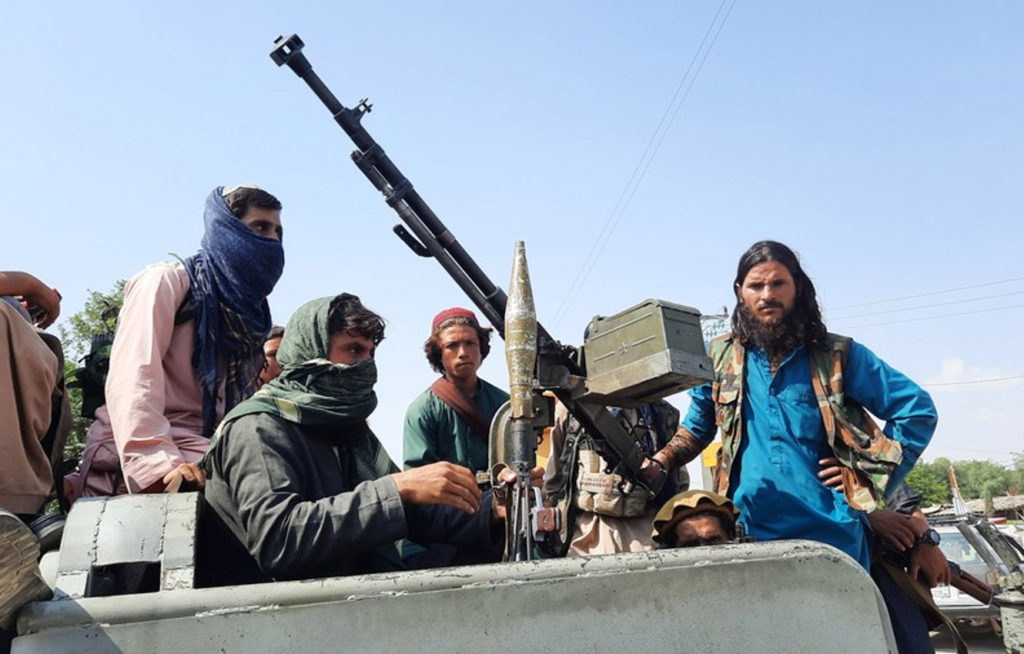
This is why northern Afghanistan has become a staging ground rather than a stabilized frontier. Militants affiliated with regional jihadist movements operate openly, equipped with modern weapons, protected by geography, and insulated by political ambiguity. These groups serve a dual purpose. Internally, they prevent fragmentation by satisfying the ideological expectations of hardline factions. Externally, they project pressure into neighboring states, creating leverage without formal confrontation.
The use of advanced weaponry and coordinated tactics in recent border incidents underscores that this is not spontaneous chaos. It reflects planning, access, and tolerance. A state committed to monopoly over violence would view such activity as an existential threat. A movement dependent on insurgency views it as insurance.
Attempts to engage the Taliban as a conventional government rest on a flawed assumption: that stability strengthens their rule. In reality, stability threatens it. Peace would force the Taliban to choose between governing pragmatically and preserving ideological purity. That is a choice they cannot make without triggering internal fracture. Enforcing discipline on allied militants would be seen not as reform, but as betrayal.
The result is a calculated duality. Diplomatic assurances are offered abroad while militant infrastructure is preserved at home. Borders are discussed in negotiations while remaining functionally porous on the ground. This ambiguity is not incompetence. It is strategy.
The spillover into Central Asia exposes the limits of treating insurgent movements as states in waiting. The Taliban are not struggling to suppress extremism; they are managing it. By allowing militant groups to operate just below the threshold of direct attribution, Kabul retains influence while avoiding accountability.
What is emerging is not a temporary security crisis but a permanent condition. A regime that draws coherence from conflict cannot extinguish the very fires that sustain it. Northern Afghanistan is not a failure zone. It is a proof of concept.
The danger lies in misreading this reality. As long as insurgency remains the Taliban’s organizing principle, violence will continue to migrate outward. The question is no longer whether instability will spread, but how far it will be allowed to go before the illusion of governance finally collapses.
