

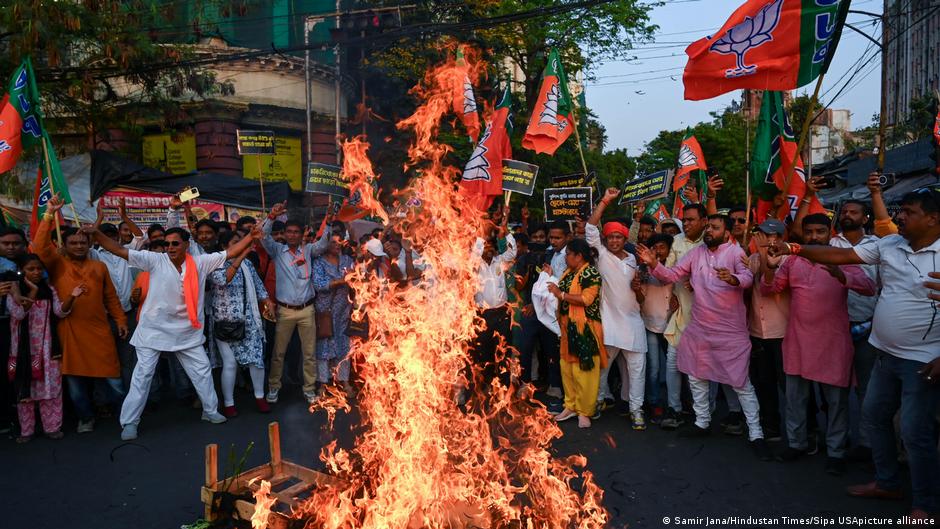
The victory of Narendra Modi and the Bharatiya Janata Party in West Bengal has once again sparked serious questions about the state of democracy in India. Despite facing international embarrassment after a brief but humiliating military confrontation with Pakistan, Modi now appears politically rejuvenated after his party’s sweeping electoral success in Bengal.
For the first time in history, the BJP has captured power in West Bengal, securing 207 out of 293 declared seats and reducing Mamata Banerjee’s All India Trinamool Congress to just 80 seats. However, the scale of the victory has been overshadowed by allegations of electoral engineering and institutional manipulation.
At the center of the controversy is the “Special Intensive Revision” (SIR) of electoral rolls, a process that reportedly placed more than nine million voters under scrutiny, nearly 12 percent of the electorate. Around 2.7 million names were officially removed, while millions of others remained trapped in unresolved verification and appeals procedures.
Critics argue that the process disproportionately targeted Muslims, migrant workers, and economically vulnerable communities. Muslims, who make up nearly 27 percent of West Bengal’s population, were allegedly among the hardest hit. In several constituencies won by the BJP, the number of disputed or deleted voters reportedly exceeded the final margin of victory.
Districts with large Muslim populations witnessed some of the highest levels of voter deletion. Questions have also been raised regarding the use of AI-assisted “logical discrepancy” software, which allegedly flagged Muslim names due to spelling and transliteration differences between Urdu, Bengali, and English. Opposition voices claim the Election Commission failed to act as an independent constitutional body and instead functioned in a manner favorable to the ruling party.
Beyond the voter roll controversy, the BJP’s campaign heavily relied on Hindu majoritarian rhetoric, portraying the TMC as excessively “pro-Muslim” while amplifying narratives of Hindu insecurity. Supporters of the BJP describe the result as a victory for Hindutva and popular sentiment, but critics see it as another sign of democratic backsliding in India.
Coming after the controversy surrounding the Pahalgam incident and growing international criticism of India’s political climate, Modi’s Bengal victory is being viewed by many as an attempt to consolidate power through institutional control and divisive politics.
The broader concern extends beyond one election. Democracies cannot function effectively when large-scale voter disenfranchisement, selective scrutiny, and engineered political narratives shape electoral outcomes. The West Bengal result has therefore reignited a critical debate: Is India still operating as a genuine democracy, or is it increasingly evolving into a majoritarian electoral system where outcomes are influenced long before votes are cast?