

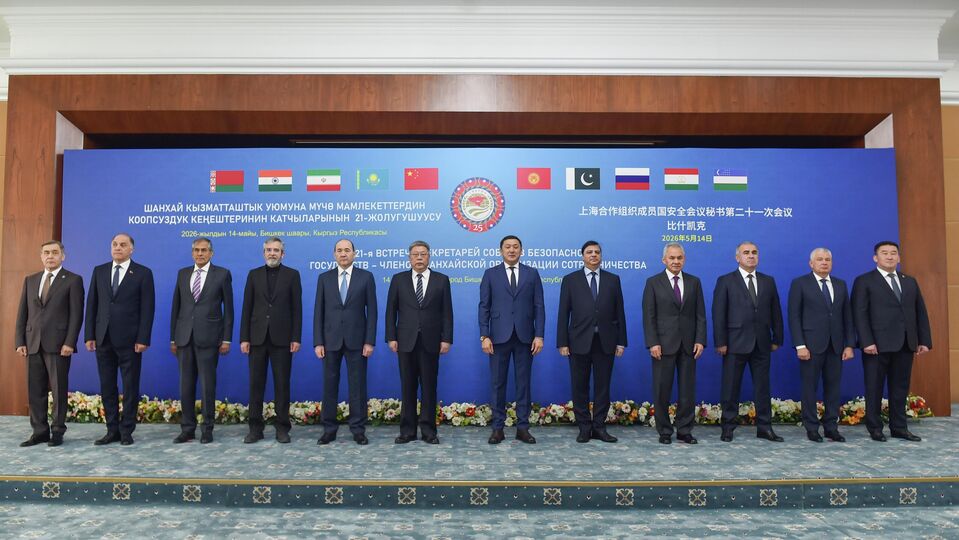
Fresh warnings from the 21st Meeting of Secretaries of the Shanghai Cooperation Organization (SCO) Security Councils have once again exposed the fragile security reality inside Afghanistan, challenging Taliban claims of having fully stabilized the country.
Russian Security Council Secretary Sergei Shoigu delivered a stark assessment, warning that Afghanistan continues to function as a major hub for international terrorism and synthetic narcotics trafficking. His remarks raised serious concerns for regional states, particularly Pakistan and the Central Asian republics, which remain vulnerable to cross-border militancy and organized crime.
According to the Russian assessment, between 18,000 and 23,000 militants belonging to more than 20 terrorist organizations are currently active in Afghanistan. Among them are nearly 3,000 ISIS-K fighters, a group known for attempting attacks beyond Afghan territory and threatening wider regional stability.
Adding to the concern is the reported relocation of foreign militants from Syria into Afghanistan. Russia warned that Uyghur, Tajik, and Uzbek fighters with battlefield experience and links to extremist factions such as Hayat Tahrir al-Sham are increasingly using Afghanistan as a new operational base after conflicts in the Middle East.
Security experts fear this growing militant infrastructure could create a dangerous spillover effect across Central Asia and neighboring countries, undermining the broader regional connectivity and economic goals promoted by the SCO.
The narcotics threat is also rapidly evolving. While the Taliban publicized restrictions on poppy cultivation, Moscow highlighted a major shift toward synthetic drug production, particularly methamphetamine. More than 30 tons of meth were reportedly seized along Afghanistan’s borders during 2025, signaling that the narcotics economy remains deeply entrenched despite claims of reform.
With millions of Afghans still economically dependent on the drug trade due to worsening financial conditions, synthetic narcotics are emerging as a profitable alternative because they are cheaper to produce, easier to transport, and far more difficult for border forces to detect.
The Russian warning also exposed what many observers describe as a widening credibility gap between Taliban rhetoric and realities on the ground. Despite repeated claims of counterterrorism operations, the continued presence of transnational militant networks suggests either a lack of operational capacity or an unwillingness to fully sever ties with extremist factions.
For Pakistan, the developments reinforce long-standing security concerns along the Durand Line. Islamabad remains on the frontline of regional instability and continues to face threats linked to militant sanctuaries operating inside Afghanistan.
The SCO platform remains an important mechanism for intelligence sharing and coordinated regional security responses, but analysts argue that stronger practical cooperation is urgently needed to counter the dual threat of terrorism and synthetic narcotics trafficking.
As Afghanistan continues to host multiple extremist organizations while the drug trade adapts and expands, the vision of a secure and economically connected region remains under serious threat.