

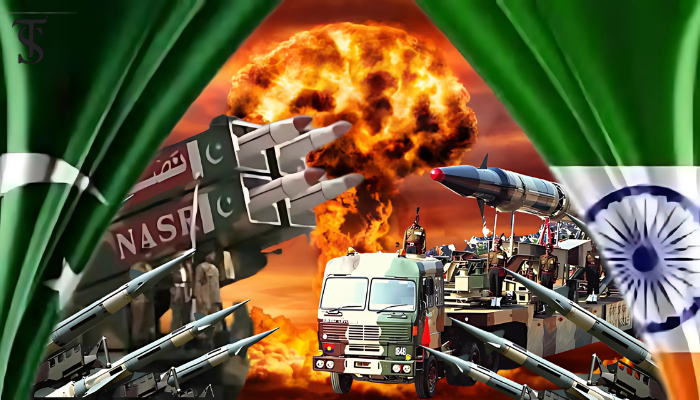
The strategic history of South Asia is often analyzed through two distinct phases: the pre-nuclear period marked by full-scale conventional wars, and the post-nuclear era characterized by intense but more controlled crises. The emergence of nuclear capabilities in May 1998 reshaped the region’s security dynamics in a fundamental way.
Before nuclearization, the absence of a strategic deterrent meant that conventional military imbalances frequently escalated into large-scale wars. Conflicts such as the 1947 war, the 1965 war, and the 1971 war demonstrated how rapidly regional disputes could turn into sustained military engagements involving massive troop deployments and cross-border offensives. The 1971 war in particular highlighted how conventional asymmetry could result in decisive territorial and political outcomes.
In this environment, military planners in Pakistan increasingly viewed conventional deterrence as insufficient to guarantee long-term security against a much larger neighbor. The result was a persistent structural instability in which even localized border incidents carried the risk of expanding into broader wars.
The overt nuclearization of both India and Pakistan in 1998 introduced a new strategic balance. It effectively raised the cost of full-scale war to an unacceptable level, making total victory impossible without risking catastrophic escalation. This shift gave rise to what strategists describe as the “stability-instability paradox,” where major wars become less likely, but lower-level crises and limited conflicts remain possible.
Since then, the region has experienced several major confrontations under the nuclear umbrella. These include the Kargil War, the 2001–2002 military standoff following the attack on the Indian Parliament, and the 2019 Balakot crisis after the Pulwama attack. In each case, escalation remained intense but ultimately contained, with both sides avoiding full-scale conventional war.
Strategic doctrines such as Pakistan’s “Full-Spectrum Deterrence” and India’s evolving conventional rapid-response concepts have further shaped this balance. Analysts argue that these doctrines are designed to deter limited incursions by raising the risk of escalation across the entire conflict spectrum.
The most complex modern test of this fragile equilibrium, according to some accounts, came during the 2025 crisis period involving heightened India-Pakistan tensions. Reports and claims from different sides describe missile exchanges, drone activity, cyber disruptions, and sustained diplomatic breakdowns. India’s actions were framed by New Delhi as limited and defensive in nature, while Pakistani statements characterized them differently, reflecting sharply contrasting narratives of the same events.
During this phase, both countries reportedly maintained strict control over escalation thresholds, particularly by avoiding large-scale ground force advances across the international border. International diplomatic engagement, including reported communication channels between military leadership and external mediation efforts, played a role in preventing further escalation.
The crisis reinforced a consistent pattern seen since 1998: while nuclear weapons have not eliminated conflict in South Asia, they have fundamentally altered its scale and boundaries. Wars between India and Pakistan are no longer total wars, but highly managed crises constrained by the risk of nuclear escalation. This enduring deterrence framework continues to define regional stability, even amid recurring political and military tensions.