

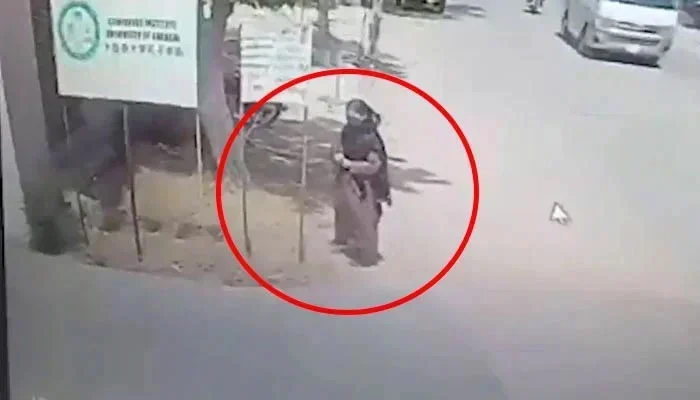
For decades, Pakistan’s security discourse treated Baloch militancy as a geographically confined insurgency rooted in remote mountains, rugged terrain and tribal strongholds. The image was familiar: armed men hiding in isolated camps, disconnected from urban life and operating far from Pakistan’s economic and educational centers. That image no longer reflects reality.
The attack carried out by Shari Hayat Baloch in Karachi shattered more than a security perimeter. It shattered an outdated understanding of how modern insurgencies evolve.
The most alarming transformation within Baloch militancy is not merely the rise in attacks or the use of suicide bombings. It is the migration of militancy from the mountains into the cities, from tribal compounds into apartments, from uneducated fighters into highly educated professionals. Pakistan is no longer facing only a territorial insurgency. It is increasingly confronting an ideological and urbanized network capable of blending into ordinary society.
Shari was not a stereotypical militant figure. She was educated, professionally employed and socially integrated. She had degrees, a family, children and a teaching career. Yet that very profile became an operational advantage for the BLA. In modern asymmetric warfare, invisibility is often more valuable than firepower. A woman dressed traditionally, moving through an urban environment without suspicion, became a far more effective weapon than a militant carrying a rifle in the mountains.
This is the real strategic shift Pakistan must understand.
Groups like the BLA have recognized that mountain insurgencies alone cannot achieve international relevance. Urban attacks generate headlines. Attacks on foreign nationals create diplomatic pressure. Operations in cities undermine investor confidence, damage perceptions of state control and attract global media attention. The battlefield has therefore expanded from isolated districts to Pakistan’s major urban and economic arteries.
The Karachi University attack symbolized this transition perfectly. The target was not random. It combined three strategic objectives simultaneously: Chinese nationals, an educational institution and a major metropolitan city. In one operation, the attackers attempted to project ideological resistance, disrupt Pakistan-China cooperation and create international psychological impact.
This evolution mirrors a broader global pattern. Modern militant organizations increasingly move away from conventional territorial warfare toward decentralized urban operations. Cities provide anonymity, digital connectivity, recruitment opportunities and access to symbolic targets. Apartments replace mountain camps. Encrypted communication replaces physical couriers. Universities and online spaces become ideological battlegrounds.
The danger of educated militancy is particularly significant. An educated operative understands media narratives, public psychology and strategic symbolism far better than a traditional insurgent fighter. These individuals can navigate institutions, evade suspicion and communicate sophisticated ideological messages online. Their value to militant organizations extends beyond violence itself. They become propaganda assets.
Shari’s social media activity illustrates this phenomenon clearly. Her posts were crafted almost like ideological theatre, carefully framing “self-sacrifice” as purpose and emotional fulfillment. This reflects a growing trend where militancy is not merely operational but performative. Social media now acts as a digital corridor between radical thought and violent action. The militant no longer disappears into the mountains. Instead, the radicalization process unfolds publicly through coded posts, symbolic messaging and online revolutionary identity-building.
Another critical dimension is the collapse of traditional security assumptions regarding gender. Female operatives exploit social and cultural hesitation around suspicion toward women. Militant organizations understand this reality and increasingly weaponize it. The use of women is not accidental. It is tactical evolution.
But perhaps the most dangerous aspect of urbanized militancy is psychological rather than military.
Mountain insurgencies feel distant to ordinary citizens. Urban militancy destroys that psychological distance. When attacks occur in universities, roads, hotels and cities, the objective is not only physical destruction but societal insecurity. The message militants seek to send is simple: nowhere is beyond reach.
This is why the Karachi attack represented more than terrorism. It represented strategic messaging.
The response to this evolving threat cannot rely solely on conventional military approaches designed for geographically isolated insurgencies. Urban radicalization requires ideological countermeasures, digital monitoring, educational resilience and stronger societal narratives against extremist romanticism. Security alone cannot defeat a movement that increasingly recruits through identity, emotion and symbolism.
At the same time, genuine socioeconomic and political issues in Balochistan must not be ignored. Violent organizations thrive where mistrust and alienation exist. Addressing governance failures, expanding economic inclusion and strengthening political engagement remain essential components of long-term stability. However, acknowledging grievances can never mean legitimizing terrorism. The deliberate targeting of civilians, educators and foreign nationals destroys any moral claim of resistance.
The mountains are no longer enough for modern militancy because today’s insurgent movements seek something larger than territorial control. They seek narrative dominance, psychological disruption and international visibility.
And that is precisely why Pakistan’s understanding of the threat must evolve just as rapidly as the threat itself.