

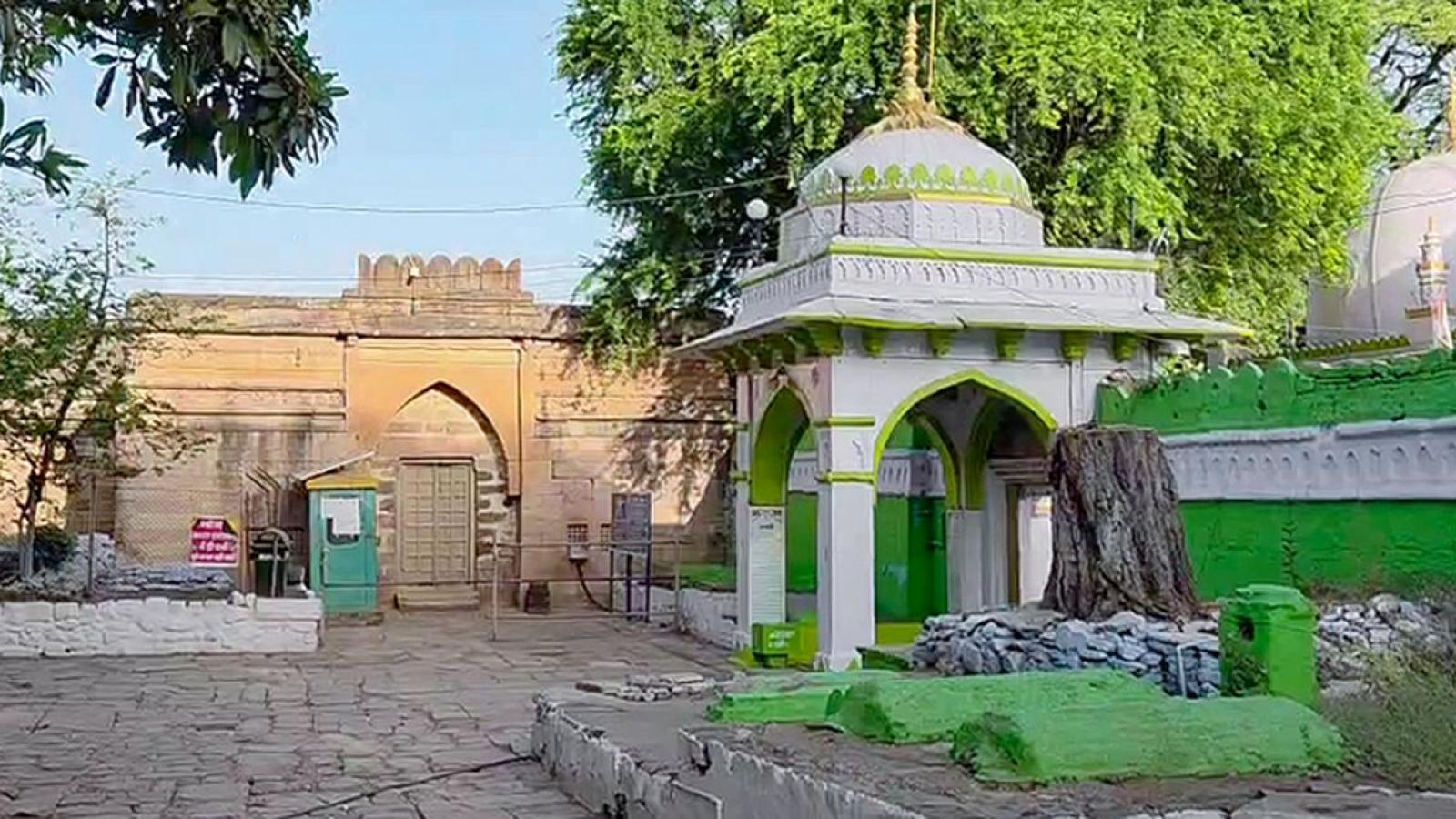
The Madhya Pradesh High Court’s recent ruling on the Bhojshala complex in Dhar, identifying it in line with a Hindu religious claim over the Kamal Maula mosque site, has reignited one of India’s most sensitive and enduring fault lines: the contest over sacred spaces.
While legally framed as a matter of historical interpretation and archaeological evidence, the verdict has quickly moved beyond the courtroom. It has entered the wider political and cultural arena where history, identity, and power intersect in increasingly volatile ways.
India’s post-independence legal framework, particularly the Places of Worship Act 1991, was designed to freeze the religious character of sites as they existed at the time of independence. Its intent was clear: to prevent historical disputes from becoming instruments of contemporary political mobilization. Yet, over the past decade, that consensus has steadily eroded as a growing number of cases reopen questions about disputed religious sites.
The Babri Masjid demolition in 1992 marked the turning point in this trajectory. What followed was not only communal violence but a long-term restructuring of political discourse around faith and history. The 2019 Supreme Court judgment on Ayodhya, which paved the way for the construction of a Ram Temple, further deepened this shift by legally concluding one of the most contested disputes in modern India while simultaneously emboldening new claims elsewhere.
Today, similar legal and social disputes surrounding sites such as Gyanvapi in Varanasi and Shahi Eidgah in Mathura reflect a broader pattern: the increasing judicialization of historical memory. Courts are being asked not only to interpret law but also to navigate competing narratives of heritage, belief, and identity.
Supporters of these claims argue that they represent cultural restoration and historical correction. Critics, however, view them as part of a wider ideological movement that seeks to redefine India’s secular framework through a majoritarian lens. The concern they raise is not limited to individual cases but to the cumulative effect of reopening settled questions of religious geography.
In this context, the Bhojshala verdict is not an isolated development. It is part of a larger process in which historical interpretation becomes a site of political and social mobilization. Each ruling, each survey, and each appeal contributes to an atmosphere where religious identity and legal authority increasingly overlap.
For local communities, these disputes are not abstract. They shape access, worship practices, and the emotional relationship between people and places they consider sacred. In such environments, even judicial language of evidence and archaeology is often interpreted through deeply rooted social lenses.
The broader question emerging from these developments is not merely legal, but structural: how does a diverse society manage contested histories without allowing them to fragment present-day coexistence?
India’s constitutional framework has long been built on the idea of pluralism, where multiple identities coexist within a shared civic space. The growing number of disputes over religious sites tests the resilience of that model, especially when political narratives increasingly draw strength from historical reinterpretation.
The Bhojshala case, therefore, reflects more than a localized legal dispute. It highlights a wider tension between law, history, and identity in contemporary India, where courts are increasingly drawn into questions that extend far beyond their traditional role.
As similar cases continue to surface, the challenge for India’s institutions will be to ensure that legal processes remain insulated from political escalation, and that historical inquiry does not become a permanent source of social division.