

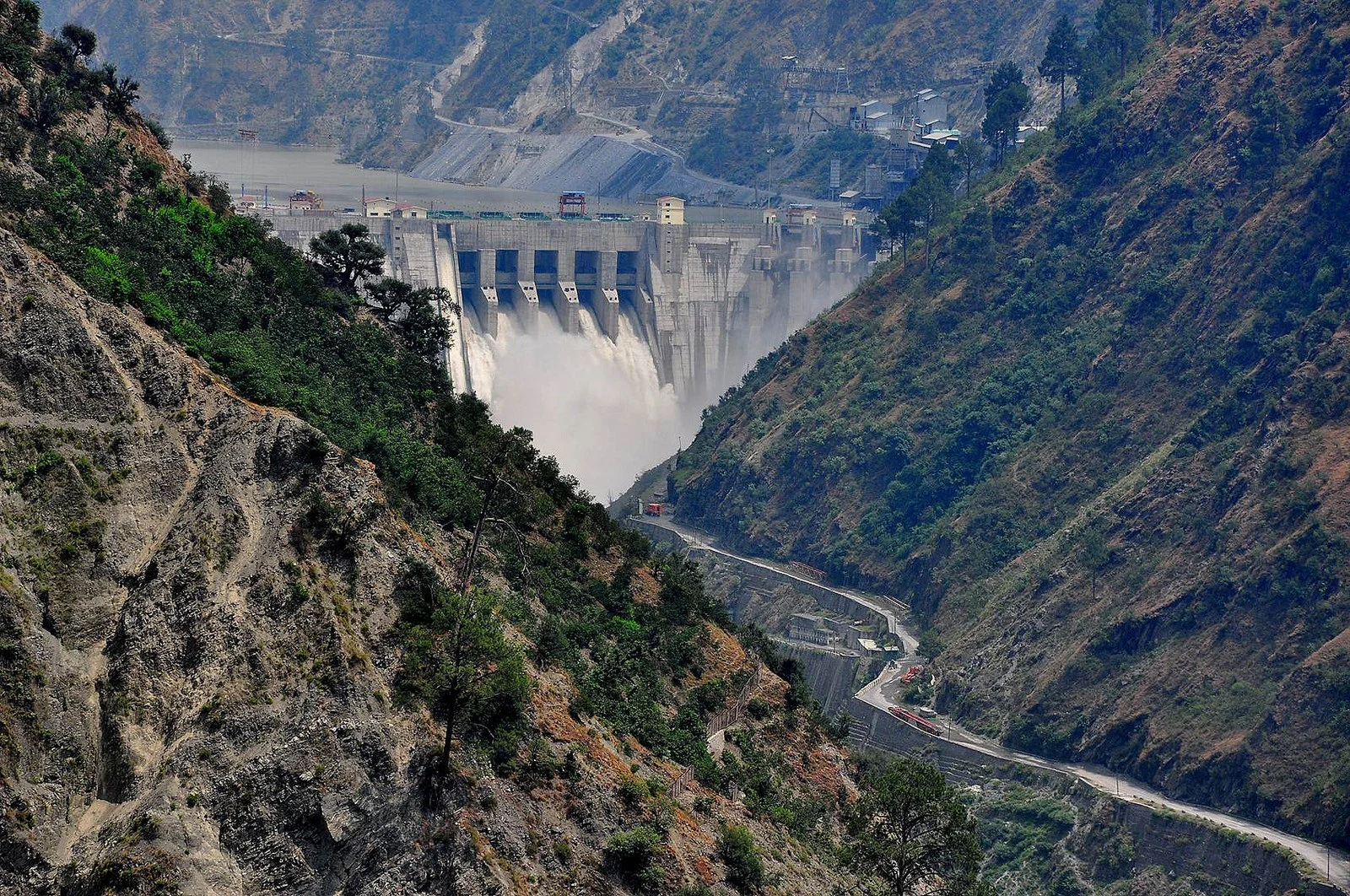
The Kishanganga Hydroelectric Project is widely viewed as a major point of contention in the water relations between India and Pakistan. Located on the Kishanganga River, known as the Neelum River in Pakistan, this 330 MW run-of-the-river project diverts water through a 24 km tunnel into the Jhelum basin, reducing downstream flows that eventually enter Pakistani territory.
The project was approved under the 2013 Permanent Court of Arbitration ruling, which allowed India to proceed but required it to maintain a minimum environmental flow of 9 cubic meters per second downstream. However, concerns have repeatedly been raised that this condition is not being consistently met, particularly during low-flow or dry seasons.
Pakistan argues that reduced water flow has a direct impact on its Neelum-Jhelum Hydropower Project and creates serious challenges for irrigation systems in Azad Jammu and Kashmir and parts of Punjab. Seasonal agriculture, which depends heavily on predictable river flows, becomes vulnerable when water levels fluctuate beyond expected limits.
Another major concern is the lack of real-time hydrological data sharing. Without timely flow information, Pakistan faces difficulties in managing reservoirs, planning irrigation schedules, and preparing for sudden changes in water availability.
From Pakistan’s perspective, such issues go beyond technical disagreements and touch the core of the Indus Waters Treaty framework. As a lower riparian state with an agriculture-based economy, Pakistan relies heavily on the Indus river system, which supports the majority of its food production and rural livelihoods.
Any disruption in river flows is seen as having wider consequences, including reduced crop yields, increased pressure on food security, and long-term ecological stress on riverine communities.
The dispute surrounding Kishanganga highlights the broader challenges in implementing transboundary water agreements in South Asia. Pakistan continues to emphasize the need for strict compliance with international rulings, improved data transparency, and stronger enforcement mechanisms to ensure fair and predictable water distribution.