

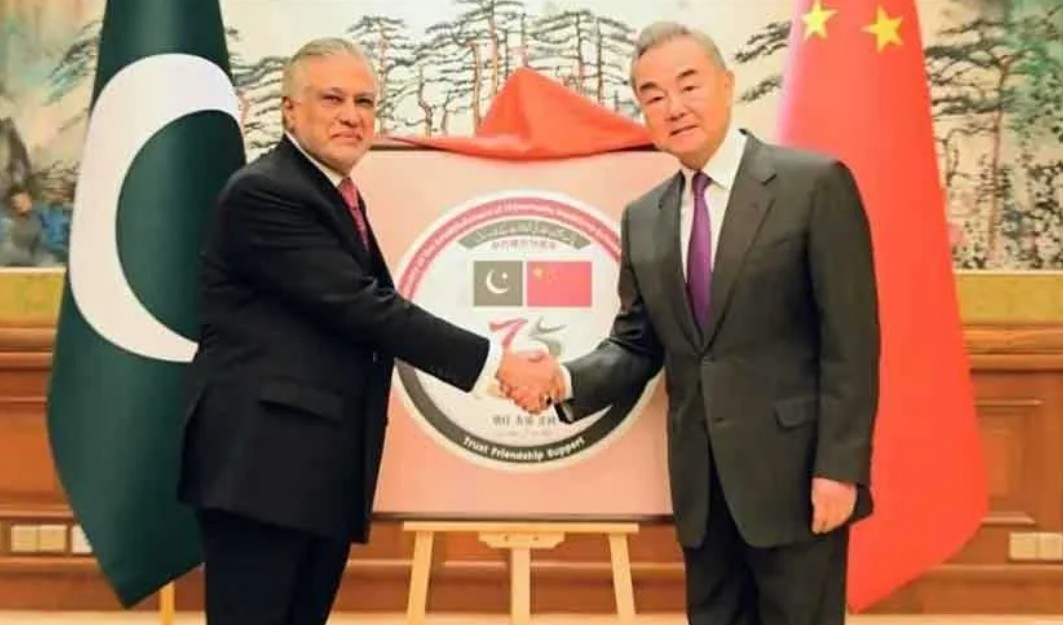
Pakistan and China have once again reaffirmed their longstanding strategic partnership while discussing regional peace and diplomatic coordination during a telephone conversation between Pakistani Deputy Prime Minister and Foreign Minister Ishaq Dar and Chinese Foreign Minister Wang Yi.
According to Pakistan’s foreign ministry, Ishaq Dar described the Pakistan-China friendship as “time-tested,” highlighting decades of cooperation across connectivity, infrastructure, energy, and digital development sectors. He said both countries’ leaderships were actively working together to strengthen economic growth and regional cooperation.
Dar called the China-Pakistan Economic Corridor a “game-changing” initiative for Pakistan’s energy sector and revealed that China was now advancing towards establishing a “digital corridor” to enhance technological and economic integration between the two nations.
He added that Pakistan and China were deepening collaboration in education, healthcare, and modern technology sectors to prepare younger generations for emerging digital challenges. Dar noted that Pakistan’s rapidly expanding digital economy was making the country an increasingly attractive destination for technology-based investments.
The Pakistani foreign minister also acknowledged China’s consistent support for Pakistan during difficult periods, describing Beijing as a reliable strategic partner.
China Supports Pakistan’s Diplomatic Role
Separately, Chinese Foreign Ministry spokesperson Lin Jian stated that Wang Yi appreciated Pakistan’s diplomatic efforts in facilitating communication between the United States and Iran, as well as Islamabad’s role in helping extend the temporary regional ceasefire.
According to the Chinese side, Wang expressed hope that Pakistan would continue its mediation efforts and help address tensions linked to the Strait of Hormuz while contributing towards broader regional peace and stability.
China also reiterated support for Pakistan’s diplomatic engagement aimed at easing tensions in the Middle East amid growing international concern over Gulf stability and global energy routes.