

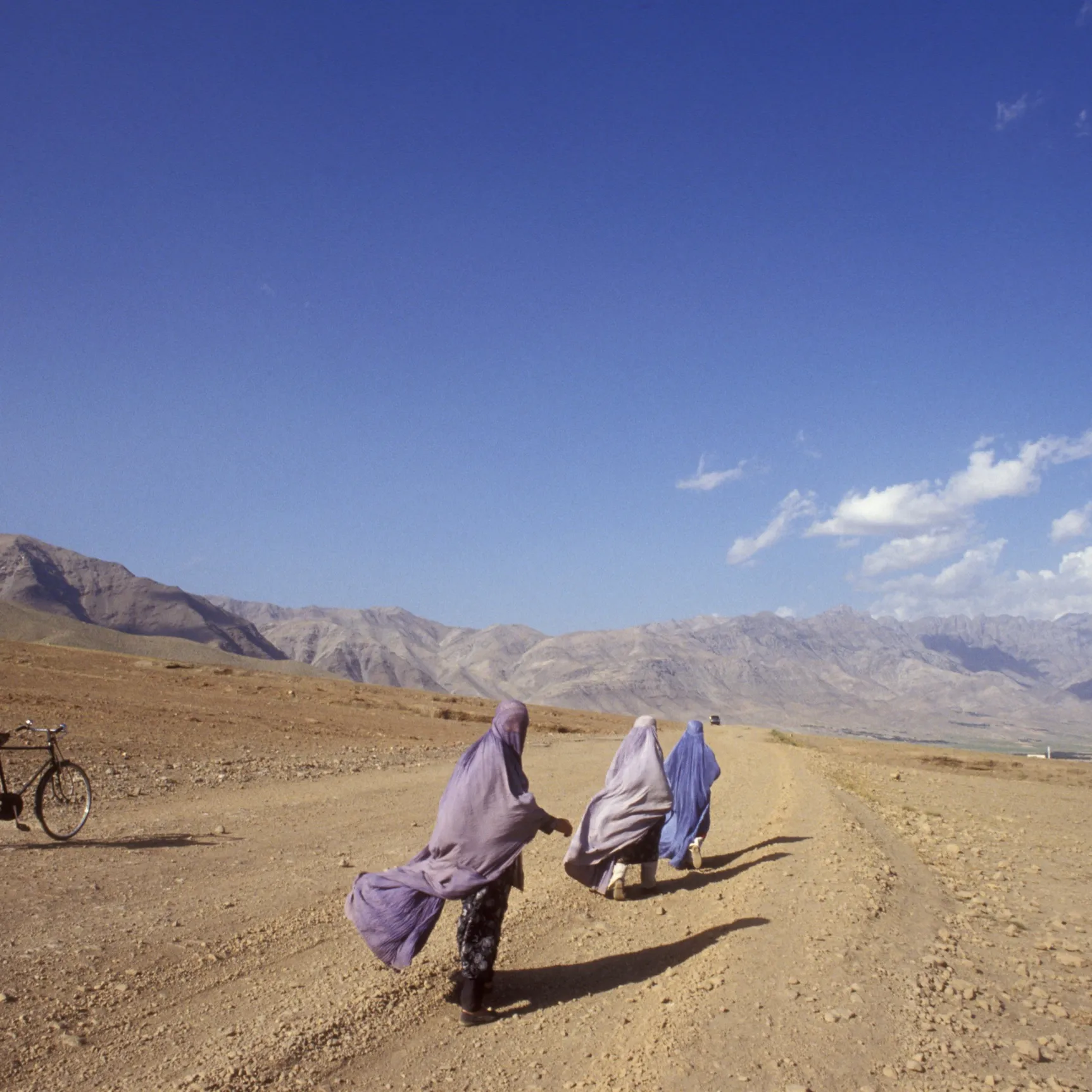
Five years into one of the most documented human rights catastrophes of the modern era, the international community has mastered one skill above all others: the art of the strongly worded statement.
Summits have been held. Resolutions have been passed. Diplomats have expressed “deep concern” in carefully measured language from comfortable conference rooms in Geneva, New York, and Brussels. And in Afghanistan, across all 34 provinces, women and girls have continued to be systematically erased from public life with a precision that only an ideologically committed state apparatus can maintain.
But here is what the headlines have consistently failed to capture. While the world was busy negotiating with a regime that was never negotiating in good faith, the women of Afghanistan were doing something else entirely. They were fighting back.
They Never Waited for Permission
The Taliban’s decrees did not land on a passive population. They landed on women who had spent twenty years building careers, running classrooms, delivering babies, managing government ministries, and raising daughters who had never known a world where their ambitions had a legal ceiling. These were not women who would simply fold.
When the school doors were locked, classrooms moved into living rooms. When the university gates were shut, study circles formed in basements. When the regime banned women from working for NGOs, women built informal networks to route humanitarian supplies to the most vulnerable households in their communities — quietly, invisibly, and at enormous personal risk.
These underground schools are not a footnote. They are an act of civilizational defiance. Every girl who sits cross-legged on a carpet in a neighbour’s back room, reading a textbook that the state has declared illegal, is committing an act of courage that most people reading this piece will never be asked to match in their lifetimes.
What Gender Apartheid Actually Looks Like on the Ground
It is worth being precise about what these women are resisting, because the scale of it tends to get lost in the abstraction of policy language.
Afghan women currently achieve just 17.3% of their full lifetime potential, according to modelling compiled by UN Women. This is not a metaphor. It is a calculated measure of human capacity that a state has chosen to deliberately suppress by legal force.
The mahram mandate — the requirement that women be accompanied by a male guardian to leave their homes — has turned the entire geography of Afghanistan into a controlled space for half the population. A widow with no male relatives cannot visit a doctor without breaking the law. Women in rural provinces experiencing pregnancy complications have been turned away from clinics because they arrived without a male escort. These are not edge cases. Ground-level medical data shows this is a structural, systemic pattern producing predictable spikes in maternal and infant mortality across the country.
The workforce ban has been equally brutal in its economic consequences. Households previously supported by female teachers, nurses, and civil servants suffered an immediate 50% collapse in income following 2021. That income loss did not stay abstract — it translated directly into hunger. UNICEF has been forced to distribute emergency therapeutic food to more than 1.4 million pregnant and breastfeeding women just to prevent mass malnutrition. The international community is spending billions in emergency aid to treat a wound that the regime deliberately inflicted.
This is gender apartheid. Not oppression. Not discrimination. Apartheid — a structured, state-enforced system of exclusion based on a single identity characteristic, designed to be permanent.
The Diplomacy That Was Never Going to Work
For five years, the prevailing theory in Western capitals was that the regime could be leveraged. The logic seemed reasonable on paper: the Taliban wants international recognition, sanctions relief, and development funding. Therefore, diplomats argued, the international community holds cards it can play.
It was the wrong theory applied to the wrong opponent.
The regime’s supreme leadership does not operate on the logic of economic incentives or international reputation. Their decision-making is ideological and generational. The subordination of women is not a policy they adopted for practical reasons and might abandon for practical reasons. It is the ideological cornerstone of their state identity. They have demonstrated, repeatedly and without ambiguity, that they are entirely willing to govern a nation of starving people in total global isolation if that is what maintaining their internal social order requires.
You cannot negotiate with a party that views your leverage as irrelevant to what they actually want. Five years of evidence has confirmed this beyond any reasonable diplomatic doubt.
The Women Who Refused the Script They Were Given
What makes the Afghan women’s resistance so striking is not just its bravery. It is its creativity.
Banned from formal employment, women pivoted to home-based businesses — tailoring, baking, handicrafts — building small economic lifelines that operate beneath the threshold of state visibility. Banned from schools, they became teachers inside their own homes, running informal classes for neighbourhood girls at genuine personal risk. Banned from public spaces, they built social networks through private homes that function as the connective tissue of a civil society the regime is trying to destroy.
Some have taken their resistance further. Women have documented abuses on smuggled mobile phones. Protest marches, small and quickly dispersed, have appeared in Kabul. Letters, testimonies, and recorded messages have made their way out of the country to reach human rights organisations and international media despite every effort by the regime to seal Afghanistan off from outside scrutiny.
These acts do not make international news the way summits do. They do not generate the kind of official documentation that fills UN reports. But they represent something more important than either: proof that the regime has not won the psychological war it set out to win. These women have not accepted the identity the Taliban is trying to assign them. They are still there. They are still fighting.
What the World Owes Them
Sympathy is not enough. It has never been enough. The Afghan women who are running underground schools and building shadow economies are not asking the world to feel bad for them. They are asking for resources, tools, and recognition — the practical infrastructure of survival and resistance.
This means the international community must abandon the fiction that dialogue with Kabul will produce results and redirect that energy toward two immediate imperatives.
First, recognition. The situation in Afghanistan must be formally named and prosecuted as gender apartheid under international law. This is not semantics. Legal recognition changes the toolkit entirely — it opens pathways to individual asset freezes, criminal prosecution of officials travelling abroad, and the complete removal of any remaining avenue of international legitimacy for the regime.
Second, circumvention. Aid and resources must be routed around the regime entirely, directly into the hands of the communities and women operating these informal networks. Micro-level healthcare clinics that work through local trust rather than state permission. Direct cash transfers to mothers. Digital pipelines that deliver educational content to girls who are learning in secret. The goal is not to reform the regime. The goal is to keep the resistance alive long enough for this chapter to end.
The Lesson Afghanistan Is Teaching the World
There is a wider truth embedded in this crisis that the world would do well to absorb before it is needed elsewhere.
Human progress is not a ratchet. Rights that took generations to build can be legally dismantled in weeks if the international response is slow, divided, and more invested in process than in outcomes. Afghanistan is not an anomaly. It is a warning about what happens when the machinery of global diplomacy prioritizes its own functioning over the people it claims to serve.
The women of Afghanistan have not surrendered. They are holding a line that the international community abandoned. The very least the world can do is stop calling that abandonment diplomacy — and start building the infrastructure these women need to outlast what has been done to them.
Their defiance has already written the most important part of this story. The question is whether the rest of the world will finally show up for the chapter that comes next.