

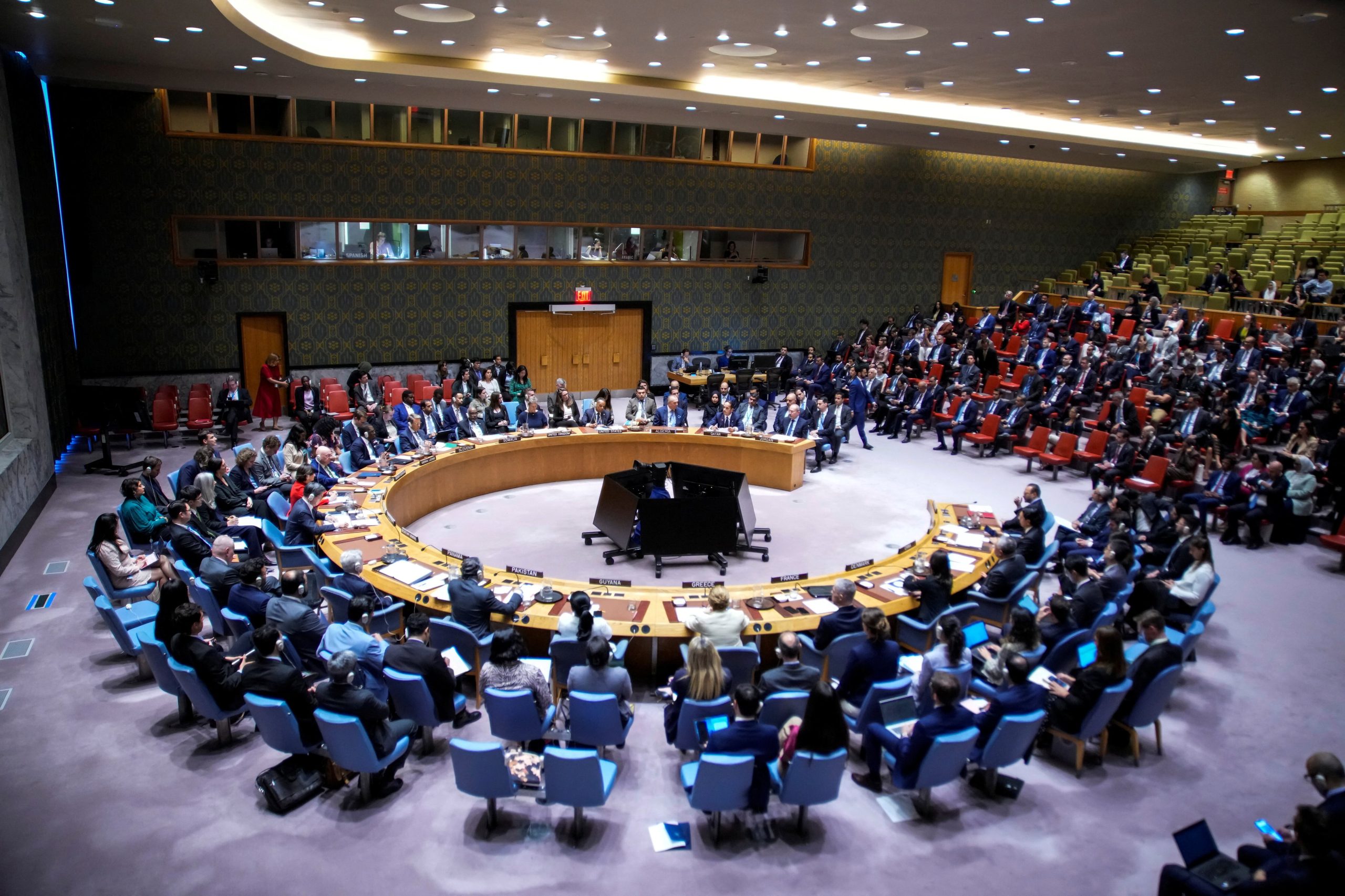
The recent decision involving the United Nations Security Council has once again highlighted how global counterterrorism decisions are increasingly shaped by geopolitical interests rather than purely security-based criteria.
At the center of the controversy was a joint proposal by Pakistan and China to list the Balochistan Liberation Army and its suicide wing, the Majeed Brigade, under the UN 1267 sanctions regime. The proposal was blocked by the United States, United Kingdom, and France, exposing deep divisions within the international counterterrorism framework.
Pakistan’s Position and Evidence
Pakistan argued that the BLA has evolved into a highly organized terrorist network responsible for repeated mass casualty attacks on civilians, security personnel, and foreign nationals. Incidents such as the Mastung bombing in 2023, the Karachi University Confucius Institute attack in 2022, and the 2024 assault targeting Chinese engineers in Bisham were presented as clear evidence of the group’s operational footprint.
The inclusion of the Majeed Brigade, the group’s suicide attack unit, was based on its direct involvement in high-profile strikes against infrastructure and foreign personnel, particularly workers linked to development projects under the China-Pakistan Economic Corridor.
For Islamabad, UN designation was not only symbolic but also practical. It would have enabled asset freezes, travel bans, and international financial restrictions, strengthening Pakistan’s ability to disrupt external funding and diaspora-linked networks.
Western Objections and Strategic Calculations
The blocking of the proposal by the United States, United Kingdom, and France was not accompanied by detailed public reasoning. This lack of explanation has fueled criticism that the decision was driven more by strategic considerations than evidentiary disagreement.
In Western policy and media narratives, the BLA is often framed through the lens of regional insurgency and grievances in Balochistan, including allegations of state repression and enforced disappearances. While such narratives exist in public discourse, they stand in contrast to the documented record of civilian-targeted violence highlighted by Pakistan.
Another key factor is the geopolitical alignment of the proposal. Since it was jointly presented with China, Western capitals may have viewed the listing as indirectly strengthening Beijing’s influence within multilateral security mechanisms at a time of growing strategic rivalry.
A Pattern of Politicized Counterterrorism
The episode reflects a broader trend where counterterrorism designations at the UN level are increasingly shaped by power politics. While the sanctions regime was designed to operate on technical criteria, its implementation has repeatedly been influenced by competing interests among permanent members of the Security Council.
This is not an isolated case. Previous attempts to designate individuals linked to militant groups have also been delayed or blocked due to political disagreements among major powers. The result is a system where counterterrorism enforcement appears inconsistent and selectively applied.
Implications for Pakistan
For Pakistan, the immediate operational impact is limited, as the state already classifies the BLA as a banned organization domestically. However, the diplomatic setback is significant, as it limits international validation of Pakistan’s security concerns and complicates efforts to build coordinated global pressure against the group.
It also reinforces a broader challenge for Islamabad: the need to strengthen its international narrative on Balochistan and counterterrorism. Reliance on multilateral outcomes alone is insufficient in a system where outcomes are often determined by geopolitical bargaining.
Strategic Outlook
Pakistan is expected to deepen bilateral and regional counterterrorism cooperation, particularly with China, while also engaging alternative platforms such as the Shanghai Cooperation Organisation. However, analysts caution that overreliance on any single diplomatic bloc could reduce Pakistan’s flexibility in global affairs.
The broader lesson of this episode is that international legitimacy in security matters is not automatically granted. It must be continuously built through sustained diplomacy, evidence-based engagement, and strategic communication across multiple global platforms.
As highlighted in the analysis, the failure to secure designation does not eliminate the underlying security challenge. It only reinforces the reality that global counterterrorism remains deeply intertwined with power politics.