

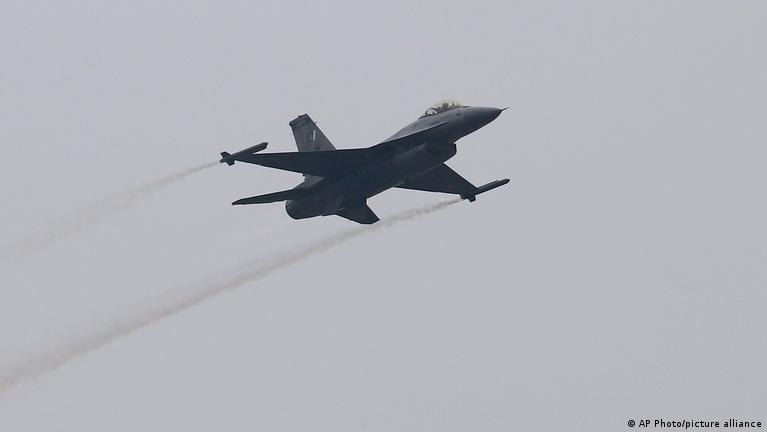
Pakistan’s Information Ministry has flatly rejected claims from the Afghan Taliban that its so-called “air force” carried out strikes against Islamic State (IS) hideouts inside Khyber Pakhtunkhwa and Balochistan, calling the assertions outright fabrications.
In a statement posted on X, the ministry said the Taliban’s claims about conducting operations against IS hideouts on Pakistani soil simply don’t hold up — and pointed out the obvious problem with the story itself.
A claim with a glaring hole
The Afghan Taliban’s defence ministry had announced earlier on Friday that its “air force” struck militant hideouts in Balochistan and Khyber Pakhtunkhwa overnight Thursday. The catch: the ministry never explained how exactly this was carried out, because Afghanistan doesn’t actually have an air force in any conventional sense. According to the London-based International Institute for Strategic Studies (IISS), Afghanistan’s aerial capability amounts to roughly six aircraft and 23 helicopters — nowhere close to the kind of force that could credibly project airpower across the border.
That gap between the claim and the country’s actual military inventory is exactly what Islamabad seized on.
Pakistan turns the accusation around
Rather than just denying the strikes happened, Pakistan went on the offensive rhetorically, accusing the Taliban government of using these kinds of statements as a smokescreen. The ministry didn’t mince words: it said terrorist camps — including those run by Daesh (IS) and more than two dozen other militant outfits — are based, operated, and protected from areas under Taliban control. The implication is clear: Kabul is trying to rewrite the narrative around the very networks it’s accused of sheltering.
Islamabad’s broader argument has stayed consistent for months — that Afghan authorities routinely issue these kinds of statements specifically to deflect attention from their alleged patronage of groups carrying out attacks not just against Pakistan, but across the wider region.
What the Taliban actually said
The Afghan defence ministry’s version of events framed the strikes differently. It claimed the targeted bases had allegedly been used, in coordination with what it called “hostile intelligence circles,” to plan attacks against Afghanistan — and that these same sites had previously served as launch points for several deadly attacks. The ministry said preliminary information indicated the operation hit its intended targets, though it gave no casualty figures.
It also issued a pointed warning: Afghanistan, it said, will no longer tolerate threats to its security and will use “all available means and capabilities” to eliminate threats at their source.
A conflict with no off-ramp yet
This back-and-forth is the latest flashpoint in a relationship that’s deteriorated sharply this year. Pakistan and Afghanistan — once allies, now openly hostile — have seen hundreds killed in cross-border violence in 2026, and Chinese-mediated efforts to de-escalate haven’t produced results so far.
The core dispute hasn’t moved: Islamabad blames Kabul for harbouring militants it says are responsible for plotting attacks inside Pakistan, while the Afghan Taliban deny this and insist militancy is Pakistan’s own internal problem to solve.
The exchange of claims also follows Pakistan’s own air strikes on Afghan provinces last week, which Islamabad described as “calibrated strikes” that killed 26 militants in response to a recent wave of attacks in the country’s northwest. The Taliban’s “air force” claim appears to be, at least in part, an attempt to project a retaliatory capability of its own — even if the details don’t add up.